WHY MAKE IT
A little comfort, a lot of flavor.
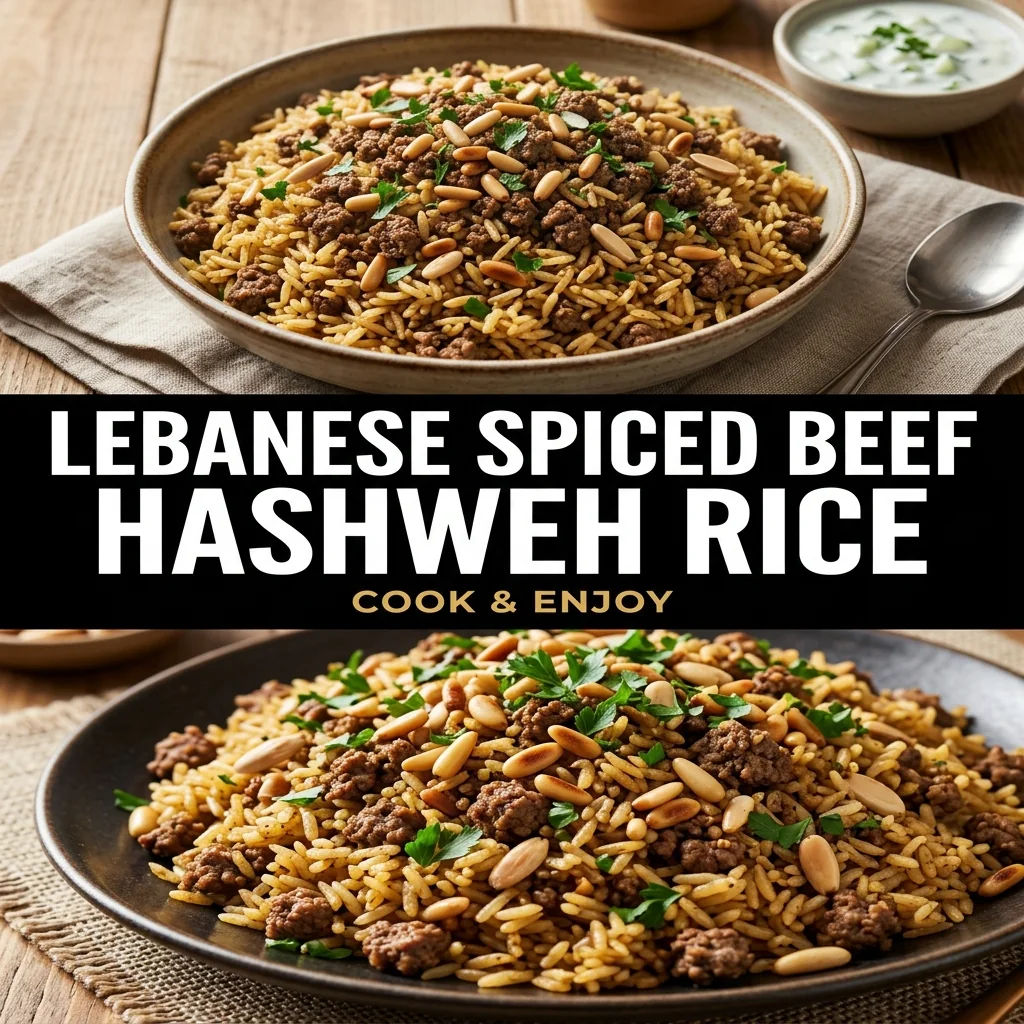
Lebanese Spiced Beef Hashweh Rice is a deeply comforting staple across Levantine cuisine, often served as a versatile centerpiece or aromatic stuffing. Hashweh, which translates directly to 'stuffing' in Arabic, elevates everyday pantry ingredients into a fragrant culinary showpiece through the generous application of warm spices. Browned halal ground beef is seasoned with ground allspice, cinnamon, nutmeg, and cloves, coating each grain of long basmati rice in rich, savory aromatics. Simmering the grains in seasoned halal beef broth ensures deep savory depth throughout the entire dish. Topped with rich toasted pine nuts and crunchy almonds, this one-pot rice offers a satisfying contrast of textures.
The Essence of Hashweh Spicing
The signature character of hashweh relies on a classic Levantine spice profile dominated by warm, sweet, and pungent notes. Ground allspice serves as the primary aromatic backbone, carrying hints of clove, cinnamon, and pepper. When combined with true cinnamon and a touch of nutmeg, the spices cut through the rich fat of the halal ground beef without overwhelming the natural savoriness of the meat. Sautéing these ground spices in the hot ghee for a full minute before adding liquids blooms their essential oils, locking rich flavor into the base.
Selecting Meat and Broth
Opting for an 85/15 lean-to-fat ratio in the ground beef provides sufficient rendered fat to toast the rice and carry spices without leaving the finished grains greasy. Halal-certified beef broth introduces essential gelatin and umami into the cooking liquid, which permeates the rice starch as it swells. If using an unsalted homemade halal stock, you may need to increase the salt slightly to ensure the starch is properly seasoned from within rather than tasting flat beneath the aromatic beef.
Textural Contrast with Nuts
A platter of hashweh rice is incomplete without its crown of toasted nuts. The buttery sweetness of pine nuts paired with the clean, splintering crunch of slivered almonds introduces an essential dynamic against the tender steamed rice and soft ground meat. Frying the nuts in ghee prior to cooking the meat not only perfumes the fat that cooks the entire dish, but also toasts the nuts evenly. Keeping them separate until final presentation ensures they retain their crisp texture.
Before you start
Toast the pine nuts and slivered almonds over medium-low heat and monitor them vigilantly, as their delicate natural oils cause them to turn from golden to burnt within seconds. Remove them from the hot pan the moment they turn amber. Soaking the basmati rice beforehand is vital; it hydrates the core of the long grains so they cook through evenly and elongate gracefully without bursting or turning gummy when simmered alongside the beef.
THE RECIPE
Lebanese Spiced Beef Hashweh Rice
6 servings · 20 minutes preparation · 35 minutes cooking · 10 minutes cooling, chilling or resting
Ingredients
Step-by-step instructions
- Place 1 1/2 cups basmati rice in a fine-mesh colander, rinse gently under cool water until the starch washes away and the water runs clear, then submerge in cold water for 20 minutes to soak before draining thoroughly.
- Melt 1 tablespoon ghee in a heavy-bottomed Dutch oven or deep lidded sauté pan over medium heat; add 1/4 cup pine nuts and 1/4 cup slivered almonds, stirring constantly for 3 to 4 minutes until golden brown, then immediately transfer the nuts to a small bowl to prevent burning.
- Add the remaining 1 tablespoon ghee to the same pan over medium-high heat, add the diced yellow onion, and cook for 5 to 6 minutes until softened and translucent around the edges.
- Add 1 pound halal ground beef and minced garlic to the onions, breaking the meat apart with a wooden spoon, and sauté for 7 to 8 minutes until the beef is fully browned and no pink remains.
- Stir in 1 1/2 teaspoons allspice, 1 teaspoon cinnamon, 1/2 teaspoon nutmeg, 1/4 teaspoon cloves, 1 1/2 teaspoons salt, and 1/2 teaspoon black pepper, cooking for 1 minute until the spices release their fragrance.
- Add the drained basmati rice to the pot, stirring gently for 2 minutes to coat every grain in the spiced rendered fat and distributed beef juices.
- Pour in 2 1/2 cups halal beef broth, bring the liquid to a rapid boil across the surface, then immediately cover with a tight-fitting lid and reduce the heat to the lowest setting.
- Simmer undisturbed for 17 minutes without lifting the lid, then turn off the heat and let the covered pot rest on the warm burner for 10 minutes to allow residual steam to finish cooking the rice evenly.
- Uncover, gently fluff the rice with a wide fork to separate the grains, fold in half of the chopped parsley, transfer to a wide serving platter, and scatter the toasted nuts and remaining parsley over the top. Before serving, verify the center of the ground-meat filling or meatballs reaches at least 160 F (71 C) on a food thermometer; extend cooking as needed.
Kitchen notes
Toast the pine nuts and slivered almonds over medium-low heat and monitor them vigilantly, as their delicate natural oils cause them to turn from golden to burnt within seconds. Remove them from the hot pan the moment they turn amber. Soaking the basmati rice beforehand is vital; it hydrates the core of the long grains so they cook through evenly and elongate gracefully without bursting or turning gummy when simmered alongside the beef.
Storage & make-ahead
Allow leftovers to cool to room temperature within 2 hours of cooking. Store in an airtight container in the refrigerator for up to 4 days. When reheating, place the rice in a covered saucepan with 2 tablespoons of water or broth over medium-low heat, stirring occasionally until heated through to an internal temperature of at least 165 F (74 C).
An original recipe guide inspired by themes in our Pinterest research. Recipe has not been independently kitchen-tested. AI-generated image is illustrative; your finished dish may look different.
Frequently asked questions
Can I use ground lamb instead of ground beef?
Yes, halal ground lamb works exceptionally well in hashweh and delivers an even richer, traditional profile. If the lamb renders an excessive volume of liquid fat, skim off a tablespoon before adding the rice so the dish remains light.
Why did my rice turn mushy at the bottom?
Mushy rice usually results from excess liquid or cooking over high heat. Be sure to drain the soaked basmati thoroughly and reduce the stove to its lowest simmer setting once covered to maintain an even, gentle steam.
Can this dish be frozen for meal prep?
Hashweh freezes well without the nut garnish. Cool the cooked rice, transfer it to freezer-safe containers, and freeze for up to 2 months. Reheat thoroughly to 165 F (74 C) and top with freshly toasted nuts before serving.


