WHY MAKE IT
A little comfort, a lot of flavor.
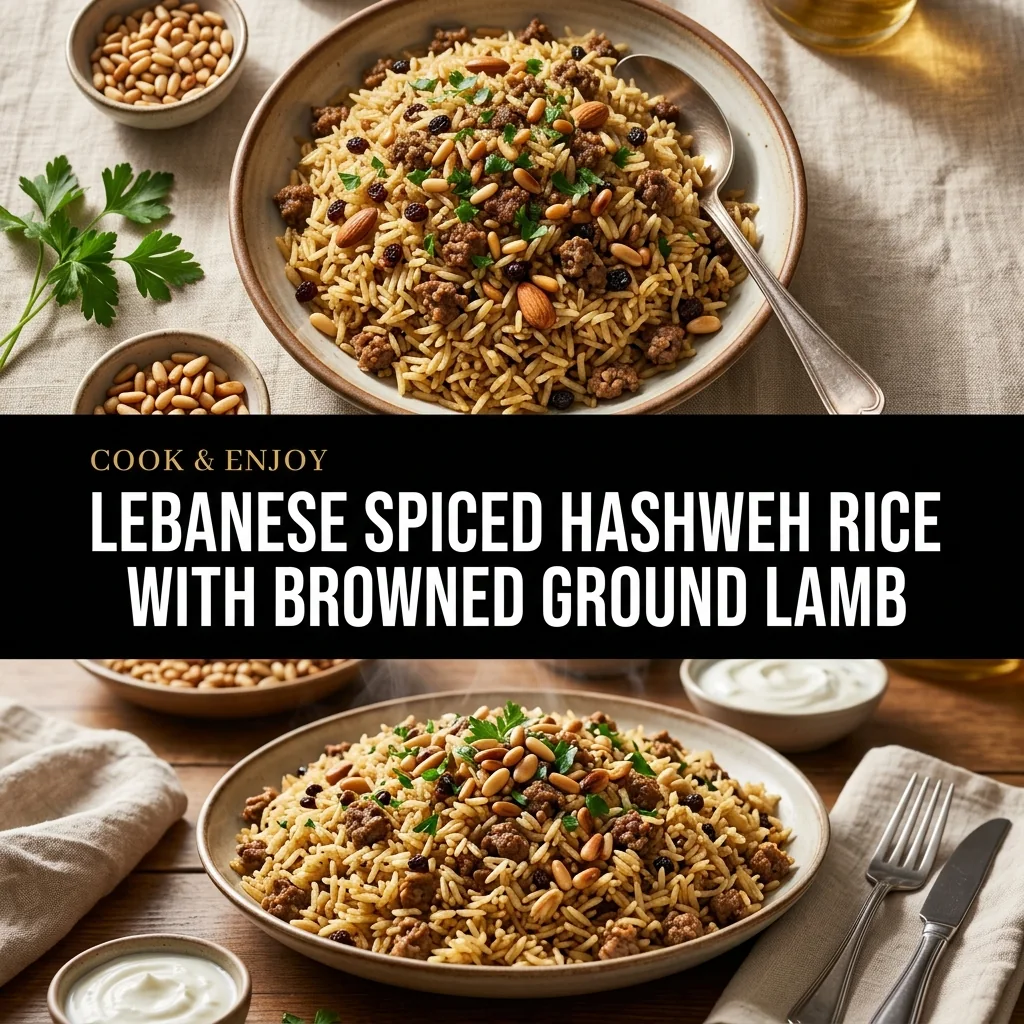
Lebanese spiced hashweh rice with browned ground lamb is an aromatic cornerstone of Levantine home cooking, functioning either as an elaborate side dish or an elegant main course. The Arabic term hashweh translates directly to stuffing, as this seasoned meat-and-rice mixture historically formed the filling for roasted poultry and vegetables. On its own, it transforms into an exquisite pilaf layered with warm, sweet spices including ground allspice, cinnamon, nutmeg, and cardamom. Cooking the long-grain basmati rice directly in rich halal broth alongside deeply browned minced lamb infuses every grain with savory depth. Crowned with golden, buttery toasted almonds and pine nuts, hashweh delivers warmth, crunch, and timeless Middle Eastern hospitality.
The Levantine Spice Harmony
The signature profile of authentic hashweh relies on the traditional seven-spice flavor palette, where cinnamon and allspice take center stage. When combined with halal ground lamb, these spices offset the natural richness of the meat, imparting sweet, floral warmth without introducing sugar. Sautéing the dry ground spices directly in the hot rendered lamb fat blooms their oil-soluble flavor compounds. This brief blooming step eliminates raw spice harshness, ensuring the entire pot of broth and rice is perfumed uniformly with a nuanced, warming aroma throughout the simmer.
Selecting and Preparing Basmati Rice
Long-grain basmati rice is preferred for hashweh because of its elongated grain structure and natural fragrance. Proper preparation ensures each grain remains independent rather than clumping into a porridge. Rinsing clears surface starches, and briefly toasting the wet rice grains in the spiced lamb fat prior to adding liquid seals the outer coat. Maintaining a tight seal with your pot lid ensures proper steam retention, allowing the grains to cook gently and uniformly without scorching against the pan base.
Texture and Garnish Contrast
Textural contrast is integral to hashweh. Because the rice and ground meat are tender and yielding, the addition of toasted nuts provides an essential crunchy bite. Gently toasting slivered almonds and delicate pine nuts in olive oil until amber creates a nutty, buttery topping that elevates the dish aesthetically and gastronomically. Scattering fresh flat-leaf parsley across the platter adds a clean, herbal freshness that balances the comforting richness of the spiced lamb and buttery nuts.
Before you start
Rinsing the basmati rice thoroughly before cooking is non-negotiable for hashweh. Washing strips away excess surface starch that would otherwise turn the pilaf sticky or mushy. Take the time to rinse until the water runs completely clear, and let the rice drain well before adding it to the browned lamb. This guarantees distinct, separate grains that absorb the spiced meat juices evenly.
THE RECIPE
Lebanese Spiced Hashweh Rice with Browned Ground Lamb
6 servings · 20 minutes preparation · 35 minutes cooking · 10 minutes cooling, chilling or resting
Ingredients
Step-by-step instructions
- Place the basmati rice in a fine-mesh strainer and rinse under cold running water for 1 to 2 minutes, agitating with your fingers until the runoff water is clear; drain thoroughly for 10 minutes.
- In a 4-quart heavy-bottomed Dutch oven or deep lidded sauté pan, heat 1 tablespoon of olive oil over medium heat. Add the slivered almonds and pine nuts, stirring continuously for 2 to 3 minutes until evenly golden and fragrant; immediately transfer nuts to a small bowl to prevent burning.
- Return the pot to medium-high heat and add the ground lamb, breaking it apart with a wooden spoon. Cook for 6 to 8 minutes until the lamb is thoroughly browned and crumbly.
- Add the finely diced yellow onion and minced garlic to the lamb. Cook over medium heat for 5 minutes, stirring frequently, until the onion becomes translucent and soft.
- Add the ground allspice, cinnamon, nutmeg, cardamom, black pepper, and 1 teaspoon of kosher salt. Stir well for 1 minute to toast the spices in the rendered lamb fat until intensely fragrant.
- Stir the rinsed, drained basmati rice into the meat mixture, coating the grains evenly with the spiced lamb fat for 1 to 2 minutes.
- Pour in the halal broth and remaining 0.5 teaspoon of salt, stirring once to distribute the rice and meat evenly across the bottom of the pot. Bring the liquid to a rolling boil over high heat.
- Cover the pot tightly with a well-fitting lid, immediately reduce the heat to the lowest setting, and cook undisturbed for 18 minutes without lifting the lid.
- Remove the pot from the heat and allow it to rest covered for 10 minutes to allow the trapped steam to settle. Remove the lid, fluff the fragrant rice gently using a fork, fold in half of the toasted nuts, and transfer to a serving platter garnished with the remaining nuts and chopped parsley. Before serving, verify the center of the ground-meat filling or meatballs reaches at least 160 F (71 C) on a food thermometer; extend cooking as needed.
Kitchen notes
Rinsing the basmati rice thoroughly before cooking is non-negotiable for hashweh. Washing strips away excess surface starch that would otherwise turn the pilaf sticky or mushy. Take the time to rinse until the water runs completely clear, and let the rice drain well before adding it to the browned lamb. This guarantees distinct, separate grains that absorb the spiced meat juices evenly.
Storage & make-ahead
Transfer leftover hashweh rice to an airtight container and place it in the refrigerator within 2 hours. Store refrigerated for up to 3 days. To reheat, warm the rice in a covered saucepan over medium-low heat with 2 tablespoons of broth or water, stirring gently until hot and reaching an internal temperature of 165°F (74°C).
An original recipe guide inspired by themes in our Pinterest research. Recipe has not been independently kitchen-tested. AI-generated image is illustrative; your finished dish may look different.
Frequently asked questions
Can I substitute halal ground beef for the ground lamb?
Yes, lean halal-certified ground beef works cleanly in hashweh. Lamb provides traditional depth and richness, but beef creates a lighter, equally flavorful pilaf when seasoned with the same quantities of allspice, cinnamon, and nutmeg.
What is the best way to serve hashweh?
Hashweh is delicious served warm alongside a bowl of plain whole-milk yogurt, a garlicky cucumber yogurt salad (khyar bi laban), or a crisp chopped fattoush salad to provide cool, refreshing acidity.
Why did my rice scorch at the bottom of the pot?
Scorching occurs if the cooking burner heat is too high or the pot base is too thin. Always use a heavy-bottomed Dutch oven, turn the flame to the lowest setting once simmering, and let residual heat finish the cooking during the 10-minute rest.