WHY MAKE IT
A little comfort, a lot of flavor.
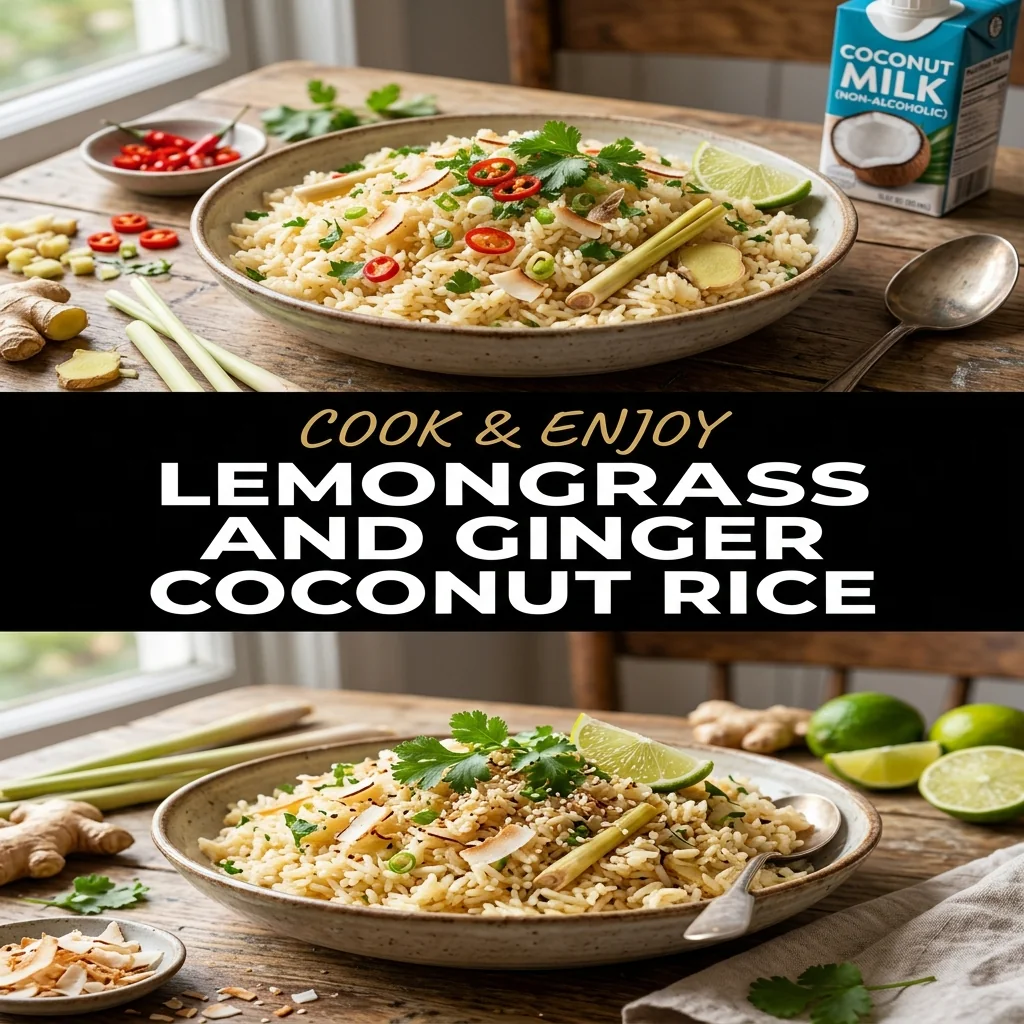
Lemongrass and Ginger Coconut Rice is a fragrant culinary foundation that pairs creamy richness with vibrant botanical top notes. Jasmine rice provides a naturally floral profile that absorbs the lush fats of pure coconut milk effortlessly. By infusing the cooking liquid with bruised lemongrass and freshly sliced ginger, the dish maintains a balanced lightness that cuts through heavier proteins. It operates wonderfully alongside spiced curries, grilled halal skewers, or pan-seared white fish. Because coconut milk contains natural sugars that can scorch against direct cookware, proper heat moderation and an even pan base ensure tender, distinct grains without burnt bottoms. This recipe delivers reliable, aromatic results suitable for both weeknight dinners and elaborate communal spreads.
Aromatic Infusion Mechanics
Bruising the thick base of lemongrass ruptures its microscopic oil glands, releasing citral compounds that disperse evenly through hot coconut fats. Slicing fresh ginger thinly increases the surface area exposed to the simmering liquid, delivering warm, peppery undertones without overwhelming the floral character of jasmine rice. Tossing these aromatics in melted coconut oil before adding liquid allows fat-soluble aroma molecules to bloom immediately. Leaving the aromatics in large pieces during the cook ensures they impart deep flavor while remaining effortless to retrieve and discard right before serving.
Liquid Ratios and Heat Management
Full-fat coconut milk possesses a thick viscosity and high solids content, which alters standard rice-to-water absorption rates. Blending coconut milk with clear water maintains sufficient free moisture so the starches gelatinize smoothly without turning sticky or gummy. Heavy-bottomed stainless steel or enameled cast iron prevents hot spots that cause the milk solids to caramelize prematurely against the pan bottom. Maintaining a gentle simmer under a tight lid preserves steam volume, ensuring the topmost layer of grains cooks at the exact same rate as the bottom.
Serving and Menu Harmony
This coconut rice excels when contrasted with savory, acid-forward, or deeply spiced centerpieces. The creamy fat from coconut mellows assertive chilies, making it a natural accompaniment to halal beef rendang, fiery chicken sambal, or tamarind-glazed seafood. For added texture, consider garnishing the finished platter with lightly toasted unsweetened coconut flakes or crushed roasted peanuts alongside the fresh scallions. Avoid pairing with overly buttery European-style sauces, as competing fat profiles can overwhelm the delicate citrus and ginger aromas that define the dish.
Before you start
For the cleanest citrus flavor, bruise the lemongrass stalks firmly using the flat side of a heavy chef's knife or a rolling pin rather than slicing them into tiny rounds. Cracking the fibers releases the essential oils directly into the coconut milk without leaving fibrous wooden bits scattered throughout your fluffy cooked grains. Discarding the stalks during final plating keeps the texture smooth.
THE RECIPE
Lemongrass and Ginger Coconut Rice
4 servings · 15 minutes preparation · 25 minutes cooking · 10 minutes cooling, chilling or resting
Ingredients
Step-by-step instructions
- Rinse 2 cups of jasmine rice in a fine-mesh sieve under cold running water for 2 minutes until the runoff is clear, then drain for 5 minutes.
- Heat 1 tablespoon of coconut oil in a 3-quart heavy-bottomed saucepan over medium heat, then add 1 finely minced shallot and cook for 3 minutes until translucent.
- Add the 2 bruised stalks of lemongrass, 2 inches of sliced ginger, and 3 bruised makrut lime leaves to the saucepan, stirring continuously for 2 minutes until fragrant.
- Stir in the drained jasmine rice and cook for 2 minutes, coating every grain with the infused oil without letting the rice color.
- Pour in 1 can (13.5 ounces) of full-fat coconut milk, 1 1/2 cups of water, and 1 teaspoon of fine sea salt, bringing the liquid to a rolling boil over medium-high heat while stirring once to release any caught grains.
- Reduce heat to low, cover the pan tightly with a secure lid, and simmer undisturbed for 18 minutes until the liquid is fully absorbed.
- Remove the saucepan from the heat source and let the rice rest covered for 10 minutes to allow the steam to finish softening the upper grains evenly.
- Uncover the saucepan, discard the lemongrass stalks and lime leaves, fluff gently with a silicone rice paddle, and fold in 2 tablespoons of sliced scallions before serving.
Kitchen notes
For the cleanest citrus flavor, bruise the lemongrass stalks firmly using the flat side of a heavy chef's knife or a rolling pin rather than slicing them into tiny rounds. Cracking the fibers releases the essential oils directly into the coconut milk without leaving fibrous wooden bits scattered throughout your fluffy cooked grains. Discarding the stalks during final plating keeps the texture smooth.
Storage & make-ahead
Transfer any uneaten rice into an airtight glass container and refrigerate promptly within 2 hours of cooking. Store in the refrigerator for up to 3 days. When reheating, splash with 1 to 2 tablespoons of water or broth per cup of rice, cover loosely, and microwave or steam on the stovetop until the internal temperature reaches at least 165 F (74 C).
An original recipe guide inspired by themes in our Pinterest research. Recipe has not been independently kitchen-tested. AI-generated image is illustrative; your finished dish may look different.
Frequently asked questions
Can I substitute light coconut milk for full-fat milk?
Yes, but the texture will be noticeably lighter and slightly less velvety. If using light coconut milk, reduce the additional water by 2 tablespoons to compensate for the higher liquid content, preventing the finished rice from becoming soggy.
Why did my rice scorch on the bottom of the pot?
Coconut milk solids contain sugars that burn easily if the heat is too high. Use a heavy-bottomed pot, reduce the flame to the lowest possible setting once boiling, and never leave the heat on medium during the covered simmer stage.
Can I make this dish using basmati rice instead?
Basmati rice works well as an alternative. Increase the water by 1/4 cup and extend the simmering time by 2 minutes, as basmati requires slightly more hydration and time to cook thoroughly compared to standard jasmine rice.


