WHY MAKE IT
A little comfort, a lot of flavor.
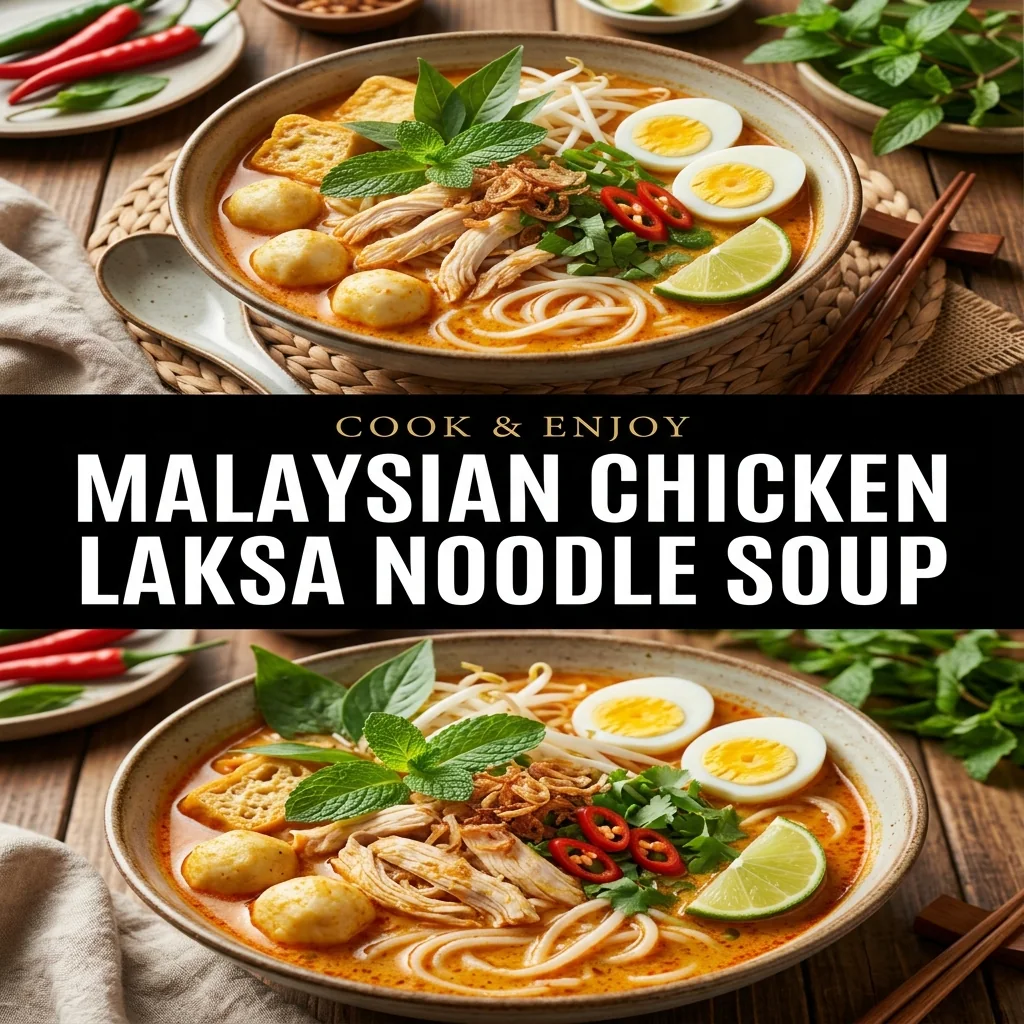
Malaysian Chicken Laksa represents a masterclass in layered Southeast Asian culinary harmony, balancing fiery aromatics, rich coconut creaminess, and clean herbal freshness. Rooted in traditional Peranakan culinary culture, this beloved noodle soup relies on a meticulously pounded spice paste that infuses the golden broth with lemongrass, turmeric, galangal, and garlic. Tender halal chicken gently poaches directly in the savory stock, keeping the meat succulent while fortifying the soup with deep poultry essence. Hollow fried tofu puffs act as sponges, drinking up the complex curry broth, while springy rice vermicelli and crisp, raw bean sprouts introduce a textural contrast. Finished with a spritz of lime juice, every steaming bowl is comforting, deeply aromatic, and utterly invigorating.
Constructing the Aromatic Laksa Paste
The backbone of any exceptional laksa is the rempah, or spice base. Lemongrass imparts a bright herbal top note, while galangal introduces an earthy pine-like warmth distinct from standard ginger. Utilizing halal-certified Malaysian curry powder ensures authentic coriander, fennel, and chili ratios without undesirable fillers. Blending these aromatics with shallots and garlic into a fine purée exposes essential oils. When gently cooked in neutral vegetable oil, the raw pungency of the roots softens into a concentrated, fragrant foundation that binds effortlessly with chicken stock.
Poaching Poultry and Emulsifying Coconut Broth
Poaching the halal chicken breast directly within the spiced broth serves two distinct purposes: it yields exceptionally tender meat and infuses the stock with natural gelatin and savory depth. A digital meat thermometer should confirm the chicken reaches a food-safe internal temperature of 165°F (74°C) before shredding. When stirring in the coconut milk, maintain a steady gentle simmer. Boiling high-fat coconut milk rapidly can cause the proteins to curdle and oil to separate excessively, dulling the luxurious mouthfeel and creamy appearance of the broth.
Serving Architecture and Component Balance
Assembling laksa requires strategic layering to maintain textural contrast. Thin rice vermicelli must be cooked separately in plain water and drained thoroughly; cooking it directly in the broth thickens the soup with excess starch and turns the noodles soggy. Placing raw, rinsed bean sprouts either at the bottom of the bowl or piled on top ensures their crisp snap cuts through the coconut richness. Halved tofu puffs absorb broth instantly, releasing bursts of flavorful curry with every mouthful alongside the sour bite of fresh lime.
Before you start
Frying the spice paste thoroughly in oil—a technique known as 'pecah minyak'—is the single most important step for authentic laksa depth. Cook the paste patiently over medium heat until the raw shallot and galangal fragrance softens and small pools of spiced red oil bead around the edges. Take care never to boil the soup rapidly after incorporating coconut milk, as excessive heat can cause the emulsion to split.
THE RECIPE
Malaysian Chicken Laksa Noodle Soup
4 servings · 25 minutes preparation · 35 minutes cooking
Ingredients
Step-by-step instructions
- In a food processor, combine 3 chopped shallots, 4 peeled garlic cloves, the sliced ginger, sliced lemongrass, 2 tablespoons curry powder, 1 tablespoon sambal oelek, and 1 teaspoon turmeric; process until a fine paste forms.
- Heat 3 tablespoons vegetable oil in a 5-quart heavy Dutch oven over medium heat.
- Add the processed spice paste to the hot oil and sauté for 6 to 8 minutes, stirring continuously until the aromatics darken and the oil begins to separate from the spice paste.
- Pour 4 cups halal chicken broth into the pot, stirring well to scrape up all browned bits from the bottom.
- Add 1 pound halal boneless chicken breasts, bring the broth to a gentle boil, then reduce heat to medium-low, cover, and simmer for 15 minutes until the chicken reaches an internal temperature of 165°F (74°C).
- Transfer the poached chicken to a cutting board, shred into bite-sized strips using two forks, and return the shredded meat to the simmering broth.
- Pour in 1 can full-fat coconut milk, add 1 teaspoon kosher salt and 8 halved fried tofu puffs, then simmer gently for 5 minutes without letting the soup boil vigorously.
- Meanwhile, cook 8 ounces rice vermicelli in a separate pot of boiling water for 3 minutes until tender, then drain and divide evenly among 4 deep soup bowls.
- Ladle the simmering chicken laksa broth, shredded meat, and puffed tofu generously over the noodles, then garnish each bowl with 1/2 cup fresh bean sprouts, fresh cilantro leaves, and a lime wedge.
Kitchen notes
Frying the spice paste thoroughly in oil—a technique known as 'pecah minyak'—is the single most important step for authentic laksa depth. Cook the paste patiently over medium heat until the raw shallot and galangal fragrance softens and small pools of spiced red oil bead around the edges. Take care never to boil the soup rapidly after incorporating coconut milk, as excessive heat can cause the emulsion to split.
Storage & make-ahead
Store the broth and shredded chicken separately from the cooked vermicelli and raw bean sprouts in airtight containers. Cool and refrigerate within 2 hours of preparation for up to 3 days. Reheat the broth gently on the stovetop over medium heat until it registers 165°F (74°C). Pour over freshly cooked noodles rather than reheating noodles in the soup, which makes them mushy.
An original recipe guide inspired by themes in our Pinterest research. Recipe has not been independently kitchen-tested. AI-generated image is illustrative; your finished dish may look different.
Frequently asked questions
Can I use halal boneless chicken thighs instead of chicken breasts?
Yes, boneless chicken thighs work wonderfully. Simmer the thighs for 18 to 20 minutes until they reach 165°F (74°C). Thighs offer richer flavor and remain extremely moist in hot soup.
Where can I find fried tofu puffs and how are they prepped?
Fried tofu puffs are available in Asian grocery stores in refrigerated produce cases. Simply cut them in half diagonally so the spongy interior absorbs the fragrant broth quickly during the final simmer.
Can I substitute yellow wheat noodles for the vermicelli?
Yes, yellow Hokkien wheat noodles are traditional in laksa, often served blended alongside thin rice vermicelli. Blanch the wheat noodles according to package directions before dividing them into the bowls.


