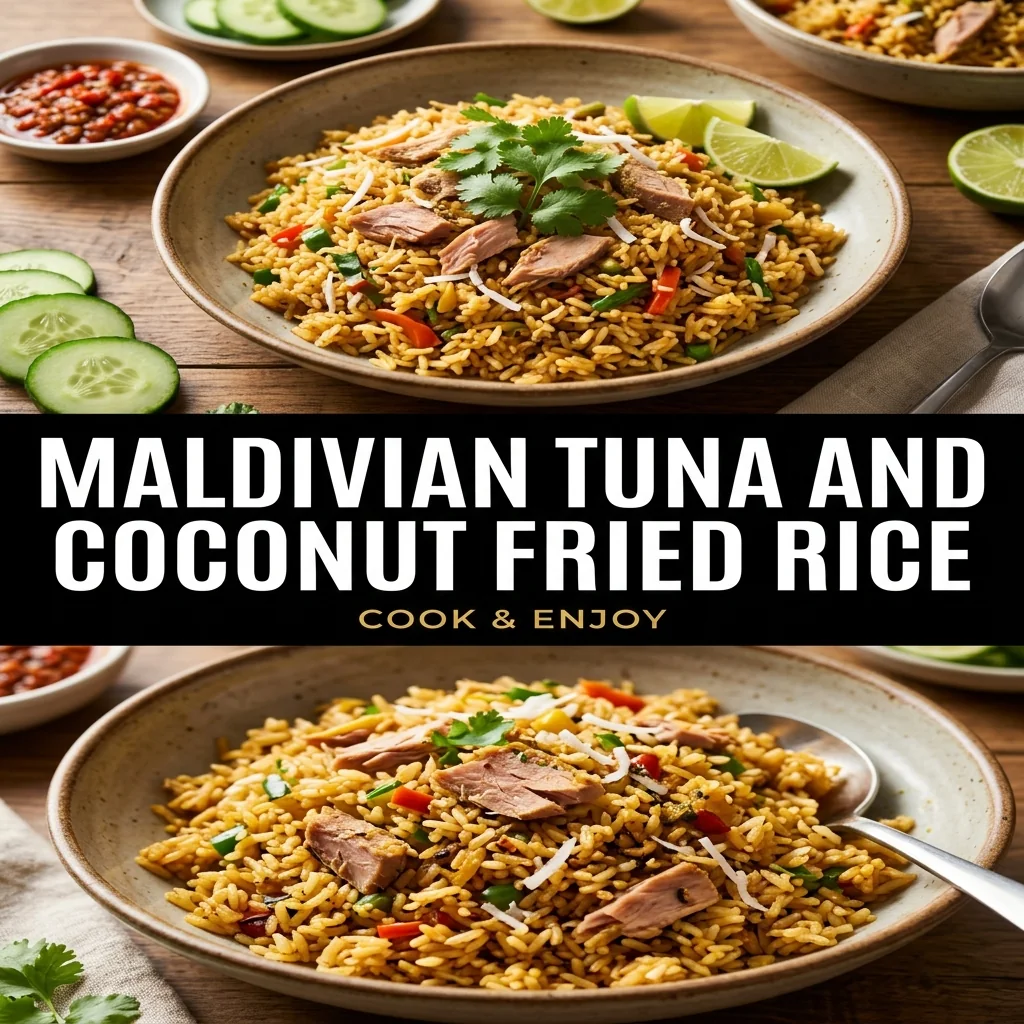
WHY MAKE IT
A little comfort, a lot of flavor.
Maldivian culinary traditions celebrate the vibrant bounty of the Indian Ocean, relying heavily on skipjack tuna, aromatic coconut palms, and fresh citrus. This savory fried rice captures those coastal elements in a swift weeknight format. Using standard pantry tuna alongside fresh aromatics, the dish delivers complex warmth from curry leaves and tiny green chilies without needing heavy commercial sauces. Grated coconut adds a tender, nutty bite that contrasts beautifully with the firm, savory flakes of fish. Finished off the burner with a vibrant squeeze of lime juice, every mouthful balances rich savory depth, lingering heat, and clean citrus acidity for an invigorating meal.
Balancing Ocean Flavors and Fresh Coconut
The core identity of this island dish relies on pairing preserved seafood with fresh coconut meat. Tuna packed in spring water provides a clean profile that allows the aromatic shallots and herbal curry leaves to shine. Grating fresh coconut brings natural sweetness and gentle moisture to balance the dry heat of the bird's eye chilies. Stirring the coconut briefly in the hot seasoned oil before adding the cold rice ensures the shreds toast slightly, releasing their essential oils and infusing the entire base with a subtle nutty fragrance.
Mastering Wok Heat and Rice Texture
Achieving separate, chewy grains in a seafood fried rice requires strict moisture management and controlled stove temperature. Cold grains keep their structural integrity when meeting the hot wok, preventing the starch from turning gummy when stirred with the tuna. Press the rice against the hot metal with a flat spatula, allowing steam to escape rapidly. Do not over-manipulate the tuna while tossing; keeping distinct flakes provides an appealing visual and textural contrast against the tender grated coconut and fine rice grains.
Aromatic Additions and Acidity
Curry leaves and lime juice are non-negotiable accents that lift this preparation above ordinary fried rice. Fresh curry leaves fry directly in coconut oil at the start, infusing the cooking medium with savory woodiness and slight citrus undertones. Adding the lime juice strictly after removing the wok from heat preserves its delicate volatile oils and punchy brightness. If simmered over high heat, citrus juice turns bitter and loses its crisp punch, which is essential to cutting through the oil and flaked fish.
Before you start
For the best texture, always choose day-old cooked rice that has spent the night drying out uncovered on a baking sheet in the refrigerator. Moisture makes fried rice soggy, while dry grains absorb the coconut oil and turmeric evenly. When handling bird's eye chilies, adjust according to heat preference by discarding the seeds. If fresh coconut is unavailable, rehydrate unsweetened frozen grated coconut rather than using sweetened shredded baker's coconut.
THE RECIPE
Maldivian Tuna and Coconut Fried Rice
4 servings · 15 minutes preparation · 15 minutes cooking
Ingredients
Step-by-step instructions
- Drain the two 5-ounce cans of tuna thoroughly in a fine-mesh strainer, pressing gently with the back of a spoon to remove excess water, then flake the fish into large flakes with a fork.
- Heat 2 tablespoons of coconut oil in a wide 12-inch wok or deep skillet over medium heat until glossy.
- Add 1/2 cup of thinly sliced shallots and 18 fresh curry leaves, stir-frying for 3 to 4 minutes until the shallots soften and turn translucent and the curry leaves crackle.
- Add 3 minced garlic cloves and 2 minced green chilies, stirring continuously for 1 minute until fragrant while ensuring the garlic does not scorch.
- Stir in 1/2 teaspoon of ground turmeric, 1/2 teaspoon of ground black pepper, and 1 teaspoon of fine sea salt, allowing the spices to toast in the warm oil for 30 seconds.
- Add the flaked tuna and 1/2 cup of freshly grated coconut to the wok, tossing gently for 2 minutes over medium heat until the tuna registers at least 145 F (63 C) and the coconut absorbs the spiced oil.
- Turn the heat up to medium-high, add 4 cups of chilled cooked rice, and stir-fry for 4 minutes, pressing clumps flat against the bottom of the pan to heat every grain thoroughly. Verify the rice mixture reaches at least 165 F (74 C) throughout before serving.
- Remove the wok from the heat source, pour in 2 tablespoons of fresh lime juice, sprinkle 2 thinly sliced scallions over top, and toss one final time before dishing up.
Kitchen notes
For the best texture, always choose day-old cooked rice that has spent the night drying out uncovered on a baking sheet in the refrigerator. Moisture makes fried rice soggy, while dry grains absorb the coconut oil and turmeric evenly. When handling bird's eye chilies, adjust according to heat preference by discarding the seeds. If fresh coconut is unavailable, rehydrate unsweetened frozen grated coconut rather than using sweetened shredded baker's coconut.
Storage & make-ahead
Transfer leftovers into an airtight glass container and refrigerate promptly within 2 hours of cooking. Consume within 2 days to maintain seafood quality. To reheat, microwave on high or warm in a lightly oiled nonstick skillet over medium-low heat until steaming throughout, ensuring the internal temperature reaches at least 165 F (74 C). Do not refreeze previously cooked and refrigerated rice.
An original recipe guide inspired by themes in our Pinterest research. Recipe has not been independently kitchen-tested. AI-generated image is illustrative; your finished dish may look different.
Frequently asked questions
Can I use tuna packed in oil instead of spring water?
Yes, tuna packed in olive or sunflower oil works well. However, reduce the added coconut oil by half a tablespoon to avoid an excessively greasy pan, and drain the canned oil thoroughly before adding the fish to the aromatics.
What is the best substitute for fresh curry leaves?
Fresh curry leaves provide a singular citrus-herbal aroma that cannot be directly replicated. If completely unavailable, use fresh kaffir lime leaves thinly sliced, or simply omit them and double the green scallions rather than using dried curry powders.
Why did my rice turn out mushy?
Mushy fried rice typically happens when warm or freshly cooked rice is added to the pan. Warm rice releases excess steam that breaks down starches. Always chill cooked rice thoroughly for several hours so the grains dry and separate cleanly.


