WHY MAKE IT
A little comfort, a lot of flavor.
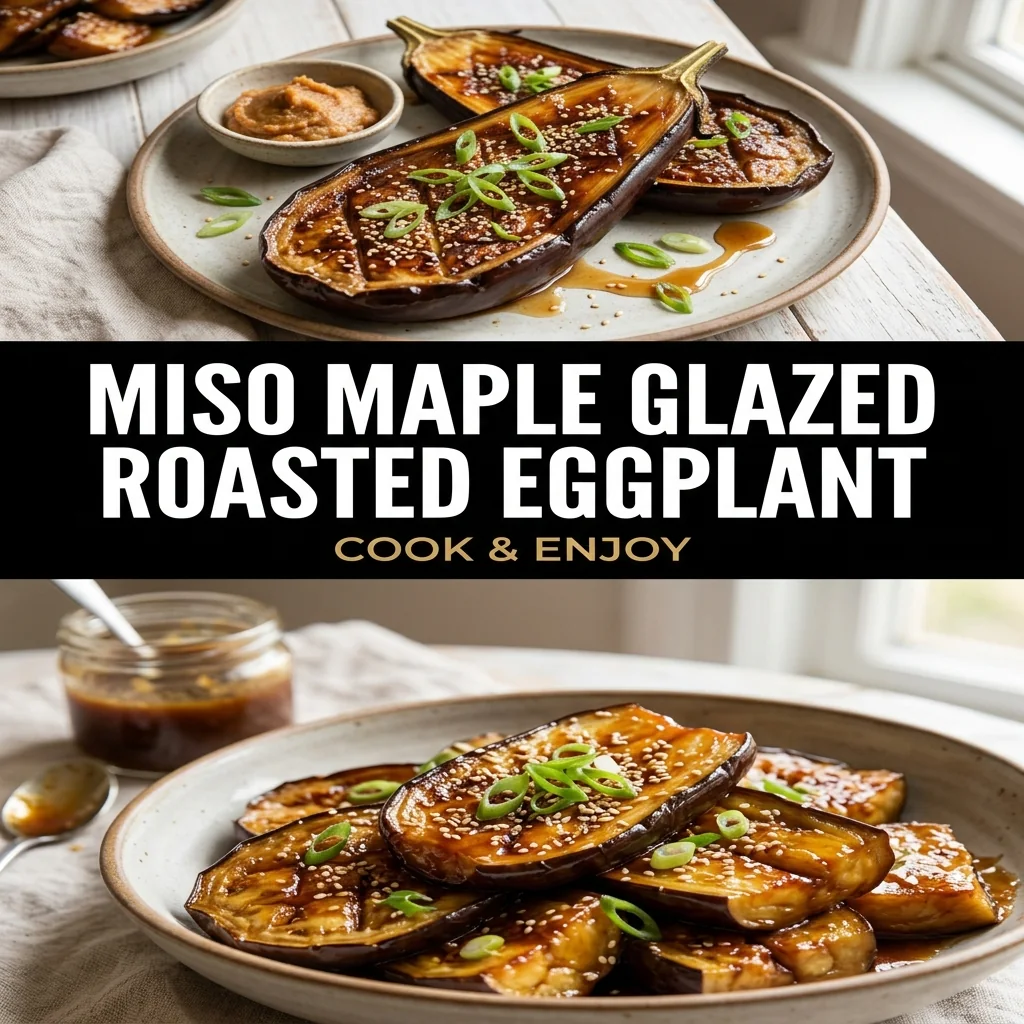
Japanese eggplant features a delicate, velvety flesh and remarkably tender skins that collapse into luxurious softness when exposed to high-heat roasting. In this halal-suitable interpretation of classic Japanese glazed aubergine, complex umami-packed white miso pairs with dark maple syrup rather than traditional mirin or sake, creating a glossy, balanced coating that highlights natural vegetable sweetness. Fresh grated ginger and toasted sesame oil impart sharp aromatic brightness to counterbalance the savory depth of fermented soybean paste. Broiling caramelizes the sugars across the scored flesh, producing rich charred edges and a melt-in-your-mouth interior that complements steamed grains, grilled poultry, or crisp vegetable plates.
Eggplant Selection
Selecting long, slender Japanese or Chinese eggplants is crucial for the texture of this dish. Standard globe eggplants contain thicker skins, higher water content, and bitter seed pockets that resist gentle caramelization. Slender Japanese varieties boast uniform diameters, allowing heat to cook the vegetable through to a custard-like softness without turning mushy. Look for specimens with shiny, unblemished purple skins, firm flesh, and bright green caps free from brown decay, ensuring optimal freshness and delicate sweetness upon cooking.
Glaze Formulation
Authentic glaze profiles often incorporate alcohol-based fermented rice condiments, which are strictly omitted here in favor of pure dark maple syrup combined with unseasoned alcohol-free rice vinegar. White miso, known as shiro miso, contributes gentle saltiness and sweet fermented undertones that blend seamlessly with maple sugars. Whisking warm filtered water directly into the paste emulsifies the dense fermented soybean solids, creating a smooth, spreadable lacquer that clings tightly to scored crevices without running off onto the hot baking pan.
Broiling Precision
The two-step cooking method separates internal tenderization from surface caramelization. Roasting cut-side down softens the firm structure and traps internal steam within the scored flesh. Once inverted and lacquered with miso syrup, intense overhead radiant heat caramelizes the concentrated sugars. Because sugar scorches rapidly under direct broilers, positioning the sheet pan six inches away from heating coils provides the necessary buffer, allowing bubbly blisters to form across the scored diamonds without bitter, acrid burning.
Before you start
Japanese eggplants are ideal for this preparation because their thin skin tenderizes quickly and their flesh has significantly fewer seeds than globe varieties. Deep diamond scoring allows heat and oil to penetrate into the interior during the initial roast while creating generous crevices that trap the sweet miso glaze. Keep a close watch during the broiling step; the natural sugars in the maple syrup and white miso transition from deeply caramelized to unpleasantly scorched within thirty seconds.
THE RECIPE
Miso Maple Glazed Roasted Eggplant
4 servings · 15 minutes preparation · 24 minutes cooking · 5 minutes cooling, chilling or resting
Ingredients
Step-by-step instructions
- Position an oven rack 6 inches below the broiler element and preheat the oven to 400 degrees Fahrenheit (204 degrees Celsius).
- Line a large rimmed half-sheet baking pan with lightly oiled aluminum foil.
- Trim the stem ends of the 4 Japanese eggplants, slice each lengthwise into two equal halves, and score the flesh side deeply in a 0.5-inch diamond pattern without piercing through the outer skin.
- Brush the cut flesh of each eggplant half evenly with the 2 tablespoons of avocado oil, coating every exposed scored groove.
- Arrange the eggplant halves cut-side down on the prepared baking sheet and roast at 400 degrees Fahrenheit (204 degrees Celsius) for 15 minutes until the skins look wrinkled and the flesh yields gently to fingertip pressure.
- While roasting, whisk together the 3 tablespoons white miso paste, 2 tablespoons maple syrup, 1 tablespoon unseasoned rice vinegar, 1 tablespoon warm water, 1 teaspoon toasted sesame oil, and 1 teaspoon grated ginger in a small bowl until completely smooth.
- Remove the sheet pan from the oven, use tongs to turn the eggplant halves cut-side up, and spread approximately 1 tablespoon of the miso glaze generously over each piece.
- Switch the oven setting to high broil and broil the glazed eggplant for 3 to 4 minutes, watching closely until the glaze bubbles vigorously and develops charred, caramelized spots.
- Remove from the oven, rest for 5 minutes, garnish with the 1.5 teaspoons toasted sesame seeds and sliced scallions, and serve warm.
Kitchen notes
Japanese eggplants are ideal for this preparation because their thin skin tenderizes quickly and their flesh has significantly fewer seeds than globe varieties. Deep diamond scoring allows heat and oil to penetrate into the interior during the initial roast while creating generous crevices that trap the sweet miso glaze. Keep a close watch during the broiling step; the natural sugars in the maple syrup and white miso transition from deeply caramelized to unpleasantly scorched within thirty seconds.
Storage & make-ahead
Store leftovers in an airtight container in the refrigerator within 2 hours of cooking. Keep chilled at 40 degrees Fahrenheit (4 degrees Celsius) or lower for up to 2 days. Reheat on a parchment-lined baking tray in a 375 degrees Fahrenheit (191 degrees Celsius) oven for 8 to 10 minutes until heated through to 165 degrees Fahrenheit (74 degrees Celsius).
An original recipe guide inspired by themes in our Pinterest research. Recipe has not been independently kitchen-tested. AI-generated image is illustrative; your finished dish may look different.
Frequently asked questions
Can I use standard globe eggplant instead of Japanese eggplant?
Globe eggplants can be used if cut into 1-inch thick rounds or wedges. However, Japanese eggplants are strongly preferred because their thin skins soften completely and their slender shape cooks evenly without turning excessively watery or developing bitter seed pockets.
Is all white miso paste suitable for a halal diet?
Most standard miso pastes contain naturally fermented soy, rice, and salt, but some commercial varieties add ethyl alcohol as a preservative. Always check the ingredients list carefully to choose an unpasteurized or certified alcohol-free halal miso paste.
Why did my glaze burn before the eggplant became soft?
This happens if the glaze is applied too early. The eggplant must be roasted cut-side down until tender before applying the miso glaze. Broil only for the final 3 to 4 minutes to caramelize the sugars safely.