WHY MAKE IT
A little comfort, a lot of flavor.
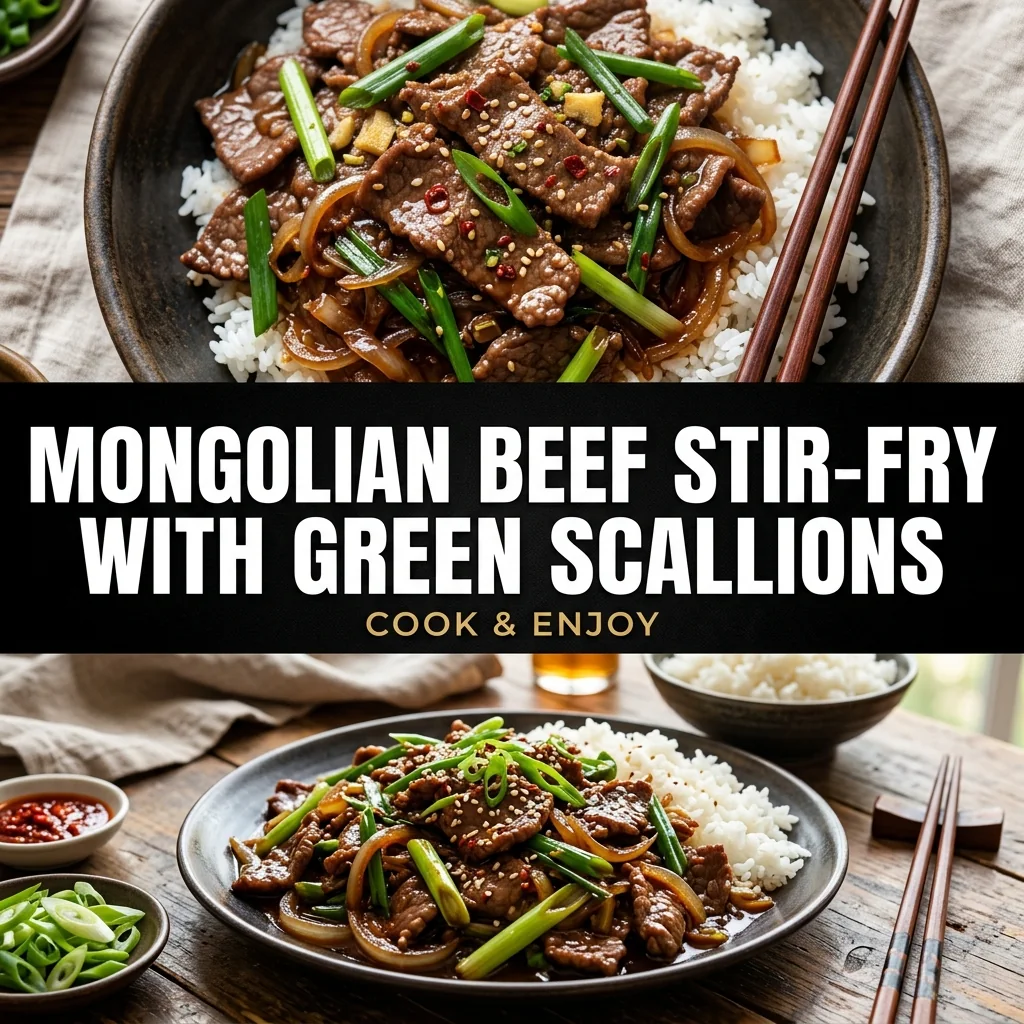
This restaurant-style Mongolian beef stir-fry relies on simple pantry components to deliver deep, savory satisfaction with minimum stove time. Tender flank steak is cut thinly across its natural muscle grain, dusted generously with cornstarch, and seared quickly in hot oil to create a crisp outer layer. The meat is then coated in a rich glaze built from halal-certified soy sauce, dark brown sugar, aromatic ginger, and plenty of fresh garlic. Fresh green scallions sliced into elongated batons are folded in at the very end of cooking, retaining their mild sharpness, pleasant crunch, and vibrant color against the dark, glossy beef. Served alongside steamed jasmine or basmati rice, this dish offers an approachable weeknight meal that yields bold savory-sweet flavors.
Selecting and Slicing Flank Steak
Flank steak is an ideal cut for high-heat stir-frying due to its pronounced grain and robust beef flavor. To achieve maximum tenderness, look for a fresh piece with consistent thickness and distinct longitudinal fibers. Prior to slicing, chill the meat in the freezer for twenty minutes to firm it up, making precision cuts easier. Slice strictly perpendicular to the visible grain lines into strips roughly one-quarter inch thick. Cutting across the fibers shortens the long muscle strands, guaranteeing that every mouthful remains tender rather than chewy once seared.
The Cornstarch Velveting Technique
Tossing raw beef slices in dry cornstarch serves two essential purposes in this stir-fry. First, it forms a dry barrier that crisps rapidly upon hitting hot oil, creating textural contrast between the crunchy exterior and the juicy interior. Second, as the seared beef simmers briefly in the sauce, residual starch on the crust gently thickens the glaze, helping it cling tightly to each strip. Allowing the coated meat to rest for fifteen minutes ensures the natural juices hydrate the powder, preventing loose starch from burning in the oil.
Balancing the Glaze and Aromatics
The foundation of an authentic tasting glaze lies in maintaining the proportion between savory halal soy sauce and rich dark brown sugar. Dark brown sugar provides subtle molasses notes that round out the sharpness of minced ginger and pungent garlic. Simmering the liquid mixture until large, glossy bubbles appear ensures that water evaporates, concentrating the savory profiles. Adding scallions during the final sixty seconds preserves their crispness and mild bite, preventing them from turning limp or soggy under the heat of the skillet.
Before you start
For the crispest texture, ensure the flank steak slices are patted dry with paper towels before tossing them in cornstarch. Crowding the skillet drops the pan temperature drastically, which causes the beef to steam rather than develop a crunchy exterior. Work strictly in two batches during the searing stage, and avoid tossing the meat during the first two minutes in the pan so the starch forms a resilient, golden shell that clings well to the sauce.
THE RECIPE
Mongolian Beef Stir-Fry with Green Scallions
4 servings · 20 minutes preparation · 12 minutes cooking · 15 minutes cooling, chilling or resting
Ingredients
Step-by-step instructions
- Place the sliced flank steak into a wide mixing bowl, sprinkle the cornstarch across the meat, and toss thoroughly by hand until every strip carries an even, powdery white coating, then set aside to rest for 15 minutes at room temperature so the starch binds.
- Whisk together the halal soy sauce, cold water, dark brown sugar, and toasted sesame oil in a small bowl until the granulated sugar crystals fully dissolve into a dark, smooth sauce.
- Set a heavy 12-inch cast-iron skillet or carbon steel wok over medium-high heat, add 1 1/2 tablespoons of vegetable oil, and swirl until wisps of smoke begin to rise from the surface.
- Lay half of the starch-dusted steak strips into the hot pan in a single, uncrowded layer and sear without moving for 2 minutes to establish a crisp crust, then flip with tongs and cook for 1 minute more before transferring to a clean plate.
- Pour the remaining 1 1/2 tablespoons of vegetable oil into the pan, sear the remaining beef strips in the same manner for 3 minutes total, and transfer them to the plate alongside the first batch.
- Lower the heat to medium, immediately add the minced ginger and minced garlic to the residual oil in the pan, and stir-fry briskly for 30 seconds until aromatic without allowing the garlic bits to scorch.
- Pour the prepared soy sauce mixture into the pan, bring it to a vigorous simmer over medium heat, and cook for 2 minutes until the liquid reduces into a glossy, bubbling syrup that coats the back of a spoon.
- Return all seared flank steak strips and the 2-inch scallion batons to the bubbling glaze, toss continuously for 1 to 2 minutes until the meat is reheated and the scallions slightly soften, then remove from heat and scatter toasted sesame seeds over the top.
Kitchen notes
For the crispest texture, ensure the flank steak slices are patted dry with paper towels before tossing them in cornstarch. Crowding the skillet drops the pan temperature drastically, which causes the beef to steam rather than develop a crunchy exterior. Work strictly in two batches during the searing stage, and avoid tossing the meat during the first two minutes in the pan so the starch forms a resilient, golden shell that clings well to the sauce.
Storage & make-ahead
Store leftovers in an airtight glass container in the refrigerator within 2 hours of cooking for up to 3 days. To reheat, warm a skillet over medium heat with a splash of water and stir until steaming hot throughout, reaching at least 165 F / 74 C before serving. Microwave reheating is also safe, but the crisp texture of the cornstarch crust will soften.
An original recipe guide inspired by themes in our Pinterest research. Recipe has not been independently kitchen-tested. AI-generated image is illustrative; your finished dish may look different.
Frequently asked questions
Can I use sirloin instead of flank steak for this recipe?
Yes, boneless top sirloin or flat iron steak works well. Trim away any thick external fat cap and slice the beef thinly across the grain, keeping the cooking times identical to prevent overcooking the leaner meat.
How do I ensure the soy sauce used is halal-certified?
Purchase soy sauce bearing an official halal logo on the label, which certifies that it was naturally brewed without non-halal processing aids or forbidden additives and meets strict manufacturing compliance standards.
Why did my sauce turn watery after adding the beef?
This happens if the skillet is not hot enough, causing the meat to release moisture instead of searing, or if the glaze was not reduced sufficiently before adding the beef back into the pan.