WHY MAKE IT
A little comfort, a lot of flavor.
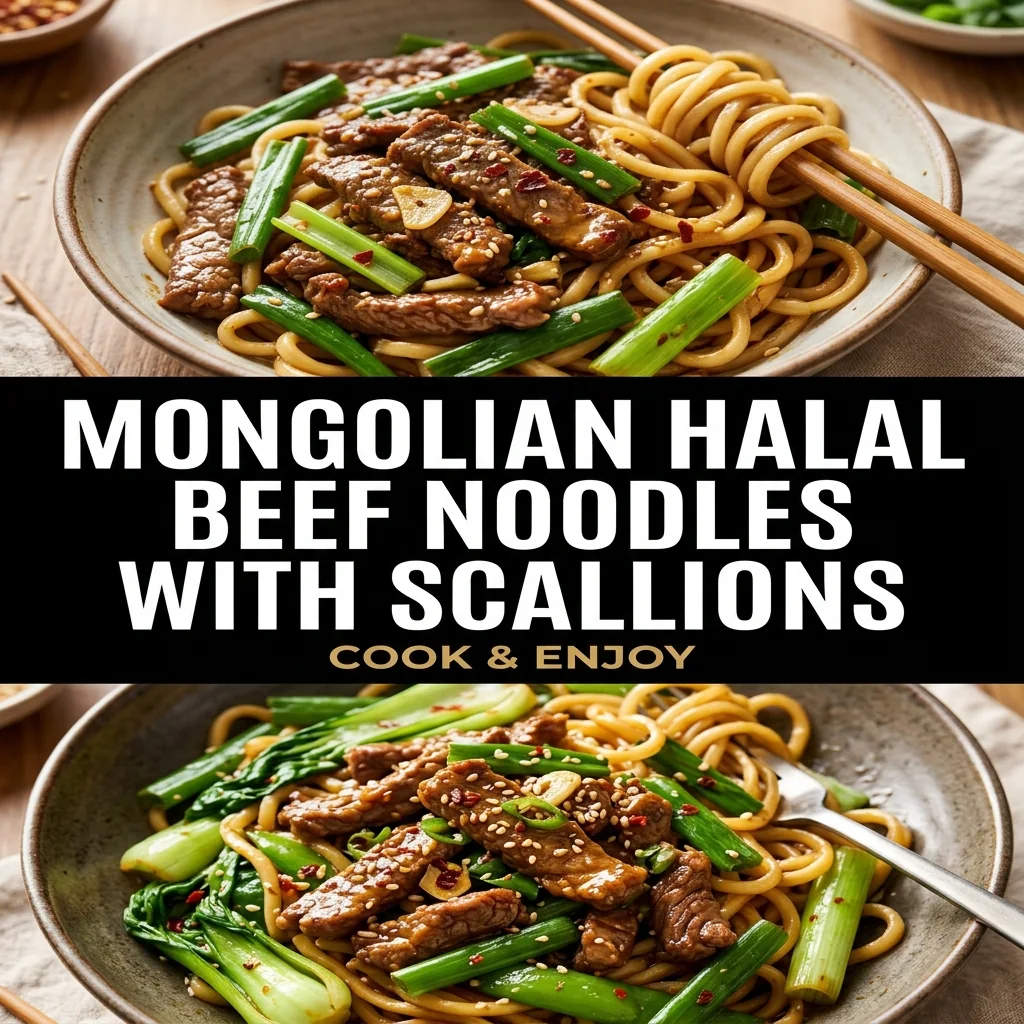
Mongolian beef noodles deliver an exhilarating balance of savory depth, caramelized sweetness, and intense aromatic heat. Thin ribbons of certified halal flank steak are marinated in a light cornstarch slurry—a traditional velveting technique that protects the meat's natural moisture while forming crunchy, caramelized edges in a blistering wok. Tossed with chewy, thick wheat noodles, the beef is enveloped in a glossy glaze made from low-sodium soy sauce, dark brown sugar, garlic, and fresh ginger. Generous quantities of fresh scallions are added in two phases, infusing the sauce with allium pungency while finishing the dish with a vibrant, crunchy bite. The result is a comforting, high-heat noodle stir-fry brimming with savory satisfaction.
Selecting and Velveting Halal Flank Steak
Flank steak is the quintessential cut for high-heat wok cooking due to its pronounced grain and robust beefy flavor. Slicing the steak thinly against the grain shortens the long muscle fibers, guaranteeing that every bite remains remarkably tender. Purchasing certified halal beef guarantees fresh, ethical sourcing. The velveting step, combining cornstarch with a splash of soy sauce, performs dual duties: it creates a physical barrier that prevents moisture loss during intense searing and yields the signature crisp, lacey exterior characteristic of authentic street-style stir-fries.
The Symphony of Garlic, Ginger, and Scallions
Aromatics form the beating heart of Mongolian-style stir-fries. Minced garlic and fresh ginger must be prepared fresh rather than using jarred pastes to prevent acrid bitterness under high heat. Dividing the scallions into two components is essential: the sturdy white and pale-green bulbs are stir-fried early alongside garlic and ginger to build an aromatic foundation within the cooking oil, while the tender dark-green tubes are tossed in during the final seconds of cooking to maintain a fresh, crisp texture and vibrant color.
Balancing the Glossy Stir-Fry Glaze
The sauce achieves its signature velvety cling through an exact ratio of dark brown sugar, low-sodium soy sauce, and cornstarch. Dark brown sugar introduces rich molasses undertones that caramelize upon contacting the smoking pan surface. Using halal-certified beef broth instead of plain water intensifies the savory meat baseline. When poured into the bubbling wok, the suspended cornstarch activates rapidly, transforming the thin liquid into a mahogany glaze that coats the thick wheat noodles without leaving a watery puddle in the serving dish.
Before you start
The secret to restaurant-style Mongolian beef noodles lies in two critical techniques: velveting the halal beef with cornstarch and achieving intense wok heat. Coating the meat in starch seals in moisture while creating delicate crisp edges when seared in smoking oil. Avoid crowding the wok; if your pan is smaller than 14 inches, sear the beef in two batches to ensure it crisps rapidly rather than steaming in pooled juices.
THE RECIPE
Mongolian Halal Beef Noodles with Scallions
4 servings · 25 minutes preparation · 15 minutes cooking · 20 minutes cooling, chilling or resting
Ingredients
Step-by-step instructions
- Place the thinly sliced halal flank steak in a medium bowl, sprinkle with 1.5 tablespoons cornstarch and 1 tablespoon soy sauce, toss until evenly coated, and rest at room temperature for 20 minutes to velvet.
- In a measuring jug, whisk together the remaining soy sauce, halal beef broth, dark brown sugar, halal hoisin sauce, toasted sesame oil, and remaining 0.5 tablespoon cornstarch until the sugar dissolves completely.
- Bring a 4-quart pot of water to a rolling boil over high heat, add the thick wheat noodles, and cook for 5 minutes until tender with a firm bite, then drain and rinse briefly under warm water.
- Heat 1.5 tablespoons neutral cooking oil in a 14-inch wok or heavy skillet over high heat until wisps of smoke appear.
- Spread the marinated beef slices in a single layer across the wok surface and sear undisturbed for 2 minutes to establish a crisp crust; flip and stir-fry for 2 minutes until just cooked through, then transfer to a clean plate.
- Add the remaining 1.5 tablespoons oil to the wok over medium-high heat, then add the minced garlic, grated ginger, red pepper flakes, and scallion whites, stir-frying for 45 seconds until fragrant.
- Pour the prepared sauce mixture into the wok and bring to a rapid boil for 2 minutes, stirring constantly until the sauce thickens into a glossy glaze.
- Return the seared beef along with the drained noodles and green scallion segments to the wok, tossing vigorously over high heat for 2 minutes until steaming and evenly glazed, then transfer to a platter, garnish with sesame seeds, and serve immediately. Verify the thickest meat portion reaches at least 145 F (63 C) before removing from the heat, then rest for at least 3 minutes before serving.
Kitchen notes
The secret to restaurant-style Mongolian beef noodles lies in two critical techniques: velveting the halal beef with cornstarch and achieving intense wok heat. Coating the meat in starch seals in moisture while creating delicate crisp edges when seared in smoking oil. Avoid crowding the wok; if your pan is smaller than 14 inches, sear the beef in two batches to ensure it crisps rapidly rather than steaming in pooled juices.
Storage & make-ahead
Cool leftovers rapidly and transfer them to an airtight glass container within 2 hours of cooking. Store in the refrigerator for up to 3 days. To reheat, warm a skillet with 1 teaspoon of neutral oil over medium-high heat, add the noodles, and toss with a splash of water or broth for 3 to 5 minutes until heated through to an internal temperature of 165°F (74°C). Avoid prolonged microwaving, which can make flank steak chewy.
An original recipe guide inspired by themes in our Pinterest research. Recipe has not been independently kitchen-tested. AI-generated image is illustrative; your finished dish may look different.
Frequently asked questions
Can I substitute other cuts of beef for flank steak?
Yes, halal sirloin, ribeye, or flat iron steak work exceptionally well in this stir-fry. Trim any excessive hard fat and slice the meat thinly against the grain. Sirloin will cook slightly faster than flank steak, so monitor the searing stage closely to avoid overcooking.
What type of noodles work best if wheat noodles are unavailable?
Fresh lo mein, udon, or thick ramen noodles provide an excellent chewy texture. In a pinch, dried linguine or fettuccine cooked one minute shy of al dente can serve as an effective substitute, absorbing the ginger-garlic soy glaze readily without becoming mushy.
How can I make this dish spicier?
To amplify the heat, increase the crushed red pepper flakes to 1 full teaspoon, or stir-fry two thinly sliced fresh red bird's eye chilies alongside the garlic and ginger aromatics. You can also finish the plated noodles with a drizzle of pure chili oil.


