WHY MAKE IT
A little comfort, a lot of flavor.
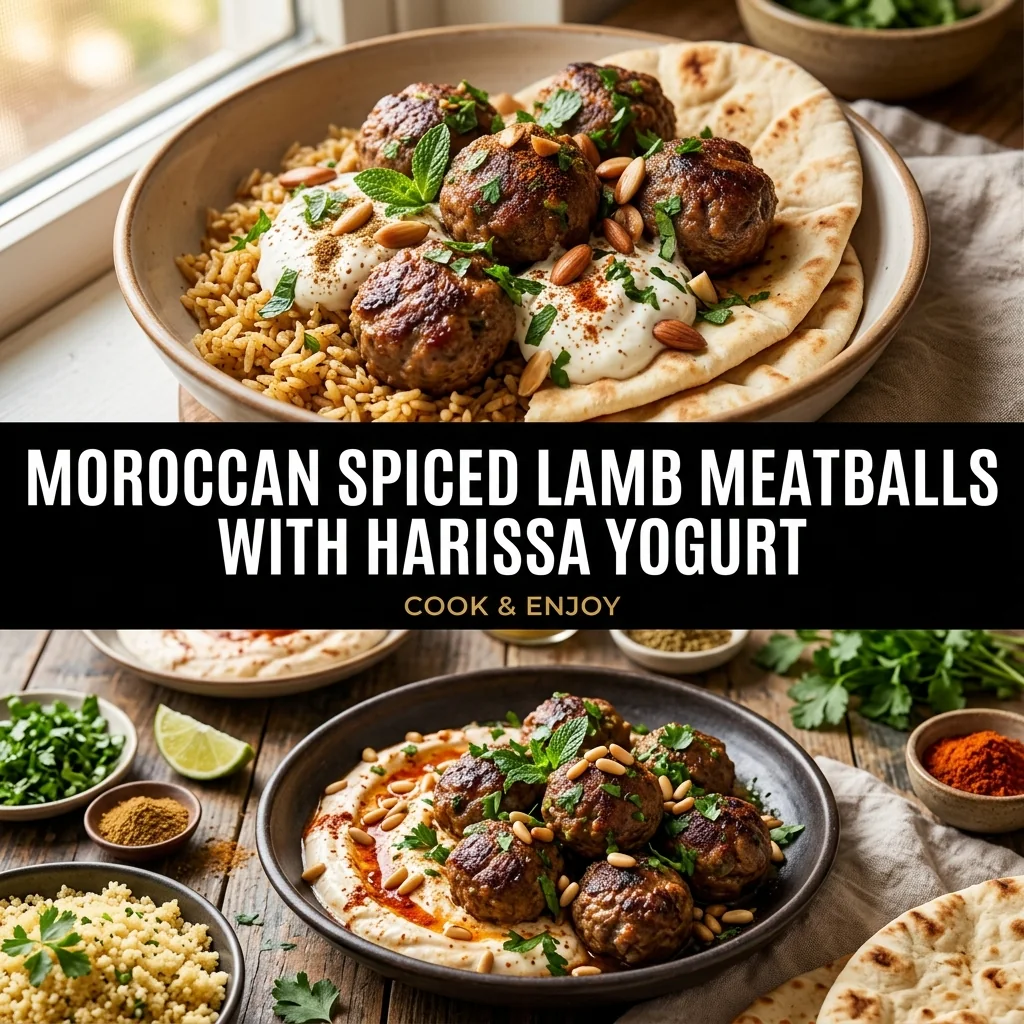
Rich, naturally sweet ground lamb provides the perfect canvas for warm North African spices. These Moroccan-style lamb meatballs blend earthy ground cumin, citrusy coriander, and a subtle whisper of cinnamon with pungent fresh garlic and fragrant herbs. When seared in a hot skillet, the exterior develops a savory, caramelized crust while the interior remains succulent and aromatic. Serving these piping hot meatballs over a base of chilled, thick Greek yogurt swirled with spicy red harissa delivers an appetizing temperature and flavor contrast. The cool, tangy cultured dairy cuts through the rich lamb fat, while the chili paste provides a lingering smoky warmth that complements the mint and parsley.
Balancing Fat Ratios and Aromatics
Ground lamb naturally contains more fat than beef or poultry, which is vital for keeping these meatballs tender during high-heat pan-frying. An eighty-twenty lean-to-fat ratio ensures that the meatballs brown quickly while retaining juiciness inside. Fresh herbs like parsley and mint are not mere garnishes; they are kneaded directly into the meat mixture to provide bright herbal notes that cut through the lamb's natural richness. Spices like cinnamon must be used judiciously, offering an earthy warmth that enhances rather than overwhelms the fragrant coriander and toasted cumin.
Technique for Pan-Searing Meatballs
To achieve a well-browned crust without overcooking the center, high surface heat and patient searing are required. Use a heavy cast-iron or stainless steel skillet that maintains steady heat when the chilled meatballs are added. Leave adequate breathing room between each meatball; overcrowding causes the pan temperature to drop sharply, making the meat release water and boil rather than sear. Let the meatballs sit undisturbed for the first three minutes to establish a caramelized base before turning them gently with tongs.
Creating the Harissa Yogurt Base
The bed of harissa-swirled yogurt serves as both an aesthetic centerpiece and an essential flavor counterpoint. Choose a dense, whole-milk Greek yogurt that has been strained of excess whey, ensuring it can support the weight of the warm meatballs without turning thin. Whisking the yogurt with fresh lemon juice enhances its natural acidity, which cleanses the palate after every rich bite of lamb. Swirling the red harissa gently through the yogurt rather than mixing it entirely creates distinct spoonfuls of spicy pepper heat and soothing creaminess.
Before you start
Avoid over-compacting the meatballs when shaping them. Rolling them lightly between your palms prevents them from turning dense or rubbery once cooked. Chilling the shaped meatballs in the refrigerator for 15 minutes before they hit the hot oil is crucial; it solidifies the fat, preventing them from falling apart or losing juices when seared. Always ensure the pan is sufficiently heated before adding the meatballs to build a crisp brown crust.
THE RECIPE
Moroccan Spiced Lamb Meatballs with Harissa Yogurt
4 servings · 20 minutes preparation · 15 minutes cooking · 15 minutes cooling, chilling or resting
Ingredients
Step-by-step instructions
- In a spacious mixing bowl, combine the halal ground lamb, plain breadcrumbs, beaten egg, minced garlic, chopped parsley, chopped mint, cumin, coriander, cinnamon, sea salt, and black pepper.
- Gently incorporate the mixture using clean hands or a wooden spoon until evenly combined, working the meat as little as possible to retain a light, tender crumb.
- Shape the meat into 16 evenly proportioned meatballs, each about 1.5 inches in diameter, arranging them on a parchment-lined tray.
- Refrigerate the formed meatballs for 15 minutes so the fat firms up, helping them hold their shape during frying.
- While the meatballs rest, whisk together the Greek yogurt, fresh lemon juice, and a pinch of salt in a shallow serving dish until smooth.
- Dollop the alcohol-free red harissa paste over the yogurt and use the back of a spoon to create an attractive marbled swirl across the surface; set aside.
- Heat the olive oil in a 12-inch heavy-bottomed skillet or cast-iron pan over medium-high heat until shimmering.
- Carefully add the meatballs to the pan, spacing them apart, and sear undisturbed for 3 to 4 minutes until a deep brown crust develops on the bottom.
- Turn the meatballs carefully and continue pan-frying for 7 to 8 minutes, rotating regularly, until all sides are nicely browned and the internal temperature reaches at least 160°F to 165°F (71°C to 74°C).
- Transfer the seared meatballs directly onto the prepared harissa yogurt platter, drizzle with pan juices, and serve immediately.
Kitchen notes
Avoid over-compacting the meatballs when shaping them. Rolling them lightly between your palms prevents them from turning dense or rubbery once cooked. Chilling the shaped meatballs in the refrigerator for 15 minutes before they hit the hot oil is crucial; it solidifies the fat, preventing them from falling apart or losing juices when seared. Always ensure the pan is sufficiently heated before adding the meatballs to build a crisp brown crust.
Storage & make-ahead
Store leftover meatballs and yogurt separately whenever possible. Place cooked meatballs in an airtight container in the refrigerator within 2 hours, keeping for up to 3 days. Reheat meatballs in a covered skillet over medium-low heat or in a 350°F (175°C) oven until an internal temperature of 165°F (74°C) is verified. Keep leftover yogurt chilled in a sealed jar for up to 3 days.
An original recipe guide inspired by themes in our Pinterest research. Recipe has not been independently kitchen-tested. AI-generated image is illustrative; your finished dish may look different.
Frequently asked questions
Can I bake these lamb meatballs instead of pan-searing them?
Yes, you can arrange the meatballs on a parchment-lined baking sheet and bake them in a preheated 400°F (204°C) oven for 12 to 15 minutes until browned and an instant-read thermometer registers at least 160°F to 165°F (71°C to 74°C).
Can I substitute ground beef for the ground lamb?
Yes, halal ground beef with an 80/20 ratio works well. Beef has a milder profile, so the spices and fresh herbs will taste slightly more pronounced, but the texture and cooking times remain identical.
What should I look for when purchasing harissa paste?
Select an alcohol-free, halal-certified harissa paste made with roasted red peppers, garlic, olive oil, and ground spices. Avoid varieties that include artificial additives, unverified vinegars, or excessive preservatives to ensure pure, roasted chili flavor.