WHY MAKE IT
A little comfort, a lot of flavor.
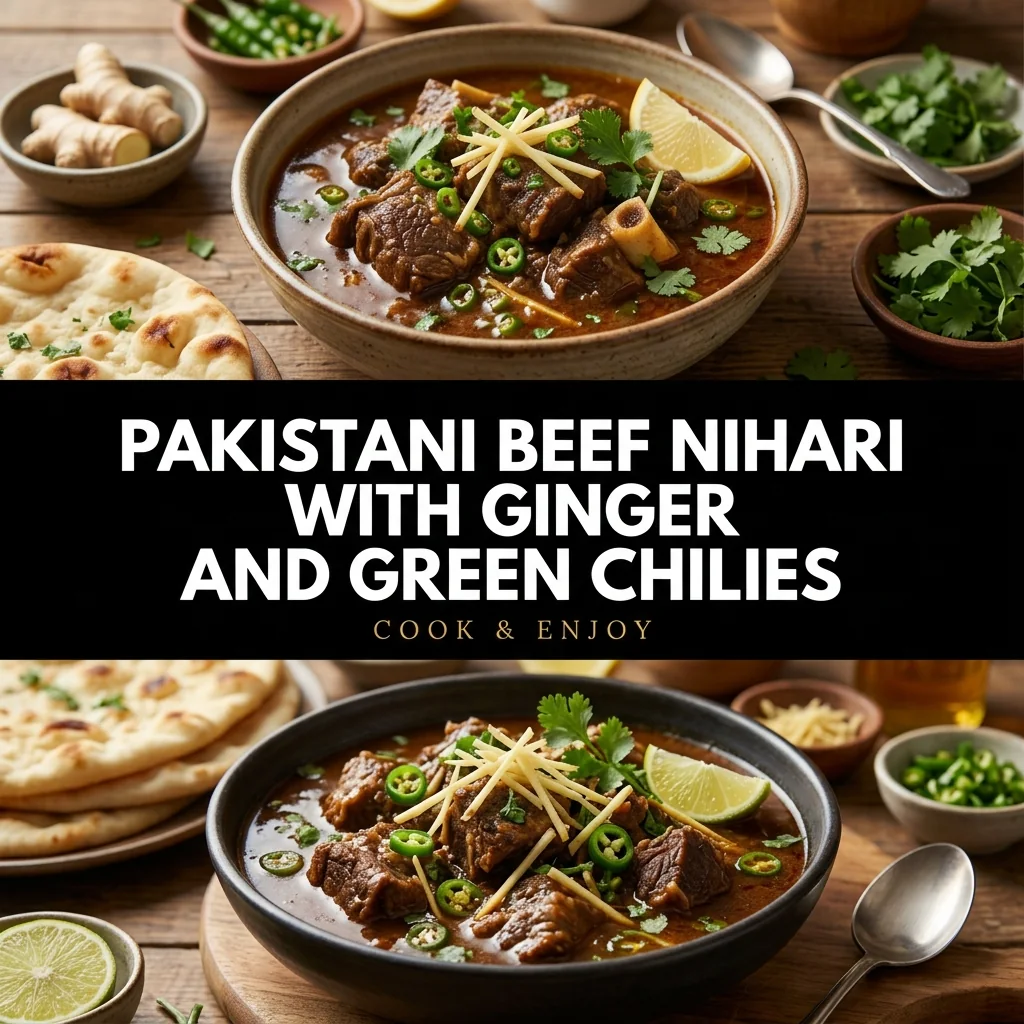
Pakistani beef nihari is a traditional, slow-simmered stew cherished for its rich depth, velvety texture, and warming spices. Prepared using halal bone-in beef shank, the dish relies on gentle braising to break down connective tissue into a luxurious, naturally body-rich broth. Ground spices such as fennel, cardamom, and mace lend a fragrant complexity that sets nihari apart from conventional beef curries. Thickened with a toasted wheat flour slurry, the sauce clings effortlessly to tender meat that yields at the touch of a fork. Served steaming hot with sharp garnishes of matchstick ginger, spicy green chilies, and fresh lemon wedges, nihari provides a balance of rich gravy and piquant brightness. It remains an enduring favorite for leisurely weekend mornings and celebratory family meals.
The Importance of Bone-In Shank
Selecting bone-in halal beef shank is central to achieving authentic nihari. Shank meat contains significant marrow and connective tissue, which melt over hours of low-heat braising. This transforms a basic cooking broth into a silky, cohesive gravy with unmatched body. Boneless cuts lack the structural collagen required to withstand a four-hour simmer without drying out. As the marrow renders directly into the cooking liquid, it enriches the fat profile, which carries the aromatic spices throughout the dish. The resulting meat becomes exceptionally tender, pulling apart cleanly under gentle pressure.
Mastering the Flour Slurry
The signature velvety consistency of nihari comes from whole wheat atta rather than cornstarch or roux. Toasting the flour prior to mixing eliminates raw grain notes and complements the earthy profile of fennel and mace. Whisking the flour thoroughly with cold water prevents starch granules from swelling prematurely, which would otherwise create unsightly lumps in the sauce. Introducing the slurry slowly while maintaining a gentle simmer ensures even dispersion. The final 15-minute simmer activates the starches, yielding a glossy finish that coats the spoon evenly without feeling heavy or pasty.
Balancing with Fresh Garnishes
A bowl of nihari is incomplete without its customary raw garnishes, which are served immediately before dining. Because the stew is deeply savory, spiced, and fatty, acidic and pungent elements provide critical contrast. Crisp matchsticks of fresh ginger cut through the richness of the rendered marrow and ghee. Thinly sliced green bird's eye chilies deliver an immediate, bright heat that contrasts with the warm, rounded burn of Kashmiri chili and ground mace. A squeeze of fresh lemon juice brightens the overall palate, lifting each spoonful and refreshing the tastebuds throughout the meal.
Before you start
For the best mouthfeel, toast the wheat flour lightly in a dry skillet before mixing it with cold water. This extra step removes any raw flour taste and imparts a gentle, nutty undertone to the stew. When whisking the slurry into the hot pot, pour in a very thin, steady stream while stirring vigorously. If the gravy thickens more than desired during the final simmer, loosen it gradually with a splash of warm halal beef broth.
THE RECIPE
Pakistani Beef Nihari with Ginger and Green Chilies
6 servings · 25 minutes preparation · 255 minutes cooking · 15 minutes cooling, chilling or resting
Ingredients
Step-by-step instructions
- Heat 1/3 cup ghee in an 8-quart heavy-bottomed Dutch oven over medium heat, add sliced onions, and fry for 10 to 12 minutes until deep golden brown.
- Stir in 2 tablespoons ginger-garlic paste and cook for 1 minute until fragrant, then add the 2.5 pounds halal bone-in beef shank pieces and sear for 6 to 8 minutes, turning once to lightly brown the exterior.
- Add Kashmiri red chili, ground coriander, turmeric, ground fennel, cardamom, mace, and salt; stir continuously for 2 minutes over medium-low heat to bloom the spices without scorching.
- Pour in 6 cups halal-certified beef broth, scrape up any browned fond from the bottom of the pot, and bring the liquid to a rolling boil over medium-high heat.
- Reduce heat to the lowest setting, cover tightly with a heavy lid, and simmer undisturbed for 3.5 to 4 hours until the beef shank is fork-tender and pulls away effortlessly from the bone.
- In a small skillet over medium heat, toast 1/4 cup whole wheat flour for 3 minutes until lightly browned and nutty, then transfer to a small bowl and whisk together with 1/2 cup cold water until completely smooth.
- Slowly drizzle the flour slurry into the simmering stew while stirring continuously to prevent clumping, then simmer uncovered over low heat for 15 minutes until the gravy thickens to a glossy consistency.
- Ladle the tender meat and rich gravy into wide serving bowls, then garnish each portion generously with julienned ginger and sliced green chilies.
Kitchen notes
For the best mouthfeel, toast the wheat flour lightly in a dry skillet before mixing it with cold water. This extra step removes any raw flour taste and imparts a gentle, nutty undertone to the stew. When whisking the slurry into the hot pot, pour in a very thin, steady stream while stirring vigorously. If the gravy thickens more than desired during the final simmer, loosen it gradually with a splash of warm halal beef broth.
Storage & make-ahead
Cool the stew to room temperature and refrigerate promptly within 2 hours in a tightly covered, airtight container for up to 3 days. When reheating, bring the stew to a full rolling boil on the stovetop until the internal temperature reaches at least 165 F (74 C), stirring gently to keep the thickened sauce smooth.
An original recipe guide inspired by themes in our Pinterest research. Recipe has not been independently kitchen-tested. AI-generated image is illustrative; your finished dish may look different.
Frequently asked questions
Can I use standard all-purpose flour instead of wheat atta?
Yes, unbleached all-purpose flour works as an alternative. Toast it gently in a dry pan until lightly golden before whisking with cold water. Atta remains traditional because its fine bran content provides an authentic nutty aroma, but all-purpose flour thickens the sauce cleanly without altering the final texture.
How do I skim and preserve the red oil on top?
Before stirring in the flour slurry, spoon off the vibrant red surface oil into a clean dish. Set it aside in a warm spot, then drizzle it back over individual portions right after plating. This keeps the colorful presentation intact without dulling the appearance after thickening.
Can nihari be prepared ahead of time?
Nihari tastes even better the next day because the spices continue to penetrate the tender meat overnight. Chill promptly within 2 hours in an airtight container, and reheat gently over medium-low heat until the stew reaches 165 F (74 C), adding water if the gravy thickened excessively.