WHY MAKE IT
A little comfort, a lot of flavor.
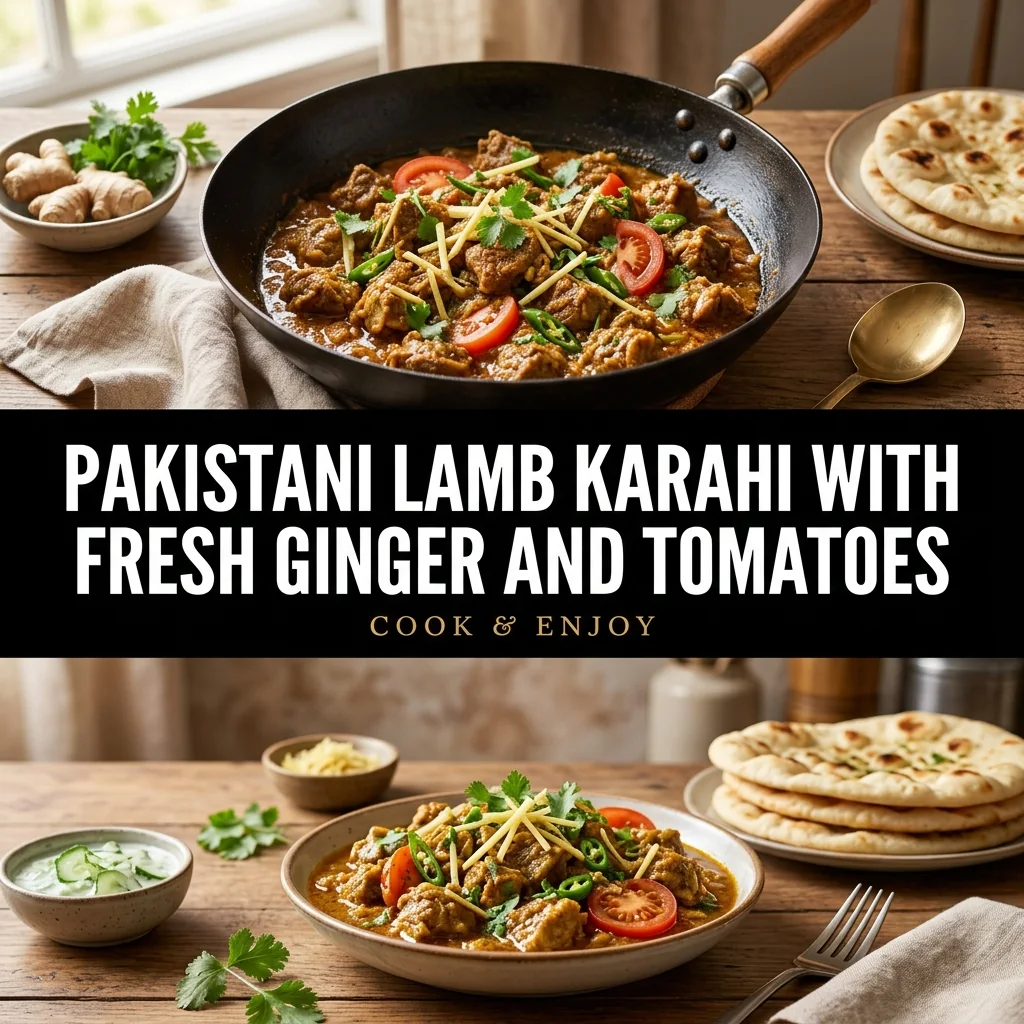
Lamb Karahi is a hallmark of northern Pakistani cuisine, named after the heavy, rounded wok-like vessel in which it is rapidly cooked and served. Unlike typical curries that rely on deeply browned onions and heavy sauces, a traditional karahi highlights the natural tang of fresh ripe tomatoes, sharp ginger, and the sharp bite of coarsely cracked black pepper. Halal bone-in lamb shoulder provides both richness and depth, as the marrow renders into the sauce during high-heat stir-frying. Completed with an abundance of fresh green chiles and slivered raw ginger, this dish delivers an intensely savory, fragrant sauce clinging tightly to tender lamb morsels.
Bone-In Meat Selection
Using bone-in lamb shoulder is fundamental for a balanced karahi. The connective tissue and bone marrow infuse the minimal sauce with natural gelatin and savory depth as the meat fries under high heat. Cut the lamb into small, uniform pieces of approximately 1.5 inches. Smaller cuts allow the heat to penetrate rapidly, ensuring the meat becomes tender within the relatively short cooking window without requiring hours of slow braising. Ensure the butcher trims excess outer fat pads to keep the finished reduction from feeling overly greasy.
The Tomato Steaming Technique
Halving the tomatoes and placing them skin-side up over the cooking lamb creates a self-basting environment under the lid. As the tomatoes heat, their juices steam the meat, while the skins loosen completely. Peeling off the skins by hand results in a silken, glossy masala without fibrous residue. Once uncovered, vigorous mashing integrates the pulp directly into the rendered ghee and aromatics. Cooking down this tomato pulp until the emulsion breaks and the fat surfaces is crucial for eliminating any sour, raw tomato undertones.
Aromatic Finishes
Karahi is distinctive for its lack of complex whole garam masala, letting coarse black pepper, fresh ginger, and green chilies command the profile. Crushing whole peppercorns in a mortar just before cooking delivers bright floral heat rather than stale bitterness. Adding thin batons of fresh ginger toward the end of cooking preserves their sharp, spicy crunch, providing textural contrast against the tender lamb. Slit green chiles impart their fragrant capsaicin oils into the simmering fat without breaking down completely into the sauce.
Before you start
Do not rush the tomato reduction stage known as bhunai. Authentic karahi flavor requires cooking off the moisture from the fresh tomatoes until the oil or ghee separates cleanly at the pan margins. Freshly crushed whole black peppercorns are non-negotiable; pre-ground fine pepper will turn the sauce murky and lack the punchy aromatics characteristic of roadside Pakistani street-style preparation. Keep the flame robust during the final stir-fry to glaze the meat properly.
THE RECIPE
Pakistani Lamb Karahi with Fresh Ginger and Tomatoes
4 servings · 20 minutes preparation · 110 minutes cooking · 5 minutes cooling, chilling or resting
Ingredients
Step-by-step instructions
- Heat 0.33 cup of ghee in a heavy wok, karahi, or wide deep skillet over high heat until shimmering.
- Add the 1.5 pounds of lamb pieces and 1 teaspoon of coarse sea salt, searing vigorously for 6 to 8 minutes while stirring constantly until the exterior is browned.
- Add the 2 tablespoons of garlic paste and 2 tablespoons of ginger paste to the wok, stir-frying for 2 minutes until aromatic and raw sharpness dissipates.
- Arrange the tomato halves over the lamb, add 1/2 cup water, cover, and simmer over low heat for 60 to 90 minutes, stirring occasionally and adding a little hot water if the pan dries, until the lamb shoulder is fork-tender.
- Remove the lid and use kitchen tongs to easily peel off and discard the loosened tomato skins.
- Increase heat back to medium-high and use a flat wooden spatula to crush and mash the tomato pulp into the meat and pan juices.
- Add the 1 teaspoon ground cumin, 1 teaspoon ground coriander, and 0.5 teaspoon Kashmiri red chili powder, stirring vigorously for 8 to 10 minutes until the excess water evaporates and the ghee visibly separates from the thick tomato masala (bhunai stage).
- Stir in the 1 tablespoon of coarsely crushed black peppercorns, most of the julienned ginger, and the 4 slit green chilies, tossing rapidly for 2 minutes to meld flavors.
- Remove from heat, allow to rest for 5 minutes, garnish with the remaining julienned ginger and 0.25 cup of fresh cilantro, and serve hot.
Kitchen notes
Do not rush the tomato reduction stage known as bhunai. Authentic karahi flavor requires cooking off the moisture from the fresh tomatoes until the oil or ghee separates cleanly at the pan margins. Freshly crushed whole black peppercorns are non-negotiable; pre-ground fine pepper will turn the sauce murky and lack the punchy aromatics characteristic of roadside Pakistani street-style preparation. Keep the flame robust during the final stir-fry to glaze the meat properly.
Storage & make-ahead
Transfer cooled leftovers to an airtight glass container within 2 hours of cooking. Keep refrigerated for up to 3 days. Reheat gently in a covered skillet over medium heat, stirring occasionally, until the meat is thoroughly heated to an internal temperature of 165 F / 74 C.
An original recipe guide inspired by themes in our Pinterest research. Recipe has not been independently kitchen-tested. AI-generated image is illustrative; your finished dish may look different.
Frequently asked questions
Can I use boneless lamb instead of bone-in?
Yes, boneless lamb leg or shoulder can be substituted, but bone-in pieces yield significantly richer pan juices due to the marrow rendering during the reduction phase. If using boneless, reduce searing time slightly to prevent toughness.
Why are no onions used in this recipe?
Traditional Shinwari and Lahori street-style karahis omit onions entirely. The sauce relies exclusively on reduced ripe tomatoes, garlic, and ginger, resulting in a cleaner, more vibrant acidity that complements rich lamb.
How spicy is this dish?
The primary heat comes from fresh green chilies and cracked black pepper rather than chili powder. You can adjust the heat level easily by using milder chilies or removing their inner seeds before adding them to the wok.