WHY MAKE IT
A little comfort, a lot of flavor.
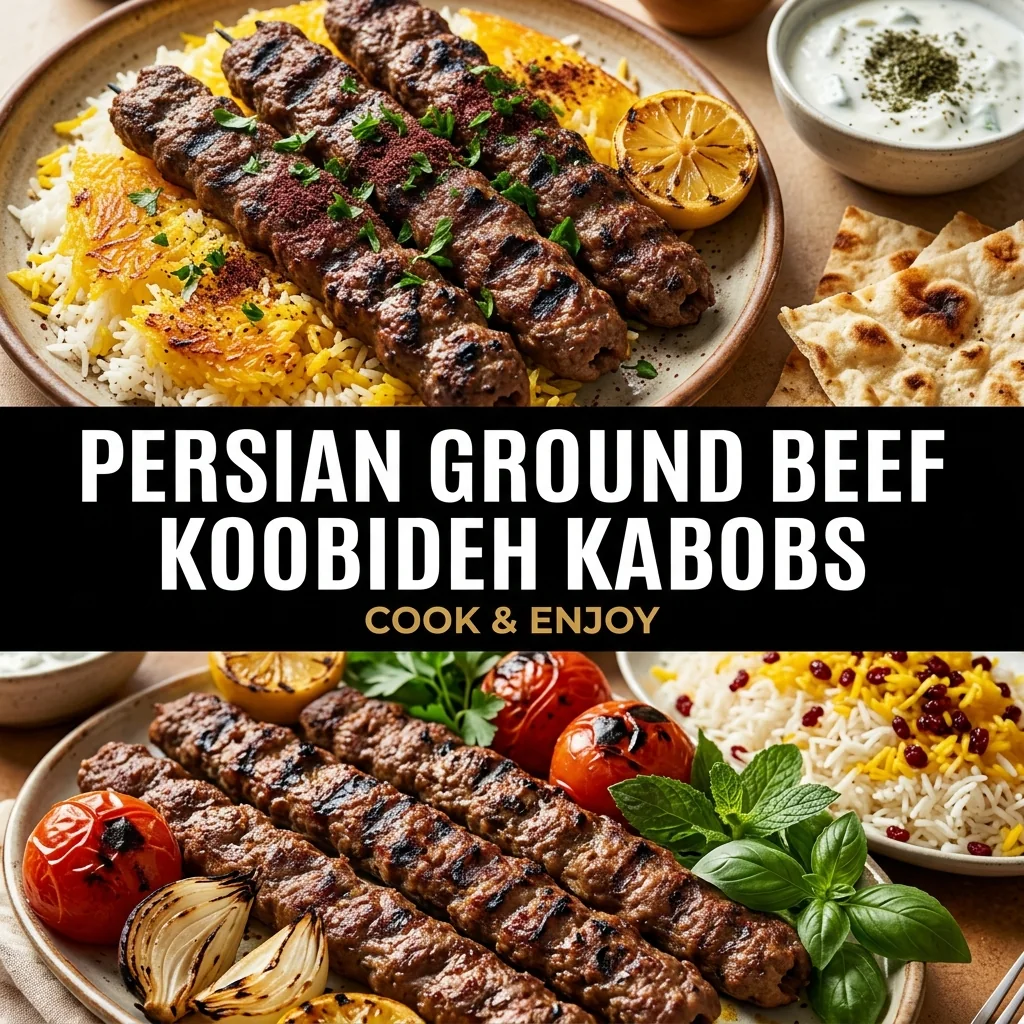
Persian Ground Beef Koobideh Kabobs represent one of the most celebrated culinary traditions of Iranian cookery, famous for their tender, melt-in-the-mouth texture and savory saffron aroma. Achieving the signature texture relies on balancing high-quality halal ground beef containing twenty percent fat with thoroughly drained grated onion pulp, avoiding heavy fillers or breadcrumbs. The mixture is kneaded until a sticky protein emulsion forms, allowing the meat to cling firmly to wide, sword-style skewers without tearing or separating over intense direct heat. Basted lightly with aromatic saffron-infused butter and accompanied by charred summer tomatoes and flatbread, these kabobs deliver genuine hearthside flavor.
Meat Selection and Emulsion
The foundation of successful koobideh is halal ground beef with roughly twenty percent fat. Leaner grinds dry out quickly and drop from the skewer during cooking. If possible, ask your halal butcher to grind the beef twice through a fine die. Kneading the cold meat with salt and spices for at least ten minutes mechanically breaks down muscle fibers, forming myosin threads that bind the mixture. The resulting sticky paste holds together over high heat without requiring eggs, flour, or commercial binding agents.
Managing Moisture and Skewering
Excess water is the primary cause of kabobs falling into the grill fire. Grated yellow onions release substantial water that must be wrung out completely before incorporating into the meat. When ready to skewer, chill the mixture thoroughly and use dedicated flat, stainless-steel skewers roughly one inch wide. Wet your hands lightly with cool water to prevent sticking, press the meat evenly along the blade, and use your fingers to create rhythmic ridges that ensure even charring and heat transfer.
Grill Management and Serving
A very hot grill is crucial during the initial minute of cooking to sear the exterior and lock the meat onto the metal. Turn the skewers frequently during the first two to three minutes so the heat cooks both sides evenly before gravity pulls the meat downward. Basting with saffron water mixed with halal-certified melted butter adds sheen and deep floral notes. Pull the kabobs off using warm flatbread to catch all natural juices, and serve with steamed basmati rice.
Before you start
Extracting moisture from the grated onion is essential to prevent koobideh from detaching from the skewers over the heat. Squeeze the pulp in cheesecloth or a fine-mesh sieve until almost dry. Keeping the meat cold before molding stabilizes the animal fat, allowing the protein paste to form an emulsion that adheres smoothly to flat metal skewers. Never use round bamboo skewers, as the minced meat will easily slide off into the coals during the initial turn.
THE RECIPE
Persian Ground Beef Koobideh Kabobs
4 servings · 35 minutes preparation · 12 minutes cooking · 125 minutes cooling, chilling or resting
Ingredients
Step-by-step instructions
- Place the grated yellow onions in a fine-mesh strainer set over a bowl, press firmly with a silicone spatula to squeeze out as much moisture as possible, and discard the extracted liquid entirely.
- In a large chilled mixing bowl, combine the thoroughly drained onion pulp with 1.5 pounds finely minced halal ground beef, 1 tablespoon of the prepared saffron water, 1.5 teaspoons fine sea salt, 1 teaspoon black pepper, 0.5 teaspoon ground sumac, and 0.25 teaspoon ground turmeric.
- Knead the mixture by hand vigorously for 10 to 12 minutes until the meat paste turns pale, sticky, and holds together smoothly without falling apart.
- Cover the mixing bowl securely with food wrap and chill in the refrigerator for at least 2 hours (120 minutes) to firm up the fat and proteins.
- Divide the chilled meat paste into 4 equal portions of roughly 6 ounces each; moisten hands lightly with cold water and mold each portion securely around a 1-inch-wide flat metal skewer, pinching the meat evenly along the skewer and pressing rhythmic indentations with your thumb and forefinger.
- Thread the 4 halved Roma tomatoes onto separate thin skewers for even grilling alongside the meat.
- Preheat an outdoor charcoal or gas grill to high direct heat (roughly 450°F to 500°F / 232°C to 260°C) and clean the grates thoroughly.
- Place the skewers across the hot grill grates, turning them every 45 to 60 seconds during the first 3 minutes to set the meat without dropping, then grill for an additional 6 to 8 minutes until cooked through and lightly charred, basting with the melted halal-certified butter combined with the remaining 1 tablespoon saffron water.
- Slide the cooked kabobs off the skewers directly onto warm flatbread using a piece of bread as a mitt, let rest for 5 minutes, dust with the remaining 1 teaspoon sumac, and serve hot alongside the blistered grilled tomatoes. Before serving, verify the center of the ground-meat filling or meatballs reaches at least 160 F (71 C) on a food thermometer; extend cooking as needed.
Kitchen notes
Extracting moisture from the grated onion is essential to prevent koobideh from detaching from the skewers over the heat. Squeeze the pulp in cheesecloth or a fine-mesh sieve until almost dry. Keeping the meat cold before molding stabilizes the animal fat, allowing the protein paste to form an emulsion that adheres smoothly to flat metal skewers. Never use round bamboo skewers, as the minced meat will easily slide off into the coals during the initial turn.
Storage & make-ahead
Store leftover grilled kabobs in an airtight container in the refrigerator within 2 hours of cooking. Refrigerate for up to 3 days. Reheat gently in a covered skillet over medium-low heat with a splash of water, or in a 350°F (177°C) oven covered with foil, until an internal temperature of 165°F (74°C) is reached throughout.
An original recipe guide inspired by themes in our Pinterest research. Recipe has not been independently kitchen-tested. AI-generated image is illustrative; your finished dish may look different.
Frequently asked questions
Can I make koobideh using a standard ridged grill pan indoors?
Yes. If flat skewers do not fit your indoor cast-iron grill pan, form the meat into long, flattened oval patties. Cook them over medium-high heat for about 4 to 5 minutes per side until nicely browned and cooked through.
Why did my koobideh break apart on the grill?
The meat mixture was likely too wet from retained onion juice, insufficiently kneaded, or too warm when skewered. Always knead until very sticky, squeeze onions dry, and chill the mixture for at least 2 hours before grilling.
What is the best way to extract juice from grated onions?
Place the grated onions in a clean kitchen towel or triple-layered cheesecloth, twist the top tightly, and squeeze firmly over the sink until no additional liquid drips out.