WHY MAKE IT
A little comfort, a lot of flavor.
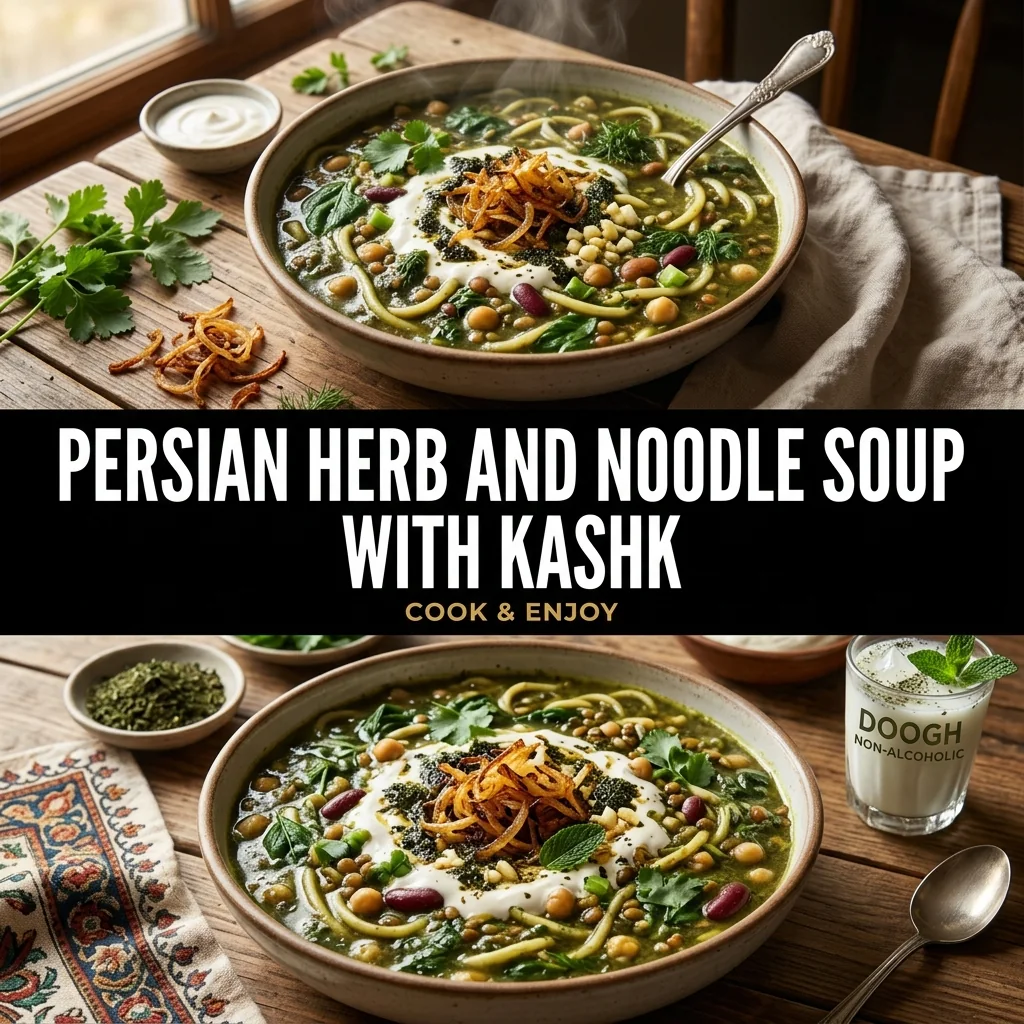
Ash Reshteh is one of the most beloved culinary treasures of Persian cuisine, a thick and restorative herb soup traditionally shared during gatherings and milestones. Packed with an astonishing volume of fresh parsley, cilantro, dill, and spinach, the soup takes on an emerald hue and an earthy, garden-fresh profile. Simmered alongside tender lentils, chickpeas, and kidney beans, it becomes exceptionally hearty, while flat reshteh noodles release starch that creates a velvety, stew-like body. The defining magic happens at the very end: swirls of tangy kashk (fermented whey), sweet caramelized onions (piyaz dagh), and aromatic fried dried mint (nana dagh) turn every bowl into a masterpiece of savory, sour, and herbaceous notes.
Understanding Kashk and Halal Substitutes
Kashk is a traditional fermented dairy product made from drained yogurt or whey, delivering a salty, pronounced sourness that defines classic Ash Reshteh. When sourcing kashk, verify that commercial liquid brands carry halal certification with no unverified animal rennet or additives. If authentic kashk is unavailable at your local Middle Eastern grocer, an excellent halal-friendly substitute is easily made by whisking whole-milk plain Greek yogurt with a tablespoon of fresh lemon juice and a pinch of salt. This provides that signature creamy tartness that balances the earthy herbs and legumes.
The Essential Herb Foundation
Unlike Western soups where herbs serve primarily as subtle accents, Ash Reshteh treats fresh herbs as foundational vegetables. Several cups of finely chopped fresh parsley, cilantro, dill, and spinach are folded into the pot, cooking down into a luscious green matrix. It is essential to wash and dry the herbs thoroughly before chopping to avoid bruising the delicate leaves. Incorporating the herbs during the final twenty minutes of cooking preserves their vibrant color, fresh aroma, and lively herbal flavor without allowing them to turn dull or overcooked.
Reshteh Noodles and Salinity
Reshteh are traditional Persian wheat noodles that look similar to flat linguine but are specially salted during production. Because commercial reshteh noodles carry substantial salt within their dough, it is critical to under-salt the soup base initially. As the noodles simmer directly in the pot, they release both starch and sodium into the broth. Taste the soup only after the noodles have fully cooked and softened before adding any additional salt, keeping in mind that kashk garnishes will also introduce pleasant salinity.
Before you start
Dried mint burns within seconds when exposed to hot oil, turning bitter and acrid. Heat the oil over gentle medium-low heat, add the dried mint, swirl the skillet off the heat immediately after 20 to 30 seconds, and pour it into a heatproof dish. The residual warmth blooms the herbal aroma into a vibrant, dark green oil without scorching the delicate leaves.
THE RECIPE
Persian Herb and Noodle Soup with Kashk
6 servings · 25 minutes preparation · 45 minutes cooking · 10 minutes cooling, chilling or resting
Ingredients
Step-by-step instructions
- Heat 3 tablespoons olive oil in a large 6-quart soup pot over medium heat, add the thinly sliced onions, and fry for 12 to 15 minutes until deeply caramelized and golden brown.
- Scoop out half of the caramelized onions into a small dish and set aside for final garnishing.
- Add the minced garlic and 1 teaspoon turmeric to the remaining onions in the pot, sauteing for 1 minute until fragrant.
- Pour 7 cups of halal broth into the pot, add 1/2 cup rinsed lentils and 1 teaspoon kosher salt, bring to a boil, then cover and simmer over medium-low heat for 15 minutes until lentils are just tender.
- Stir in the drained chickpeas, drained kidney beans, chopped parsley, cilantro, dill, and spinach, bringing the pot back to a gentle simmer for 10 minutes until the herbs wilt into a rich dark green broth.
- Add the broken reshteh noodles, stirring gently to submerge them, and simmer uncovered for 8 to 10 minutes until the noodles are tender and their starches have thickened the broth.
- In a small skillet, heat 2 tablespoons olive oil over medium-low heat, stir in 2 tablespoons dried mint for 30 seconds until aromatic, and immediately remove from heat to prevent burning.
- Remove the soup from heat and let it rest undisturbed for 10 minutes to allow the flavors to harmonize and the broth to settle into a velvety consistency.
- Ladle the hearty soup into wide bowls, swirl 1 to 2 tablespoons of kashk over each portion, and top with the reserved caramelized onions and sizzling mint oil.
Kitchen notes
Dried mint burns within seconds when exposed to hot oil, turning bitter and acrid. Heat the oil over gentle medium-low heat, add the dried mint, swirl the skillet off the heat immediately after 20 to 30 seconds, and pour it into a heatproof dish. The residual warmth blooms the herbal aroma into a vibrant, dark green oil without scorching the delicate leaves.
Storage & make-ahead
Cool the soup and refrigerate within 2 hours in an airtight container for up to 4 days. As it rests, reshteh noodles absorb liquid, causing the soup to thicken considerably. When reheating, place in a saucepan over medium heat, add 1/2 to 1 cup of water or halal broth, and bring to a simmer until reaching 165°F (74°C). Store kashk and fried mint separately.
An original recipe guide inspired by themes in our Pinterest research. Recipe has not been independently kitchen-tested. AI-generated image is illustrative; your finished dish may look different.
Frequently asked questions
What can I substitute if I cannot find Persian reshteh noodles?
You can substitute flat Italian linguine or thick fettuccine broken into halves. If using standard pasta, you may need to add an extra 1/2 teaspoon of salt to the broth, as authentic reshteh noodles are pre-salted.
Can I use dried herbs instead of fresh?
Fresh herbs are strongly recommended for the authentic flavor and body of Ash Reshteh. In an emergency, use frozen chopped herbs. Avoid using dried parsley or cilantro, as they lack the vibrant chlorophyll and tender leaf structure.
Can I freeze Ash Reshteh?
Freezing is not recommended once the noodles and kashk are added, as noodles turn mushy and dairy separates upon thawing. You can, however, freeze the herb and bean base, adding fresh noodles and garnishes when reheating.