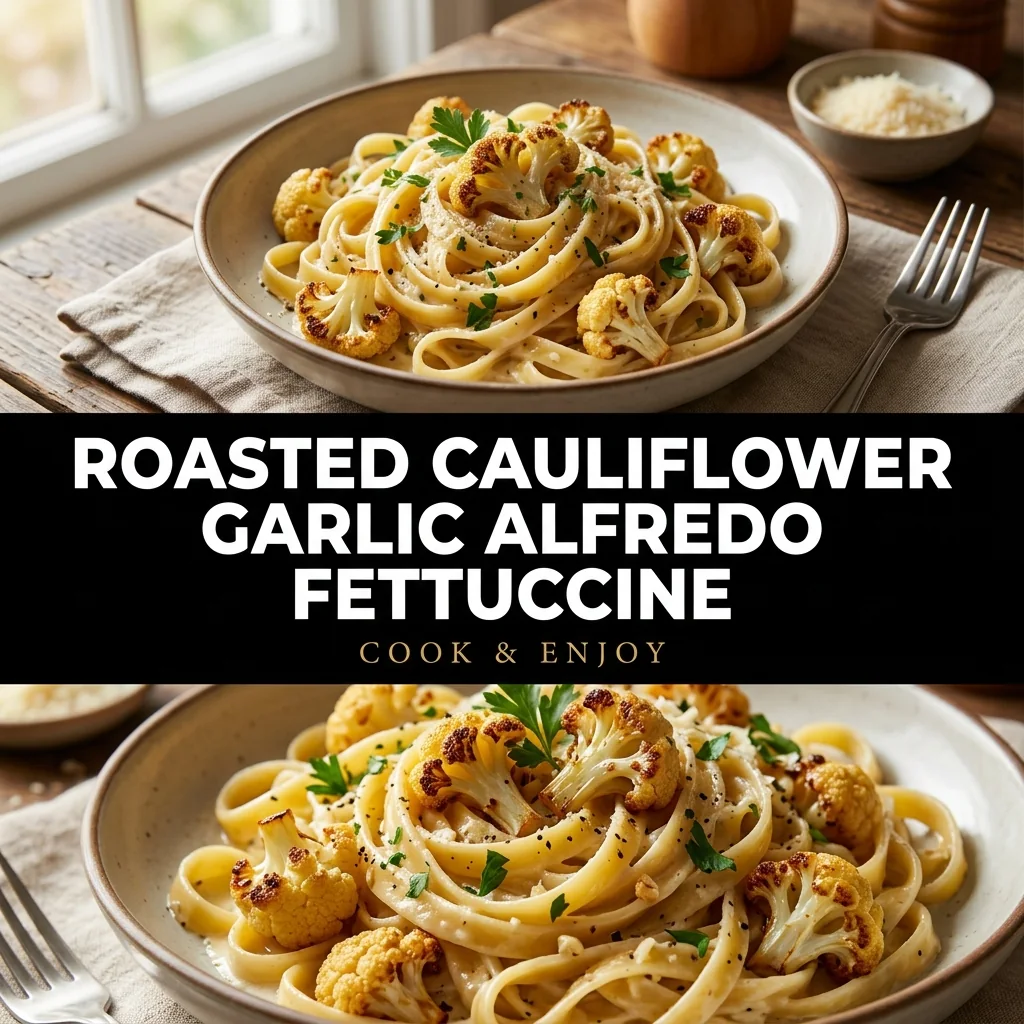
WHY MAKE IT
A little comfort, a lot of flavor.
Classic Alfredo sauce relies heavily on butter and heavy dairy cream, which yields tremendous richness but can leave the palate feeling weighed down. This roasted cauliflower Alfredo offers an ingenious culinary alternative that retains all the luxurious velvet of the original while highlighting deep, savory caramelized aromatics. By oven-roasting cauliflower and whole garlic cloves until deeply golden, their natural sugars concentrate and their sulfurous edge transforms into nutty sweetness. When pureed with warm halal broth and aged cheese made with microbial rennet, the vegetable fibers hydrate into a remarkably glossy sauce that clings neatly to every strand of fettuccine. It delivers complete dining comfort with a vibrant vegetable-forward foundation.
The Science of Roasting Vegetables for Sauce
Roasting the cauliflower florets at 400°F (200°C) rather than steaming or boiling them is fundamental to this recipe's flavor profile. Steaming introduces excess moisture that dilutes flavor and yields a bland, watery sauce. High-heat roasting dehydrates the surface tissue slightly, initiating the Maillard reaction. This caramelization develops savory amino-acid compounds that replicate the hearty foundation traditionally supplied by heavy dairy fats. Whole peeled garlic cloves roasted alongside soften into sweet, spreadable nuggets that lose their acrid bite, providing a mellow allium base that integrates effortlessly into the puree.
Selecting Halal-Compliant Hard Cheeses
Authentic Italian Parmigiano-Reggiano is historically produced using animal rennet derived from non-halal calf slaughter, making verified halal substitutions necessary for compliant kitchens. Look explicitly for domestic or European aged hard cheeses labeled with halal certification or clearly designated as made with microbial, plant-based, or vegetarian enzymes. These cheeses undergo traditional lactic fermentation and aging processes, developing the requisite crystalline tyrosine crunch and umami complexity without compromising halal standards. Finely grate the cheese immediately before blending so it melts evenly into the warm puree without clumping.
Achieving Ideal Pasta Emulsification
Starch-rich pasta cooking water serves as the vital bridge between the vegetable puree and the dried fettuccine strands. When fettuccine boils, surface amylose starches shed into the liquid. Scooping out a small vessel of this hot, cloudy water before draining provides a ready-made binding agent. Tossing the warm noodles and sauce over low heat allows the starches to marry the fat from the olive oil and melted cheese with the cauliflower solids, producing a sleek emulsion that grips the pasta rather than pooling loosely at the plate base.
Before you start
For the silkiest possible consistency, avoid rushing the blending step. A high-speed blender breaks down cauliflower cell walls far better than a standard food processor. If your sauce appears slightly thick once tossed with the fettuccine, stream in reserved hot pasta water one tablespoon at a time. The naturally suspended starches from the boiling liquid emulsify seamlessly with the vegetable puree and cheese, creating a glossy restaurant-style coating without requiring heavy cream.
THE RECIPE
Roasted Cauliflower Garlic Alfredo Fettuccine
4 servings · 20 minutes preparation · 35 minutes cooking · 5 minutes cooling, chilling or resting
Ingredients
Step-by-step instructions
- Preheat the oven to 400°F (200°C) and line a large rimmed baking sheet with unbleached parchment paper.
- Toss the cauliflower florets and whole peeled garlic cloves with 2 tablespoons of extra virgin olive oil, 1/2 teaspoon kosher salt, and 1/4 teaspoon black pepper directly on the sheet pan, spreading them into a single, uncrowded layer.
- Roast in the oven for 25 to 30 minutes, turning once halfway through, until the cauliflower florets display deep caramelized edges and the garlic cloves are golden brown and soft when pressed.
- Transfer the roasted cauliflower and garlic to a high-speed blender, reserving 1/2 cup of small roasted florets for final plating; add the warm halal-certified vegetable broth, whole milk, grated halal parmesan cheese, and freshly grated nutmeg.
- Secure the blender lid tightly and puree on high speed for 90 to 120 seconds until the sauce turns entirely smooth, silky, and uniform in texture, resting for 5 minutes in the blending jug.
- Bring a large 6-quart stockpot of salted water to a rolling boil over high heat, drop in the fettuccine, and cook for 10 to 11 minutes until al dente; reserve 1/2 cup of the starchy cooking water before draining thoroughly.
- Return the drained pasta to the warm stockpot over low heat, pour in the blended cauliflower sauce along with the remaining 1 tablespoon of olive oil, and toss continuously for 2 minutes to coat the noodles, thinning with reserved cooking water if desired, then fold in chopped parsley and reserved florets before serving hot.
Kitchen notes
For the silkiest possible consistency, avoid rushing the blending step. A high-speed blender breaks down cauliflower cell walls far better than a standard food processor. If your sauce appears slightly thick once tossed with the fettuccine, stream in reserved hot pasta water one tablespoon at a time. The naturally suspended starches from the boiling liquid emulsify seamlessly with the vegetable puree and cheese, creating a glossy restaurant-style coating without requiring heavy cream.
Storage & make-ahead
Cool leftovers promptly and refrigerate in an airtight glass container within 2 hours of preparation. Store safely in the refrigerator for up to 3 days. When reheating, transfer pasta to a skillet over medium-low heat, stir in a splash of warm water or halal broth to loosen the puree, and heat thoroughly until steaming hot and reaching an internal temperature of 165°F (74°C). Freezing is not recommended as vegetable purees separate upon thawing.
An original recipe guide inspired by themes in our Pinterest research. Recipe has not been independently kitchen-tested. AI-generated image is illustrative; your finished dish may look different.
Frequently asked questions
Can I use frozen cauliflower instead of fresh florets?
Yes, though you must thaw the frozen cauliflower completely and pat it thoroughly dry with clean towels before roasting. Excess surface moisture causes frozen florets to steam rather than caramelize, which limits browning. Increase the roasting time by 5 to 8 minutes to achieve deep golden edges.
Why did my sauce turn out slightly grainy?
Graininess occurs if the roasted cauliflower was undercooked before blending or if the blender motor lacked sufficient speed. Ensure florets are completely fork-tender throughout prior to pureeing, and blend continuously on the highest setting for at least 90 seconds until the mixture transforms into a uniform sheen.
Can I substitute another pasta shape for the fettuccine?
Broad, flat ribbon noodles such as tagliatelle or pappardelle work exceptionally well. If you prefer short shapes, choose ridged options like rigatoni, penne rigate, or cavatappi, as their grooves and interior hollows trap the thick, creamy cauliflower garlic sauce efficiently for balanced, flavorful bites.


