WHY MAKE IT
A little comfort, a lot of flavor.
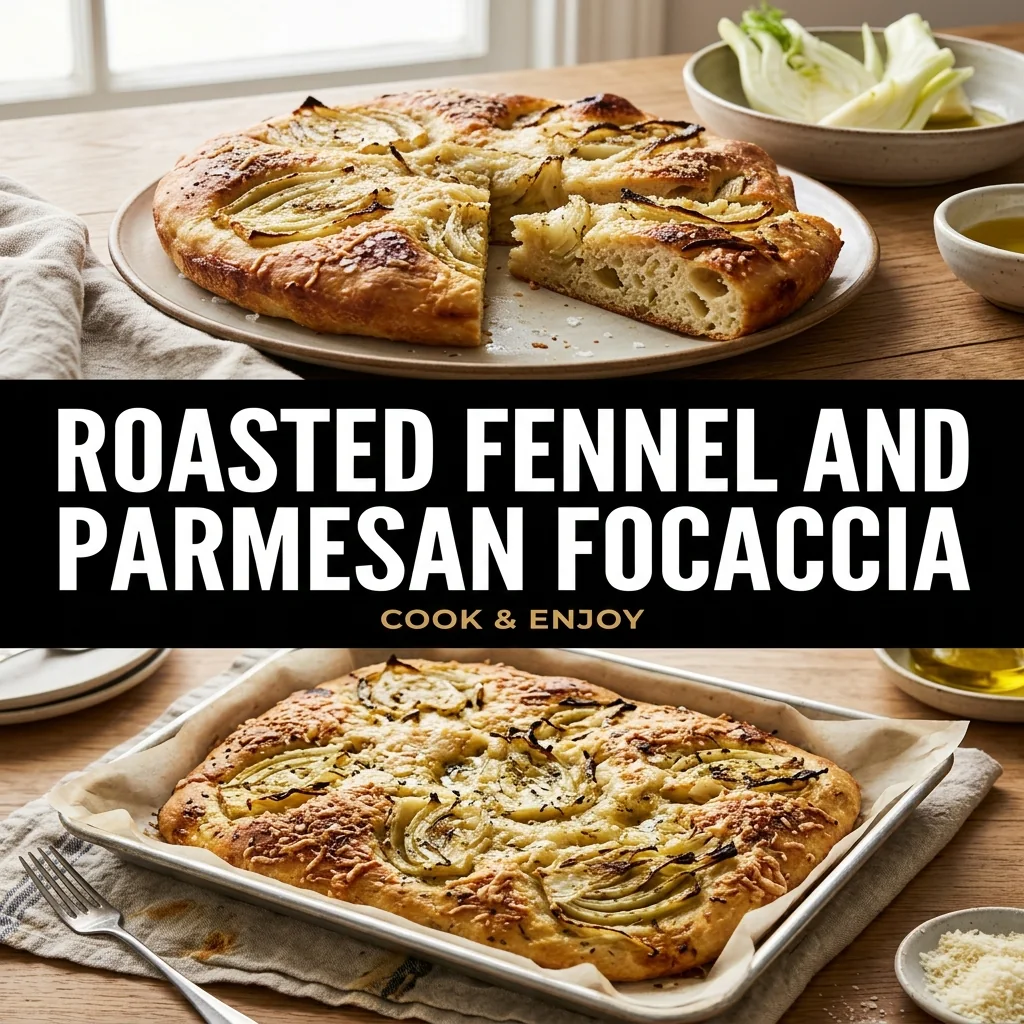
This roasted fennel and parmesan focaccia marries the aromatic, sweet anise notes of caramelized fennel with the savory, crystalline bite of aged cheese. Focaccia provides the ideal canvas for showcasing robust toppings, thanks to its high-hydration crumb that yields an interior both pillowy and elastic. A generous coating of quality extra-virgin olive oil fries the bottom crust against the pan, developing a remarkable crunch that contrasts beautifully with the tender, dimpled surface. Shaving the fennel bulb and giving it a brief par-roast unlocks natural sugars while softening fibrous tissues, ensuring every bite integrates smoothly into the bread. Finished with pungent fresh rosemary and flaky salt, this bread is a sophisticated bake suitable for any table.
Hydration and Dough Development
Achieving the airy crumb and characteristic large alveoli of classic focaccia requires a high-hydration formula. At nearly seventy-eight percent hydration, this dough remains relatively wet and sticky, which intimidates novice bakers who might be tempted to add excess flour. Instead of conventional kneading on a board, utilizing the stretch-and-fold method directly inside the bowl organizes the gluten network gently without deflating delicate gas cells. As gluten aligns, the dough transforms from a ragged paste into a supple, extensible dough capable of expanding vigorously when hitting high oven temperatures.
Fennel Preparation and Caramelization
Fennel bulbs possess high water content and a firm fibrous structure that behaves unpredictably if applied raw to baking bread. Using a mandoline to shave the trimmed bulb into paper-thin ribbons ensures tender texture and consistent roasting. Par-cooking the ribbons for ten minutes draws out surface water and initiates caramelization, converting sharp licorice aromatics into a mellow, sweet profile. When pressed into the olive-oil-filled dimples alongside chopped rosemary and halal parmesan, the fennel crisps slightly around the edges without burning or introducing unwanted sogginess to the upper crumb.
Dimpling Technique and Pan Selection
The dimpling process serves two critical structural purposes in focaccia baking: releasing large volatile air pockets to ensure even baking and creating reservoirs for olive oil and seasonings. Pressing firmly with oily pads of fingers until you feel the metal pan ensures the dough retains its dimpled texture through the baking process. A heavy, light-colored aluminum or seasoned steel baking pan conducts heat far better than glass or ceramic dishes, guaranteeing that the bottom of the loaf fries in the oil to achieve a shatteringly crisp crust.
Before you start
Pre-roasting the fennel is essential because raw shaved fennel expels moisture while baking, which can prevent the top layer of focaccia dough from crisping properly. Slicing the fennel thin allows it to caramelize and become sweet rather than stringy. For maximum oven spring and a soft, open crumb, avoid flattening the dough with a rolling pin; rely solely on gentle gravity during the second pan proof to stretch the gluten structure naturally.
THE RECIPE
Roasted Fennel and Parmesan Focaccia
8 servings · 25 minutes preparation · 32 minutes cooking · 105 minutes cooling, chilling or resting
Ingredients
Step-by-step instructions
- Whisk 310 milliliters lukewarm water, 6 grams active dry yeast, and 6 grams granulated sugar in a large bowl, then rest for 5 minutes until frothy.
- Add 400 grams bread flour, 8 grams fine sea salt, and 20 milliliters olive oil; mix with a sturdy spatula until a wet, sticky dough forms.
- Perform four sets of stretch-and-folds directly in the bowl at 15-minute intervals, cover tightly, and rest for an additional 45 minutes (60 minutes total initial rise) until light and bubbly.
- Toss the shaved fennel with 10 milliliters olive oil, a pinch of salt, and black pepper on a baking sheet, and roast at 400 F (204 C) for 10 minutes until softened and edges brown slightly; remove and cool.
- Pour 20 milliliters olive oil into a 9 by 13-inch metal baking pan, transfer the slack dough into the pan, gently turn it once to coat in oil, and rest untouched for 45 minutes to let it spread toward the corners.
- Preheat the oven to 425 F (218 C) while the dough finishes its second rest.
- Drizzle the dough surface with the remaining 10 milliliters olive oil, oil your fingertips, and dimple the dough deeply down to the pan bottom across the entire surface.
- Scatter the roasted fennel slices, 4 grams chopped fresh rosemary, 40 grams grated halal parmesan, and 3 grams flaky sea salt evenly over the dimpled dough.
- Bake at 425 F (218 C) for 20 to 22 minutes until the crust is blistered and golden brown and the cheese is caramelized, then cool in the pan on a rack for 10 minutes before slicing.
Kitchen notes
Pre-roasting the fennel is essential because raw shaved fennel expels moisture while baking, which can prevent the top layer of focaccia dough from crisping properly. Slicing the fennel thin allows it to caramelize and become sweet rather than stringy. For maximum oven spring and a soft, open crumb, avoid flattening the dough with a rolling pin; rely solely on gentle gravity during the second pan proof to stretch the gluten structure naturally.
Storage & make-ahead
Cool briefly, then refrigerate leftovers in an airtight container within 2 hours of baking for up to 3 days. Freeze tightly wrapped portions for up to 2 months. Reheat in a 350 F (177 C) oven until the center reaches 165 F (74 C).
An original recipe guide inspired by themes in our Pinterest research. Recipe has not been independently kitchen-tested. AI-generated image is illustrative; your finished dish may look different.
Frequently asked questions
Can I let the dough rise overnight in the refrigerator?
Yes, after mixing and completing the stretch-and-folds, cover the bowl tightly and refrigerate for up to 24 hours. Bring the dough to room temperature for 1 hour before transferring to the oiled baking pan for its final proof.
How do I ensure my parmesan is halal?
Traditional Italian-style hard cheese uses animal rennet. For this recipe, select an aged Italian-style hard cheese explicitly labeled with vegetarian rennet, microbial enzymes, or certified with an official halal stamp.
Why did my focaccia stick to the pan?
Sticking usually stems from using insufficient olive oil or an unseasoned pan. Ensure the full 20 milliliters of oil coats the bottom and sides of the pan thoroughly before adding the dough.