WHY MAKE IT
A little comfort, a lot of flavor.
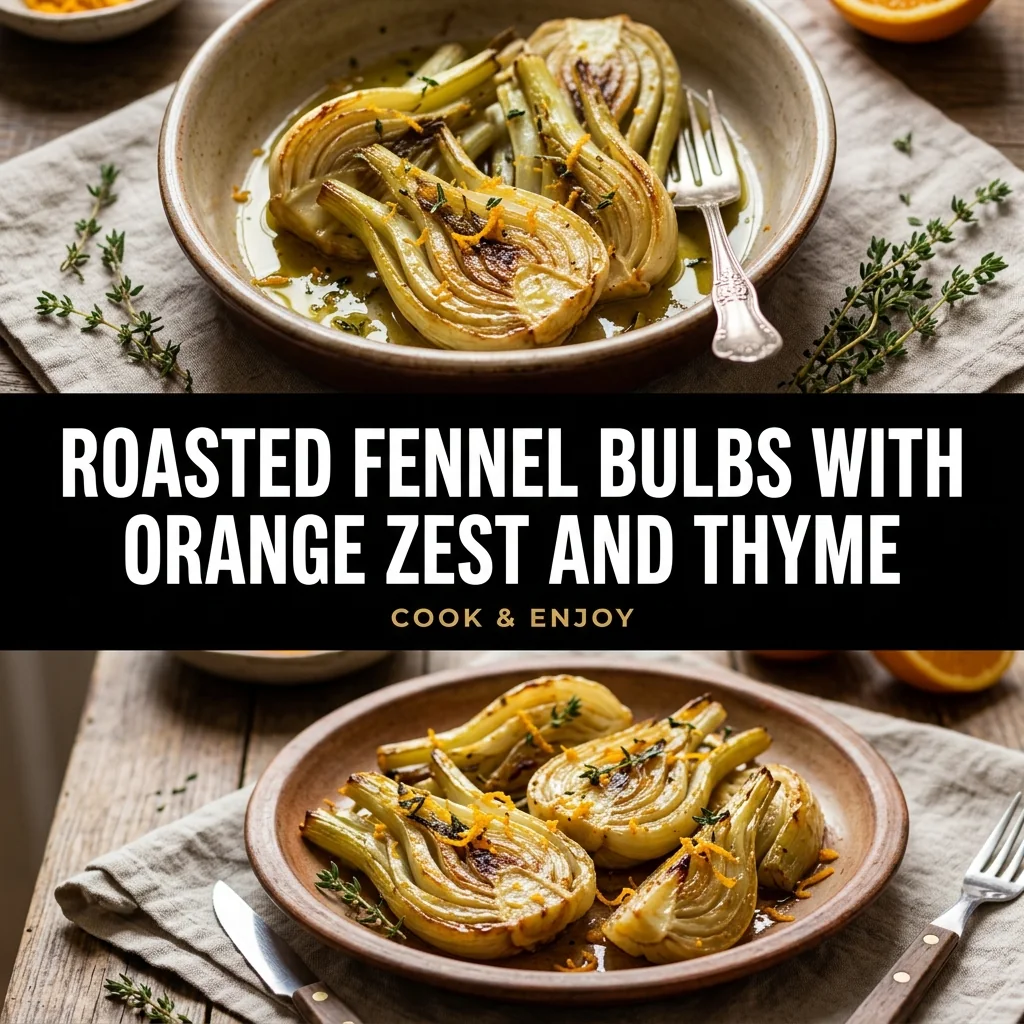
Raw fennel is renowned for its crisp snap and pronounced anise aroma, but sustained oven roasting softens its sharp licorice notes into gentle, mellow sweetness. As the dense layers roast, heat breaks down the natural starches and caramelizes the edges, yielding a tender texture reminiscent of sweet braised onions. Pairing fennel with fresh orange juice and fragrant thyme is a classic Mediterranean-inspired harmony; the bright acidity of the citrus lifts the vegetable's richness, while the floral zest and woody herb ground the sweetness. The simple pan glaze forms naturally in the oven as honey and citrus juice reduce alongside the rendered olive oil, coating every caramelized ridge in aromatic flavor.
Trimming and Slicing Fennel Bulbs
Start by cutting away the long green stalks flush with the top of the bulb, saving a handful of the feathery fronds to use as a fresh herbal garnish later. Trim only a paper-thin slice from the brown bottom of the root, keeping the core fully intact. Stand the bulb upright on its flat root base and cut down through the center into half-inch slabs. Slices cut through the central core remain bound together neatly on the baking sheet, ensuring even roasting and preventing the outer layers from separating and scorching prematurely.
The Two-Stage Roasting Process
Caramelization requires dry, sustained heat before introducing sugary liquids. Roasting the oiled fennel slices undisturbed for the first twenty minutes allows direct contact with the hot sheet pan, which promotes deep browning and jumpstarts the softening process. If the orange juice and honey mixture were applied at the beginning, the sugars would burn before the thick fennel flesh had softened. Flipping the slices and spooning the citrus glaze over them for the final twelve to fifteen minutes allows the glaze to reduce into a glossy syrup without scorching.
Maximizing Citrus and Herb Aromatics
Navel oranges offer balanced natural sugar and bright acidity that cut through roasted fennel. Zesting the orange directly over your mixing bowl captures the fragrant essential oils that spray from the peel during grating. Combining this zest with fresh thyme leaves infuses the warm glaze with earthy, herbal warmth. As the pan roasts in its second phase, the reduced citrus juice deglazes the pan sugars, creating a savory-sweet reduction that coats each tender slab and provides a balanced contrast to savory poultry or fish.
Before you start
Fennel bulbs have a dense internal core that holds the slices together during slicing and roasting. Avoid cutting away the root base entirely; trim only the dried bottom plane. If your slices are too thin, they will shrivel and burn quickly under the citrus glaze; maintain a strict half-inch thickness to allow the outside to brown while the interior cooks down to a melting, tender consistency.
THE RECIPE
Roasted Fennel Bulbs with Orange Zest and Thyme
4 servings · 15 minutes preparation · 35 minutes cooking · 5 minutes cooling, chilling or resting
Ingredients
Step-by-step instructions
- Preheat the oven to 400°F (200°C). Line a heavy rimmed 18x13-inch baking sheet with parchment paper.
- Trim the stalks from the fennel bulbs, reserving 2 tablespoons of the feathery green fronds for garnish, and trim a thin sliver off the root base while leaving the core intact.
- Slice each bulb vertically from the top down through the root into 1/2-inch-thick slabs.
- Arrange the fennel slices across the prepared baking sheet in a single layer without overlapping.
- Drizzle with 1 1/2 tablespoons of the extra-virgin olive oil and season evenly with the fine sea salt and black pepper.
- Roast for 20 minutes undisturbed until the bottoms show deep golden-brown caramelization.
- Meanwhile, whisk together the fresh orange juice, orange zest, honey, remaining 1 tablespoon extra-virgin olive oil, fresh thyme leaves, and grated garlic in a small bowl.
- Carefully flip each fennel slice using a thin spatula, then spoon the orange and thyme glaze evenly over the tops of all the slices.
- Return the baking sheet to the oven and roast for an additional 12 to 15 minutes until the fennel is tender throughout and the glaze bubbles down to a sticky, fragrant sheen.
- Remove from the oven, let rest for 5 minutes, garnish with the reserved chopped fennel fronds, and serve warm.
Kitchen notes
Fennel bulbs have a dense internal core that holds the slices together during slicing and roasting. Avoid cutting away the root base entirely; trim only the dried bottom plane. If your slices are too thin, they will shrivel and burn quickly under the citrus glaze; maintain a strict half-inch thickness to allow the outside to brown while the interior cooks down to a melting, tender consistency.
Storage & make-ahead
Transfer cooled fennel slices to a shallow airtight container and refrigerate within 2 hours of cooking for up to 3 days. Reheat in a preheated oven or toaster oven at 350°F (175°C) covered with foil for 10 minutes, then uncover for 3 minutes until heated through to an internal temperature of 165°F (74°C). Avoid freezing, as cooked fennel becomes stringy and releases excess water when thawed.
An original recipe guide inspired by themes in our Pinterest research. Recipe has not been independently kitchen-tested. AI-generated image is illustrative; your finished dish may look different.
Frequently asked questions
Can I use dried thyme if fresh thyme is unavailable?
Yes, dried thyme can be used in place of fresh. Use 1 teaspoon of dried thyme instead of the 1 tablespoon of fresh leaves, and whisk it directly into the orange juice and honey mixture so it hydrates properly during the final roast.
What should I do if my fennel starts to burn?
If the edges brown too rapidly before the core becomes tender, tent a sheet of aluminum foil loosely over the baking sheet for the remaining cook time. This traps steam and moderates direct heat, allowing the center to soften safely.
Can this dish be served at room temperature?
Yes, roasted fennel holds up exceptionally well and can be served warm or at room temperature as part of a Mediterranean-style mezze platter. The citrus glaze remains flavorful and glossy as it cools.