WHY MAKE IT
A little comfort, a lot of flavor.
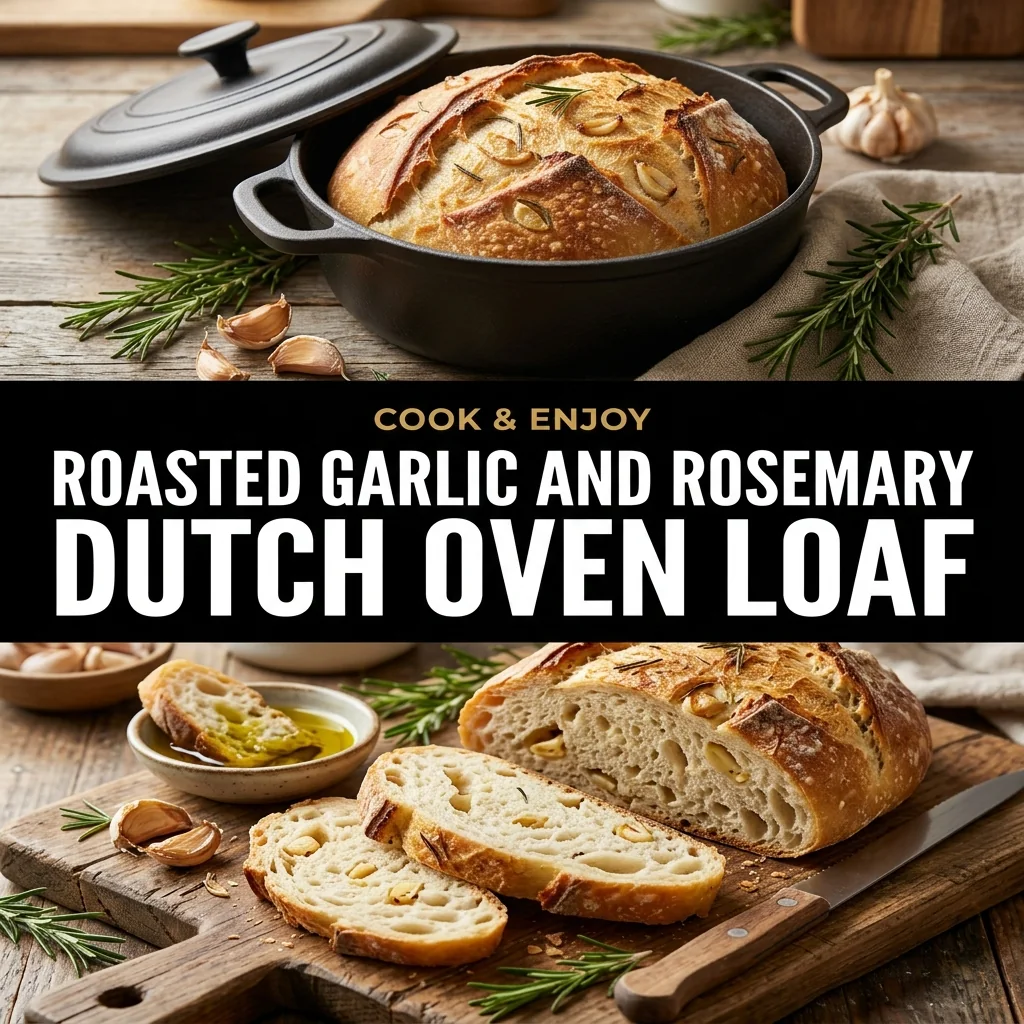
Baking artisan bread at home requires minimal physical effort when time handles the structural development. This no-knead roasted garlic and rosemary loaf combines slow overnight room-temperature fermentation with the intense radiant heat of a covered cast-iron Dutch oven. The initial roasting mellows raw garlic pungency into caramelized sweetness, while finely chopped rosemary infuses the high-hydration crumb with fragrant herbal notes. Inside the preheated pot, trapped steam keeps the outer surface supple during the initial bake, encouraging maximum oven spring before drying into an ultra-crisp, blistered crust. Sliced thick, this rustic savory bake provides an aromatic foundation for wholesome soups, olive oil dipping, or everyday table service.
Managing High Hydration Dough
This formula uses an 80 percent hydration level, yielding a sticky, slack dough that can intimidate novice bakers. The prolonged 12-hour resting phase allows flour proteins to hydrate fully and form strong gluten strands without mechanical kneading. Avoid working excessive flour into the dough during shaping, as doing so alters the hydration ratio and creates a dense crumb. Lightly flour your hands or utilize a curved bench scraper to tension the dough surface smoothly onto the cornmeal-dusted parchment paper.
The Role of Dutch Oven Steam
Baking inside a heavy, preheated cast-iron vessel replicates the steam injection systems of professional deck ovens. As the wet dough heats rapidly, moisture vaporizes and remains trapped beneath the heavy lid. This localized humidity prevents the outer starches from setting prematurely, allowing the loaf to expand vigorously upward. Removing the lid during the final 15 minutes lets radiant dry heat caramelize the exterior maltose sugars, creating a deeply colored, acoustically crackling crust.
Herb and Garlic Preparation
Selecting fresh, firm rosemary provides piney resinous aromatics that hold up remarkably well to intense baking heat. Dried rosemary often remains unpleasantly stiff and woody inside the soft bread crumb, so fresh herbs are mandatory here. Roasting the garlic beforehand until it achieves a jam-like consistency reduces its moisture content, preventing wet soggy voids from forming around the cloves inside the expanding dough matrix during baking.
Before you start
Resist the urge to crush the roasted garlic into a paste during the initial mixing step. Keeping the cloves whole ensures distinct, sweet pockets of garlic throughout the finished crumb rather than discoloring the dough gray. If your kitchen ambient temperature runs colder than 68°F (20°C), place the covered fermenting bowl inside an unheated oven with the interior light turned on to maintain the gentle warmth needed for reliable microbial fermentation.
THE RECIPE
Roasted Garlic and Rosemary Dutch Oven Loaf
10 servings · 25 minutes preparation · 85 minutes cooking · 915 minutes cooling, chilling or resting
Ingredients
Step-by-step instructions
- Preheat the oven to 400°F (204°C). Place the trimmed garlic head onto an 8-inch square of aluminum foil, drizzle with 15 ml extra-virgin olive oil, seal the packet tightly, and roast on the center rack for 40 minutes until tender and golden brown.
- Remove the garlic foil packet from the oven and let it rest at room temperature for 15 minutes. Squeeze the softened cloves from their papery skins into a small bowl, leaving them mostly whole, and set aside to cool completely.
- In a 5-quart ceramic or glass mixing bowl, whisk together 450 g bread flour, 8 g fine sea salt, and 2 g instant dry yeast until thoroughly blended.
- Add 360 ml cool water, the roasted garlic cloves, and 10 g finely chopped rosemary to the flour mixture. Stir with a sturdy wooden spoon or Danish dough whisk for 2 minutes until a wet, shaggy dough forms with no dry flour remaining.
- Cover the bowl securely with a reusable plastic lid or airtight wrap and let the dough ferment undisturbed at room temperature (68°F to 72°F / 20°C to 22°C) for 12 hours (720 minutes) until bubbly and doubled in volume.
- Turn the loose dough out onto a lightly floured silicone pastry mat. Gently pull the dough edges inward to form a round boule, transfer seam-side down onto a sheet of parchment paper dusted with 15 g coarse cornmeal, cover loosely with an inverted mixing bowl, and proof for 60 minutes.
- Place a 5-to-6-quart cast-iron Dutch oven and its lid on the middle rack of the oven and preheat to 450°F (232°C) for 45 minutes during the final proof. Carefully lower the parchment paper and dough into the preheated pot, replace the lid, and bake for 30 minutes.
- Carefully remove the Dutch oven lid and bake uncovered at 450°F (232°C) for an additional 15 minutes until the exterior crust is deep amber-brown and the internal center temperature reads 205°F to 210°F (96°C to 99°C).
- Transfer the baked bread using the parchment corners onto an elevated wire rack and let it cool completely for 120 minutes before slicing to set the crumb structure.
Kitchen notes
Resist the urge to crush the roasted garlic into a paste during the initial mixing step. Keeping the cloves whole ensures distinct, sweet pockets of garlic throughout the finished crumb rather than discoloring the dough gray. If your kitchen ambient temperature runs colder than 68°F (20°C), place the covered fermenting bowl inside an unheated oven with the interior light turned on to maintain the gentle warmth needed for reliable microbial fermentation.
Storage & make-ahead
Cool the bread fully on a wire rack within 2 hours of baking. Store unsliced bread at room temperature in a breathable paper bag for up to 3 days. For longer storage, slice the loaf, seal slices in a freezer-safe silicone bag, and freeze for up to 2 months. Reheat frozen slices directly in a toaster or warm whole portions in a 350°F (177°C) oven for 10 minutes until hot and crusty.
An original recipe guide inspired by themes in our Pinterest research. Recipe has not been independently kitchen-tested. AI-generated image is illustrative; your finished dish may look different.
Frequently asked questions
Can I use an enameled Dutch oven for this high-temperature loaf?
Yes, an enameled cast-iron pot works exceptionally well. Ensure the lid knob is heat-rated to at least 450°F (232°C). If your pot features a phenolic plastic handle with a lower heat ceiling, unscrew it and replace it with a stainless-steel knob prior to preheating.
Why did my loaf collapse slightly when transferring it into the pot?
A slight deflation usually indicates minor over-proofing during the final rest or aggressive handling. Use the extended edges of the parchment paper like a sling to gently lower the dough directly into the hot Dutch oven without jarring the delicate gas structure.
Can I substitute instant yeast with active dry yeast?
Yes, you can substitute active dry yeast at an equal weight. However, dissolve it in 60 ml of the recipe's measured water for 5 minutes beforehand to verify vitality before stirring it into the dry flour and remaining cool water.