WHY MAKE IT
A little comfort, a lot of flavor.
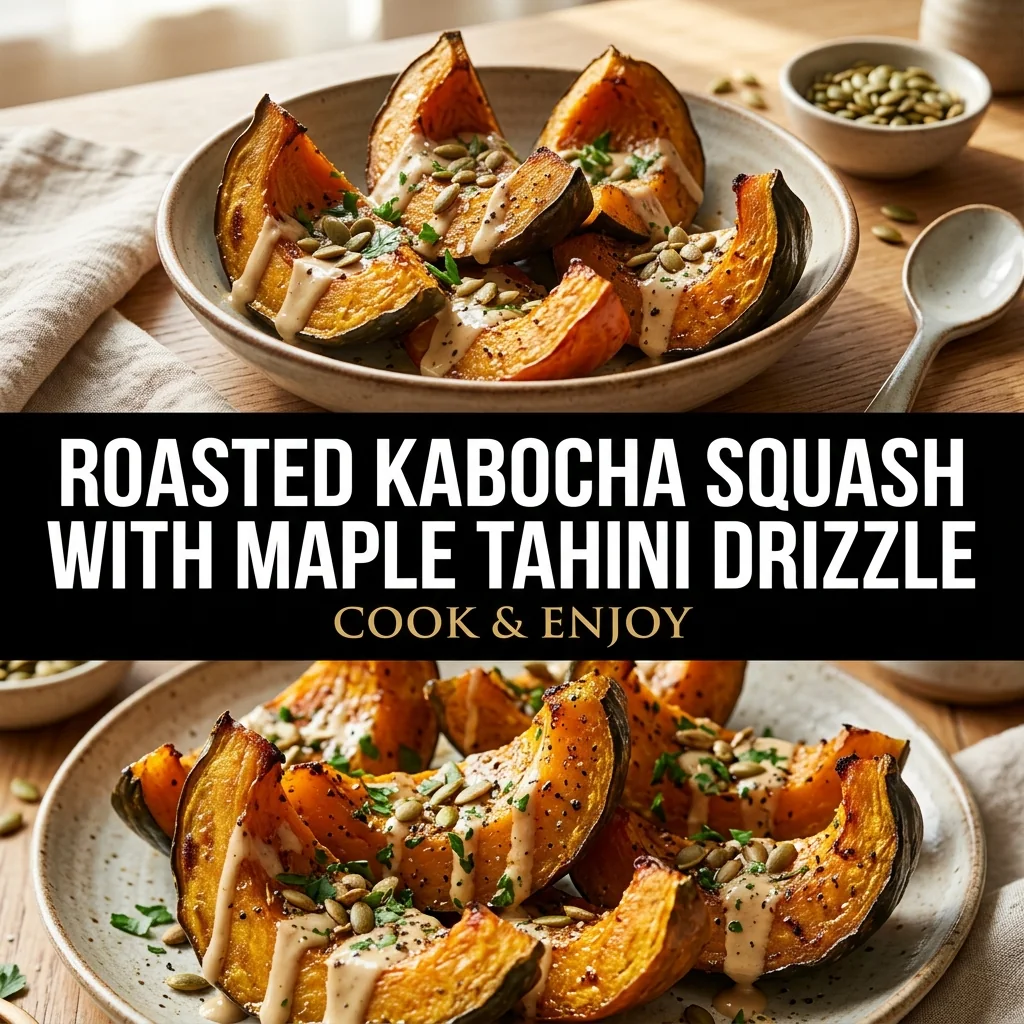
Kabocha squash offers a wonderfully dense, velvety texture that resembles a cross between sweet potato and roasted chestnut. When cut into crescent wedges and roasted at high heat, the edges caramelize into rich, concentrated bites while the skin softens into a completely edible, nutrient-rich wrapper. This recipe elevates the natural sweetness of Japanese pumpkin with a fragrant drizzle made from nutty sesame tahini, pure maple syrup, and bright lemon juice. The richness of the sesame paste cuts through the natural sugars of the squash, creating a balanced vegetable side dish that feels both comforting and refined. Perfect for weeknight family dinners or elaborate weekend feasts, this vibrant squash dish pairs effortlessly with roasted meats or hearty grain dishes.
Selecting and Prepping Kabocha Squash
When shopping for kabocha, look for a squash that feels remarkably heavy for its size with an unblemished, matte, dark green rind accented by pale green or yellowish bumps. A dull rind signals full maturity and higher sugar concentration, whereas a shiny rind indicates an underripe squash with less flavor. Wash the exterior thoroughly with a vegetable brush under cold running water before cutting. Use a large, sharp chef knife to slice the squash in half from stem to base, scoop out the interior fibers and seeds with a metal spoon, and slice the halves into uniform wedges.
Achieving Caramelization on the Pan
Proper roasting demands sufficient surface contact and adequate spacing on the baking sheet. If the kabocha wedges are crowded or piled atop one another, trapped steam will soften the flesh without producing the desirable browned crust. Spreading the wedges flat on parchment paper allows the hot oven air to circulate freely around each piece. The direct contact between the oiled vegetable surface and the metal pan encourages the natural sugars to caramelize rapidly. Turning each wedge after twenty minutes guarantees even browning on both sides and ensures a tender interior texture without burning the delicate skin.
Balancing and Emulsifying the Tahini Drizzle
Pure sesame tahini naturally contains oil that separates over time, so stir the jar thoroughly before measuring out your portion. When lemon juice and maple syrup are first introduced to tahini, the mixture may unexpectedly seize and turn thick or grainy. Do not worry; this reaction is standard food chemistry. Whisking in three tablespoons of warm water gradually relaxes the emulsion, transforming the stiff paste into a glossy, pourable condiment. Taste the finished sauce before dressing the squash; a tiny squeeze of additional lemon can instantly brighten the flavor if your tahini carries strong bitter undertones.
Before you start
Cutting dense kabocha squash safely requires a sturdy chef knife and a stable flat surface. If the squash feels too hard to slice comfortably, microwave the whole squash for two minutes first to soften the outer rind slightly. Keep the dark green skin attached during roasting; unlike butternut squash, kabocha peel becomes completely tender, edible, and nutrient-dense when baked, providing an attractive color contrast alongside the bright orange flesh.
THE RECIPE
Roasted Kabocha Squash with Maple Tahini Drizzle
4 servings · 15 minutes preparation · 30 minutes cooking · 5 minutes cooling, chilling or resting
Ingredients
Step-by-step instructions
- Preheat the oven to 400°F (204°C) and line a large rimmed baking sheet with unbleached parchment paper.
- Place the prepared kabocha squash wedges into a large mixing bowl and add 2 tablespoons of olive oil, 1/2 teaspoon of kosher salt, 1/4 teaspoon of black pepper, and 1/4 teaspoon of ground cinnamon.
- Toss the squash slices thoroughly until evenly coated in the seasoned oil, then arrange them in a single layer across the lined baking sheet, ensuring flat cut sides touch the surface.
- Roast the squash in the preheated oven for 20 minutes, then flip each wedge using metal tongs and bake for another 10 minutes until deeply golden brown and tender when pierced with a fork.
- While the squash roasts, combine 1/4 cup of pure sesame tahini, 2 tablespoons of pure maple syrup, 1 tablespoon of fresh lemon juice, and 3 tablespoons of warm water in a small bowl.
- Whisk the tahini mixture vigorously for 1 to 2 minutes until it transforms from a stiff paste into a glossy, pourable drizzle.
- Remove the baked squash from the oven and allow it to rest undisturbed on the warm pan for 5 minutes.
- Transfer the roasted wedges onto a wide serving platter, drizzle the maple tahini sauce evenly over the top, and garnish with 1 tablespoon of toasted sesame seeds and 1 tablespoon of chopped parsley.
Kitchen notes
Cutting dense kabocha squash safely requires a sturdy chef knife and a stable flat surface. If the squash feels too hard to slice comfortably, microwave the whole squash for two minutes first to soften the outer rind slightly. Keep the dark green skin attached during roasting; unlike butternut squash, kabocha peel becomes completely tender, edible, and nutrient-dense when baked, providing an attractive color contrast alongside the bright orange flesh.
Storage & make-ahead
Promptly refrigerate any leftovers in an airtight glass container within 2 hours of roasting. The roasted squash keeps well in the refrigerator for up to 4 days, though storing the tahini sauce separately preserves the best texture. Reheat leftover squash on a parchment-lined baking sheet at 375°F (190°C) until thoroughly heated through to an internal temperature of 165°F (74°C).
An original recipe guide inspired by themes in our Pinterest research. Recipe has not been independently kitchen-tested. AI-generated image is illustrative; your finished dish may look different.
Frequently asked questions
Do I need to peel the kabocha squash before roasting?
No, peeling is unnecessary. The dark green skin of kabocha squash is relatively thin and softens completely during roasting, making it entirely edible, tender, and rich in dietary fiber while adding attractive color to the finished dish.
Why did my tahini sauce turn thick and grainy when mixed?
Tahini naturally seizes when small amounts of liquid are added to its oil-rich solids. Continue whisking and add the warm water tablespoon by tablespoon; the emulsion will quickly loosen into a silky, smooth, and pourable sauce.
Can I make the tahini drizzle in advance?
Yes, you can whisk the maple tahini drizzle up to 3 days in advance and keep it sealed in the refrigerator. It may thicken when chilled, so stir in a teaspoon of warm water before serving to restore its pourable consistency.