WHY MAKE IT
A little comfort, a lot of flavor.
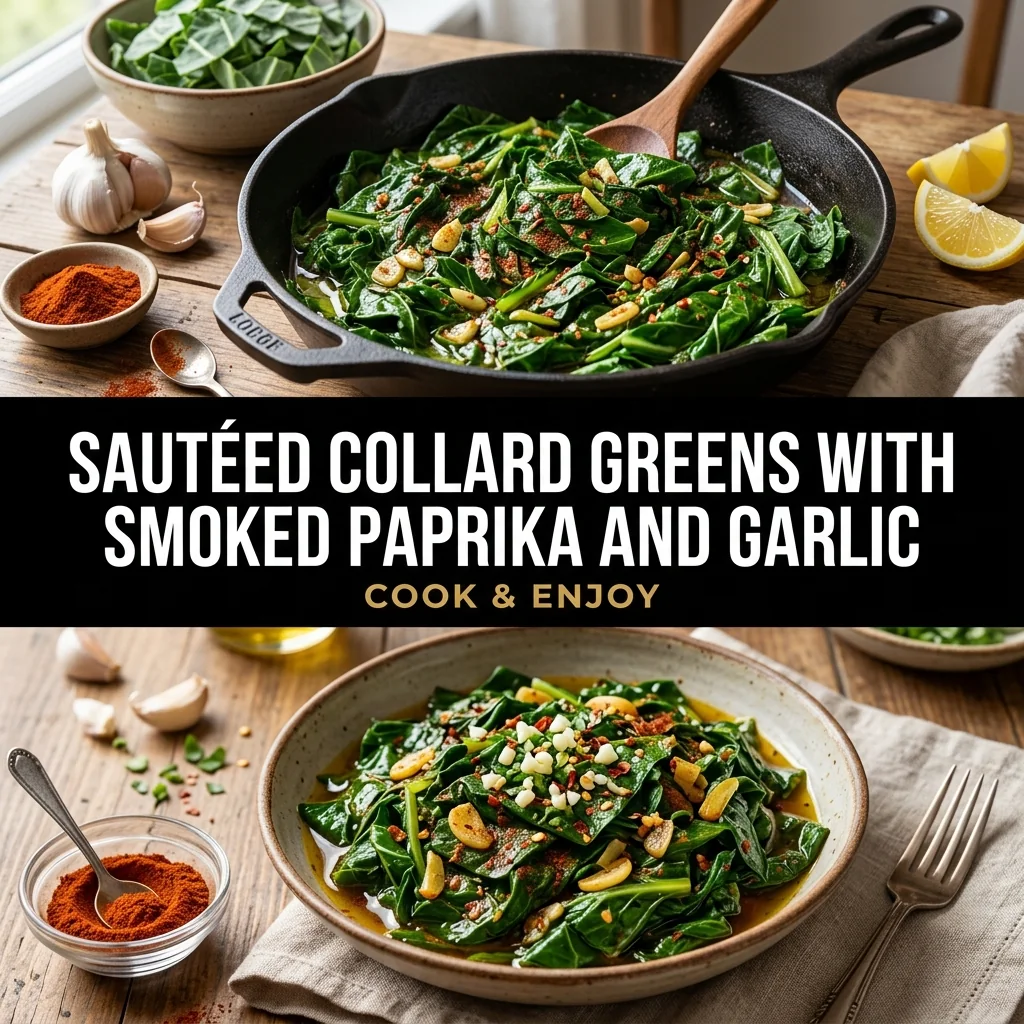
Collard greens are celebrated for their substantial texture and earthy depth, but traditional preparations often require hours of slow simmering with cured meats. This sautéed and quick-braised variation captures identical warmth and savory richness in under an hour by relying on high-quality sweet smoked Spanish paprika and golden garlic slices. Slicing the collard leaves into uniform half-inch ribbons ensures rapid, even softening while retaining an appealing, tender bite. A short braise in halal-certified vegetable broth coaxes out the vegetable's natural sugars, and finishing with unfiltered apple cider vinegar cuts through any lingering bitterness. The result is a vibrant, deeply flavorful side dish suited for busy weeknight dinners and festive gatherings alike.
Prepping and Cutting Ribbons
The thick central stems of collard greens are woody and take significantly longer to cook than the leafy portions. Removing them entirely is the secret to a fast braise. Grip the base of the stem firmly with one hand and strip the leaf halves upward with the other. Once stripped, align the leaves in a single stack, roll them lengthwise into a tight cylinder, and slice cleanly across to form ribbons. This chiffonade cut exposes maximal surface area, allowing the seasoned broth and warm oil to penetrate the greens quickly during cooking.
Flavor Development with Garlic and Paprika
Thinly sliced garlic provides sweet, mellow pockets of flavor throughout the greens without the harsh bite of raw minced garlic. Cooking the garlic gently in extra-virgin olive oil releases its aromatics before the smoked paprika is introduced. Spanish smoked paprika contains fat-soluble flavor compounds that expand when heated briefly in warm oil. However, ground paprika burns easily; keep the heat at medium and stir continuously for no more than fifteen seconds before folding in the moist greens to arrest the frying process and preserve its clean, wood-smoked profile.
The Quick Braise and Acid Finish
Braised greens need measured moisture: too little leaves the ribbons fibrous, while an excess turns them soggy and washes out their seasonings. Using one cup of broth provides enough steam under a closed lid to soften the fibers in under twenty minutes. Uncovering the skillet for the final two minutes evaporates surplus liquid, concentrating the pan juices. Stirring in apple cider vinegar and maple syrup off the burner introduces brightness and balances the smoky heat, creating a glossy, well-seasoned coating that clings directly to the greens.
Before you start
Collard leaves trap dirt in their deep veins, so submerge the trimmed leaves in a clean sink or large bowl filled with cold water, swirl vigorously, and lift them out before drying. Blooming the smoked paprika in the warm oil for just fifteen seconds unlocks its fat-soluble aromatics without scorching the delicate dried spice. If the skillet runs dry before the greens are fully tender, add two tablespoons of water or broth at a time to prevent scorching.
THE RECIPE
Sautéed Collard Greens with Smoked Paprika and Garlic
4 servings · 20 minutes preparation · 25 minutes cooking
Ingredients
Step-by-step instructions
- Wash the collard green leaves thoroughly in cold water to remove any grit, then shake dry and pat with clean kitchen towels.
- Strip the thick center stems away from the leaves by pulling the leaf halves upward off each stalk, discarding the tough stems.
- Stack the stripped leaves in neat piles, roll them into tight cylinders, and slice crosswise into 1/2-inch-wide ribbons.
- Heat the extra-virgin olive oil in a large deep skillet or Dutch oven over medium heat until shimmering.
- Add the sliced garlic and crushed red pepper flakes, cooking for 1 minute while stirring constantly until the garlic turns pale golden and aromatic, taking care not to burn it.
- Add the smoked paprika and stir immediately for 15 seconds to bloom the spice in the warm oil.
- Add the shredded collard greens in two batches, tossing with tongs to coat in the garlic-paprika oil until the leaves begin to wilt down, about 3 minutes total.
- Season with the sea salt and black pepper, then pour in the vegetable broth and bring the liquid to a gentle simmer.
- Cover the skillet with a tight-fitting lid, lower the heat to medium-low, and braise for 18 to 20 minutes until the collards are tender but retain deep green color.
- Remove the lid, increase heat to medium, and cook for 2 minutes to reduce excess liquid to a light glaze. Stir in the apple cider vinegar and maple syrup, toss thoroughly, and serve warm immediately.
Kitchen notes
Collard leaves trap dirt in their deep veins, so submerge the trimmed leaves in a clean sink or large bowl filled with cold water, swirl vigorously, and lift them out before drying. Blooming the smoked paprika in the warm oil for just fifteen seconds unlocks its fat-soluble aromatics without scorching the delicate dried spice. If the skillet runs dry before the greens are fully tender, add two tablespoons of water or broth at a time to prevent scorching.
Storage & make-ahead
Refrigerate cooled collard greens in an airtight glass or plastic container within 2 hours of cooking for up to 4 days. Reheat in a small skillet over medium heat with a splash of water or vegetable broth until steaming and the internal temperature reaches at least 165°F (74°C). This dish does not freeze well, as the leaves can become waterlogged upon thawing.
An original recipe guide inspired by themes in our Pinterest research. Recipe has not been independently kitchen-tested. AI-generated image is illustrative; your finished dish may look different.
Frequently asked questions
Can I substitute curly kale or Lacinato kale for collards?
Yes, both varieties of kale make suitable substitutes. Because kale leaves are generally thinner than collard greens, reduce the covered braising time from twenty minutes to approximately eight to ten minutes to prevent overcooking.
How can I tame the bitterness of collard greens?
Bitterness is neutralized through proper cooking and acidity. Simmering the greens until completely tender breaks down bitter glycosides, while the splash of cider vinegar and hint of maple syrup at the end balances the palate.
What type of smoked paprika works best?
Sweet smoked Spanish paprika (Pimentón dulce) delivers the most balanced flavor. Avoid hot smoked paprika unless you prefer a significantly spicier side dish, as the crushed red pepper already provides moderate heat.