WHY MAKE IT
A little comfort, a lot of flavor.
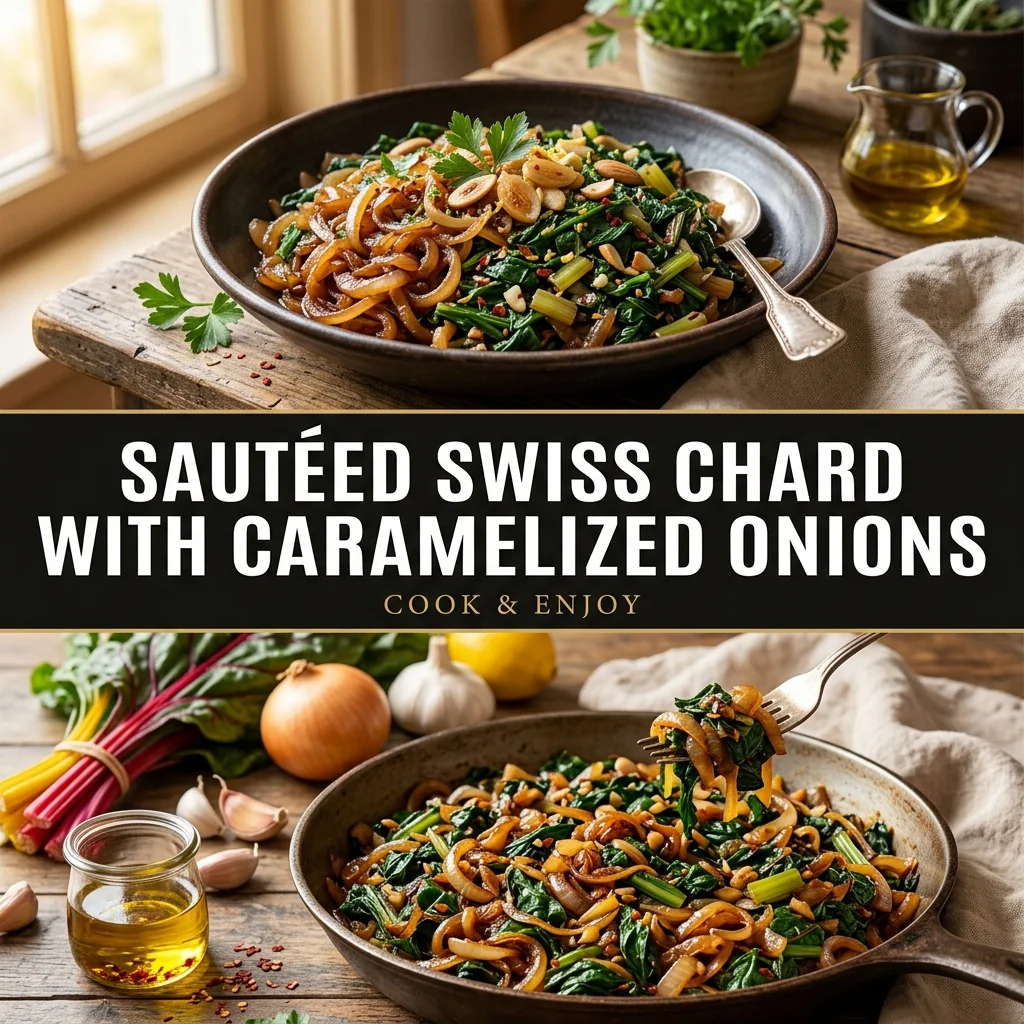
Swiss chard is one of the most versatile leafy greens in the kitchen, pairing vibrant mineral notes with succulent, colorful ribs. However, chard leaves can sometimes carry an earthy bitterness if cooked too hastily. Slow-caramelizing thinly sliced sweet yellow onions provides the ideal natural counterbalance. As the onions break down over gentle heat, their natural sugars intensify into a deep golden sweetness that softens the assertive character of the greens. Braising the chopped stems alongside garlic before introducing the tender leaves ensures every part of the vegetable finishes with impeccable tenderness, lifted at the end with a splash of lemon.
Two-Stage Chard Preparation
Swiss chard features two distinct components that require staggered cooking times: dense, fibrous stalks and delicate, tender leaves. Separating the stems from the leafy greens is essential for uniform texture. Dicing the stems into small segments allows them to soften alongside the garlic in the hot oil before the delicate leaves enter the pan. Adding the leaves in stages avoids overcrowding the skillet, ensuring each batch wilts down smoothly into the savory onion foundation without boiling or turning grey.
The Art of Slow Onion Caramelization
Achieving deeply browned onions requires patience and steady, controlled heat. Thinly slicing the onions into uniform half-moons ensures even contact with the heavy skillet base. Cooking them slowly with sea salt extracts their natural moisture, enabling the sugars to caramelize gradually without scorching the delicate edges. Combining dairy butter with olive oil provides rich flavor and helps coat the greens later. Taking the full fifteen to eighteen minutes to develop deep color transforms ordinary onions into a luscious, sweet sauce base.
Finishing with Acidity and Flavor Pairing
The rich, savory profile of caramelized onions and braised greens benefits immensely from a final burst of bright acidity. Fresh lemon juice added off the heat cuts through the buttery coating and lifts the natural earthy profile of the chard. A light sprinkle of ground sumac adds a pleasant tartness and ruby accent. This side dish is exceptionally versatile, standing up well to hearty grilled halal ribeye steaks, roasted lamb shoulder, or pan-seared sea bass on weeknight dinner menus.
Before you start
Do not discard the chard stems; they have an earthy, mineral sweetness and provide a pleasant structural bite when cooked down with the aromatics. Starting the onions with both oil and butter allows the milk solids to assist browning while the oil prevents burning. If the onions begin to scorch before developing uniform golden color, add a tablespoon of water and reduce the burner temperature slightly.
THE RECIPE
Sautéed Swiss Chard with Caramelized Onions
4 servings · 15 minutes preparation · 30 minutes cooking
Ingredients
Step-by-step instructions
- Wash the chard thoroughly in cold water to remove grit; strip the leafy greens from the central stems, dice the stems into 1/2-inch pieces, and coarsely chop the leaves into 2-inch ribbons.
- Heat 2 tablespoons extra-virgin olive oil and 1 tablespoon unsalted butter in a wide Dutch oven or deep skillet over medium heat.
- Add the sliced yellow onions and 0.25 teaspoon fine sea salt; cook for 15 to 18 minutes, stirring frequently, until the onions soften, collapse, and turn rich golden-brown.
- Stir the sliced garlic and diced chard stems into the caramelized onions; sauté for 4 to 5 minutes until the stems begin to soften and the garlic releases fragrance.
- Add the chopped chard leaves in two batches, turning with tongs to wilt down into the onions before adding the next batch.
- Pour in 0.25 cup halal vegetable broth, season with the remaining 0.25 teaspoon salt and 0.25 teaspoon black pepper, cover the skillet, and braise over medium-low heat for 5 minutes until leaves and stems are completely tender.
- Remove the lid, increase heat slightly, and cook uncovered for 2 minutes to allow any excess liquid to reduce into a glossy glaze.
- Remove from heat, stir in 1.5 tablespoons fresh lemon juice, sprinkle with ground sumac if desired, and transfer to a warm serving platter immediately.
Kitchen notes
Do not discard the chard stems; they have an earthy, mineral sweetness and provide a pleasant structural bite when cooked down with the aromatics. Starting the onions with both oil and butter allows the milk solids to assist browning while the oil prevents burning. If the onions begin to scorch before developing uniform golden color, add a tablespoon of water and reduce the burner temperature slightly.
Storage & make-ahead
Transfer leftover cooked chard to a shallow airtight glass container and refrigerate within 2 hours. Keep chilled for up to 3 days. Reheat gently in a covered skillet over medium-low heat with a splash of broth or water until steaming hot and reaching an internal temperature of 165°F (74°C). Avoid freezing, as chard leaves become stringy and watery when defrosted.
An original recipe guide inspired by themes in our Pinterest research. Recipe has not been independently kitchen-tested. AI-generated image is illustrative; your finished dish may look different.
Frequently asked questions
Can I use rainbow chard instead of standard green Swiss chard?
Yes, rainbow chard, ruby chard, and standard green Swiss chard cook identically. Rainbow chard adds striking visual appeal with its red, yellow, and white stems.
What can I do if the pan becomes too dry while wilting the greens?
Add an extra tablespoon or two of halal vegetable broth or water to generate gentle steam, which wilts the leaves quickly without letting the onions stick or burn.
Can I prepare this dish with kale or spinach instead?
Yes, though cooking times vary. Tuscan kale needs a few extra minutes of braising to soften, whereas tender baby spinach wilts in just one to two minutes.