WHY MAKE IT
A little comfort, a lot of flavor.
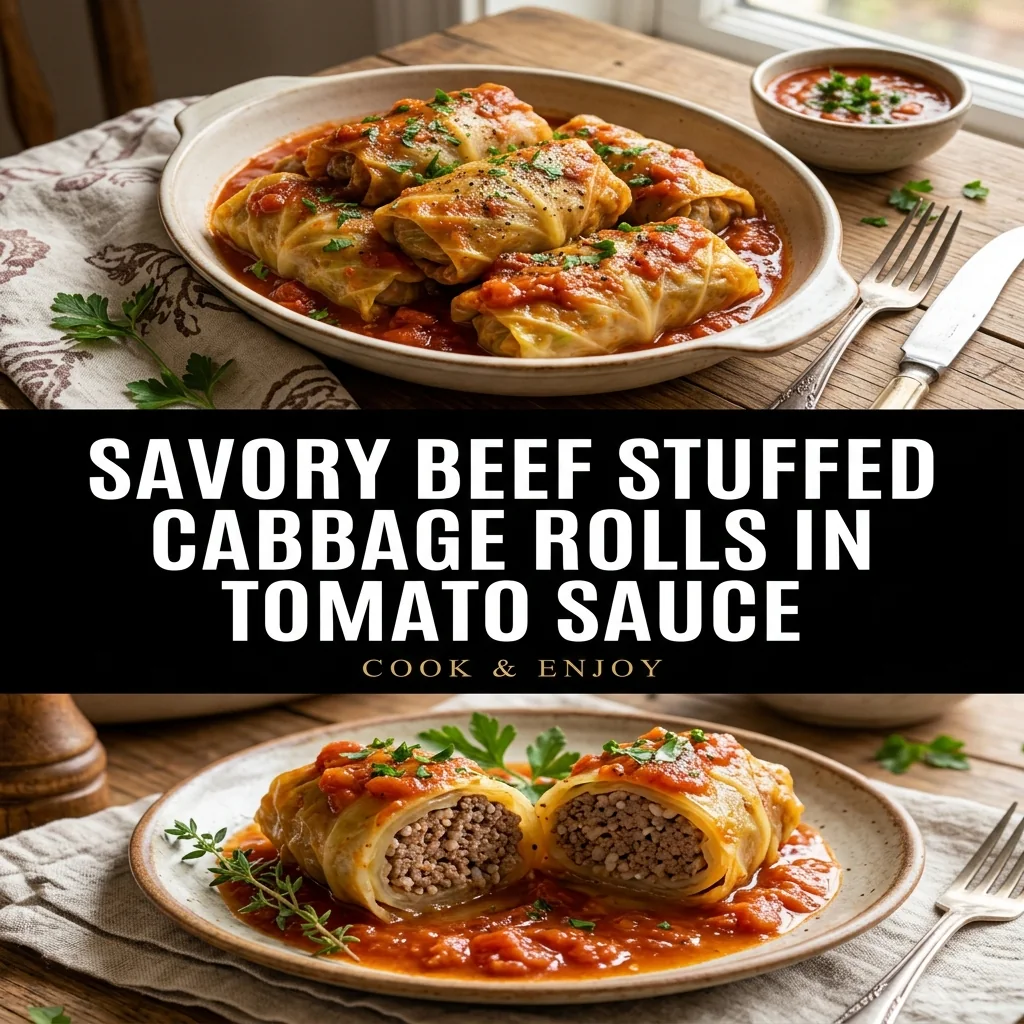
Stuffed cabbage rolls bridge culinary traditions across Eastern Europe, the Mediterranean, and the Middle East, delivering comforting texture and wholesome nutrition in every serving. Using tender savoy cabbage creates a pliable, crinkled wrapper that absorbs the aromatic tomato braising liquid far better than standard green cabbage. Inside, halal-certified ground beef blends with parboiled white rice, dried mint, and warm garlic, expanding gently as the rolls bake in a tangy, broth-infused tomato reduction. The long, covered braise allows the meat juices to permeate the rice while softening the cabbage leaves to absolute perfection, providing an elegant yet homestyle centerpiece for family dinners.
Leaf Preparation and Blanching
Blanching whole cabbage makes leaf removal effortless without tearing the delicate foliage. After coring the root base, boiling water penetrates the internal layers, loosening each leaf from the central stem. Savoy cabbage is particularly forgiving due to its naturally flexible, ruffled texture. Cool the separated leaves completely before slicing away the tough fibrous spine. This thin, uniform profile allows you to create tight, professional rolls that keep their shape under gentle oven heat.
Crafting the Rice and Beef Filling
Using parboiled long-grain rice ensures the grains cook to tender perfection without robbing excess moisture from the halal minced beef. Completely raw standard long-grain rice requires excessive water to hydrate, which can leave the meat filling dry, while fully pre-cooked rice turns unpleasantly mushy during the one-hour bake. Combining lean beef with parboiled rice, aromatic mint, and sweet paprika creates a juicy, structurally sound interior that absorbs savory braising juices.
Braising in Savory Tomato Broth
The cooking liquid is far more than a simple sauce; it is an active braising medium that seasons the rolls from the outside inward. Combining pure tomato passata with seasoned halal beef broth and fresh lemon juice provides acidity that balances the richness of the ground meat. Sealing the baking pan tightly with heavy foil traps all escaping steam, ensuring the upper layer of rolls remains moist and tender throughout the long bake.
Before you start
Shaving down the thick center rib of each cabbage leaf is an essential step that prevents the wraps from cracking or unrolling during assembly. Use a small, sharp paring knife held flat against the leaf surface to shave down the woody spine until it bends as easily as silk. Furthermore, packing the cabbage rolls tightly against one another in the baking dish ensures they retain their shape and do not float apart while baking.
THE RECIPE
Savory Beef Stuffed Cabbage Rolls in Tomato Sauce
6 servings · 40 minutes preparation · 75 minutes cooking · 10 minutes cooling, chilling or resting
Ingredients
Step-by-step instructions
- Bring a large 8-quart stockpot of salted water to a rolling boil over high heat, core the cabbage head with a paring knife, and immerse the whole cabbage into the water for 6 minutes until the outer leaves soften.
- Gently peel away 12 large outer leaves using tongs, transferring them to a colander to drain and cool; shave the thick raised vein on the back of each leaf flush using a sharp paring knife.
- In a large bowl, mix the ground beef, uncooked parboiled rice, diced onion, half of the minced garlic, dried mint, paprika, 1 teaspoon of sea salt, and black pepper until evenly blended.
- Lay each prepared cabbage leaf flat on a clean cutting board, place 3 tablespoons of the meat filling near the stem end, fold the sides inward, and roll tightly into a neat bundle.
- In a separate 2-quart bowl, whisk together the tomato passata, halal beef broth, olive oil, lemon juice, remaining garlic, and remaining 0.5 teaspoon of salt.
- Preheat the oven to 350 F (177 C), arrange the cabbage rolls seam-side down in a 9x13-inch baking dish in a tight single layer, and pour the prepared tomato sauce evenly over the rolls.
- Cover the baking dish securely with heavy aluminum foil, bake for 60 minutes until the cabbage is tender and the filling registers 160 F (71 C), and let rest undisturbed on the counter for 10 minutes before serving.
Kitchen notes
Shaving down the thick center rib of each cabbage leaf is an essential step that prevents the wraps from cracking or unrolling during assembly. Use a small, sharp paring knife held flat against the leaf surface to shave down the woody spine until it bends as easily as silk. Furthermore, packing the cabbage rolls tightly against one another in the baking dish ensures they retain their shape and do not float apart while baking.
Storage & make-ahead
Cool leftover cabbage rolls to room temperature, transfer them into an airtight container within 2 hours, and store in the refrigerator for up to 4 days. Stuffed cabbage rolls freeze exceptionally well in sealed containers for up to 2 months. To reheat, arrange the rolls in a covered baking dish with extra sauce or broth at 350 F (177 C) for 20 to 25 minutes until the center reaches 165 F (74 C).
An original recipe guide inspired by themes in our Pinterest research. Recipe has not been independently kitchen-tested. AI-generated image is illustrative; your finished dish may look different.
Frequently asked questions
Can I assemble these cabbage rolls a day in advance?
Yes. Roll the cabbage bundles, arrange them tightly in your baking dish, cover with plastic wrap, and refrigerate for up to 24 hours. Pour the fresh tomato sauce over them just before placing the dish into the preheated oven.
Can I use standard green cabbage instead of savoy cabbage?
Yes, standard green cabbage works well. However, because green cabbage leaves are stiffer, you may need to boil the head for an additional 2 to 3 minutes to make the leaves sufficiently pliable for rolling.
Why did my rice remain crunchy after baking for an hour?
Using uncooked standard raw rice or under-measuring the braising liquid can cause crunchiness. Use parboiled converted rice and ensure the baking dish is sealed tightly with heavy foil so steam cannot escape during baking.