WHY MAKE IT
A little comfort, a lot of flavor.
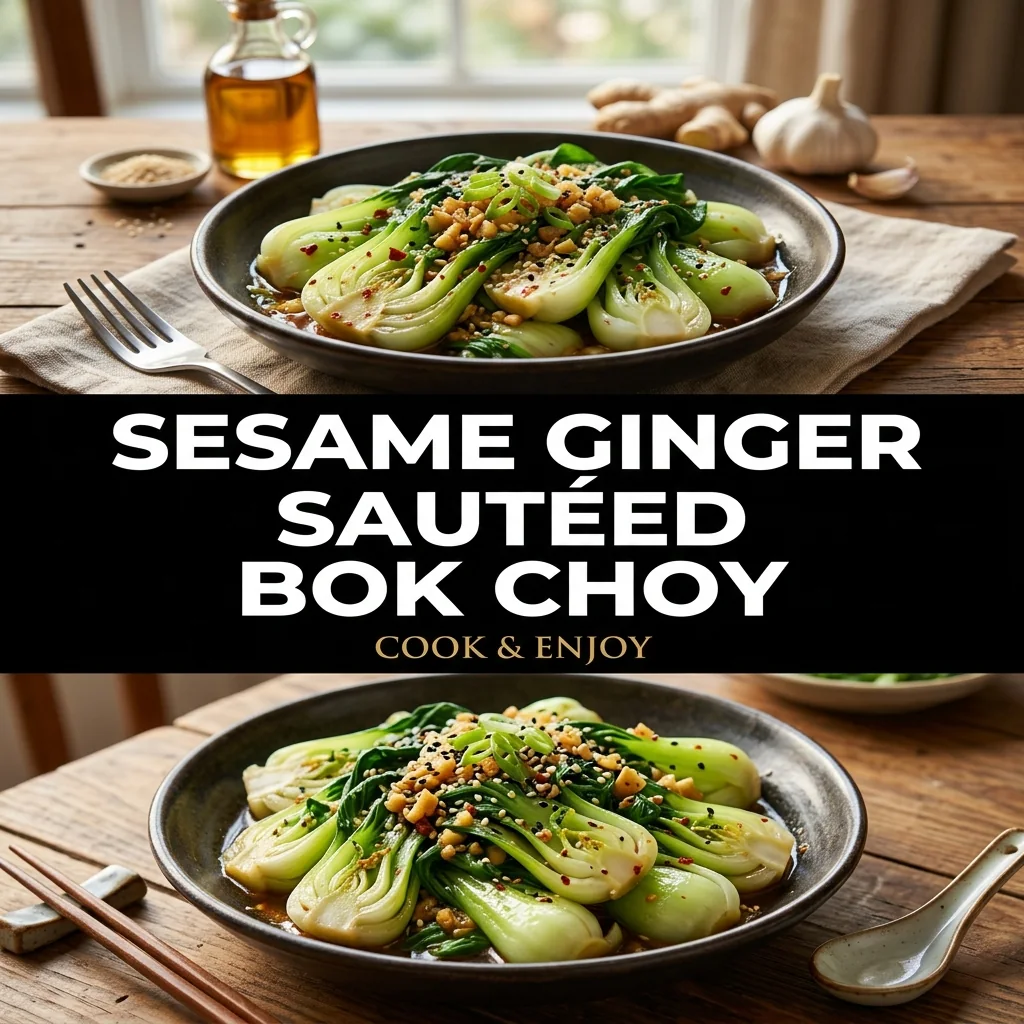
Baby bok choy is revered for its wonderful textural contrast: crisp, juicy white stalks married with tender, slightly peppery leafy fronds. When flash-cooked over high heat, the cut surfaces of the stalks caramelize rapidly, developing a savory sweetness that contrasts with the aromatic warmth of fresh ginger and thinly sliced garlic. By introducing a modest splash of umami-rich halal-certified soy sauce and pure maple syrup late in the cooking process, the liquid vaporizes instantly, enveloping the stalks in a glossy glaze while steaming them to an ideal tender-crisp finish. Finished with rich toasted sesame oil and nutty sesame seeds, this side dish provides an appetizing accompaniment to grilled poultry or roasted meats.
Proper Washing and Moisture Control
Vegetables in the brassica family naturally collect sand during rainfall and harvest. Halving the baby bok choy vertically down through the root base exposes the inner crevices. Submerge the cut heads in a basin of cold water and agitate gently, allowing heavy silt to sink to the bottom. Once drained, vigorously shake the heads and lay them cut-side down on absorbent towels for several minutes. Removing surface moisture prevents splattering when the greens meet the hot oil and guarantees that direct heat causes genuine searing rather than unintended watery braising.
Wok Heat Management and Aromatics
A blend of high-smoke-point avocado oil and toasted sesame oil establishes the thermal base for this stir-fry. Sliced ginger matchsticks and shaved garlic release their lipid-soluble flavor compounds quickly into the hot fat. Because garlic contains delicate sugars prone to burning at searing temperatures, toss the aromatics continuously for no more than 45 seconds. Once aromatic, sear the flat face of the bok choy directly against the metal. The sear builds rich depth before the liquid is introduced, yielding caramelized sweetness on the stem faces.
Balancing Texture and Seasoning
The final stage requires brief, contained steaming to tenderize the thickest portions of the white stems without reducing the delicate green tops to mush. Pouring the seasoned soy sauce mixture around the pan perimeter creates immediate steam. Covering the skillet for ninety seconds softens the core stalks while keeping them snappy and vibrant. Once uncovered, the liquid concentrates down into a clinging savory sauce. A final addition of unheated toasted sesame oil at the end preserves its volatile aromatic oils from high-heat degradation.
Before you start
Baby bok choy retains stubborn soil deep within its base where the leaves join the stem. Slicing the heads lengthwise before washing allows running water to dislodge dirt without pulling the heads apart. Furthermore, absolute surface dryness prior to hitting the hot oil is paramount. If the vegetables enter the skillet damp, they will lower the pan temperature instantly and steam into limpness rather than searing into blistered, fragrant tenderness.
THE RECIPE
Sesame Ginger Sautéed Bok Choy
4 servings · 10 minutes preparation · 7 minutes cooking · 2 minutes cooling, chilling or resting
Ingredients
Step-by-step instructions
- Rinse the halved baby bok choy thoroughly under cold running water, running fingers gently between the lower stems to flush away trapped grit, and shake thoroughly dry.
- Pat the washed greens completely dry with a clean kitchen towel, ensuring no excess moisture remains on the cut surfaces.
- In a small prep bowl, stir together 1.5 tablespoons of halal-certified reduced-sodium soy sauce, 1 teaspoon of pure maple syrup, 1 tablespoon of water, and 1/4 teaspoon of ground white pepper until fully dissolved.
- Heat 1.5 tablespoons of avocado oil and 1/2 tablespoon of toasted sesame oil in a 12-inch heavy-bottomed skillet or wok over medium-high heat until shimmering.
- Add 2 tablespoons of ginger matchsticks and 4 thinly sliced garlic cloves, tossing vigorously for 30 to 45 seconds until fragrant but not browned.
- Carefully place the bok choy halves cut-side down into the skillet in a single layer and sear undisturbed for 2 to 3 minutes until the flat surface develops golden-brown caramelized edges.
- Flip the greens over, immediately pour the prepared soy-maple mixture around the edges of the pan, and cover with a tight lid for 1 to 2 minutes to gently steam the thick white stalks.
- Remove the lid, toss the greens to coat in the reduced pan juices over high heat for 30 seconds, and transfer onto a broad serving platter.
- Drizzle the warm vegetables with the remaining 1 tablespoon of toasted sesame oil, scatter with 1 tablespoon of toasted sesame seeds, and rest 2 minutes before serving.
Kitchen notes
Baby bok choy retains stubborn soil deep within its base where the leaves join the stem. Slicing the heads lengthwise before washing allows running water to dislodge dirt without pulling the heads apart. Furthermore, absolute surface dryness prior to hitting the hot oil is paramount. If the vegetables enter the skillet damp, they will lower the pan temperature instantly and steam into limpness rather than searing into blistered, fragrant tenderness.
Storage & make-ahead
Promptly place leftover sautéed bok choy into a shallow airtight container and refrigerate within 2 hours of cooking. Store chilled for up to 3 days. To reheat while preserving moisture, warm in a covered nonstick skillet over medium-low heat with a teaspoon of water for 3 to 4 minutes until steaming and the internal food temperature reaches 165°F (74°C). Microwave reheating is not recommended, as it can turn the stalks rubbery.
An original recipe guide inspired by themes in our Pinterest research. Recipe has not been independently kitchen-tested. AI-generated image is illustrative; your finished dish may look different.
Frequently asked questions
Can I use mature, large bok choy instead of baby bok choy?
Yes, but mature bok choy has significantly thicker stems. Separate the white stems from the leafy green tops, slice the stems into bite-sized batons, sear them for 3 minutes first, and add the leaves only during the final minute of cooking.
Why use both avocado oil and toasted sesame oil for cooking?
Toasted sesame oil has a low smoke point and delicate flavor that can turn bitter under direct searing heat. Blending it with high-heat avocado oil protects the aromatic qualities while enabling proper caramelization.
How can I tell when the bok choy is done?
Insert the tip of a paring knife into the thickest part of the stem; it should penetrate with slight resistance, indicating a tender-crisp texture, while the green tops will be softly wilted and bright emerald.