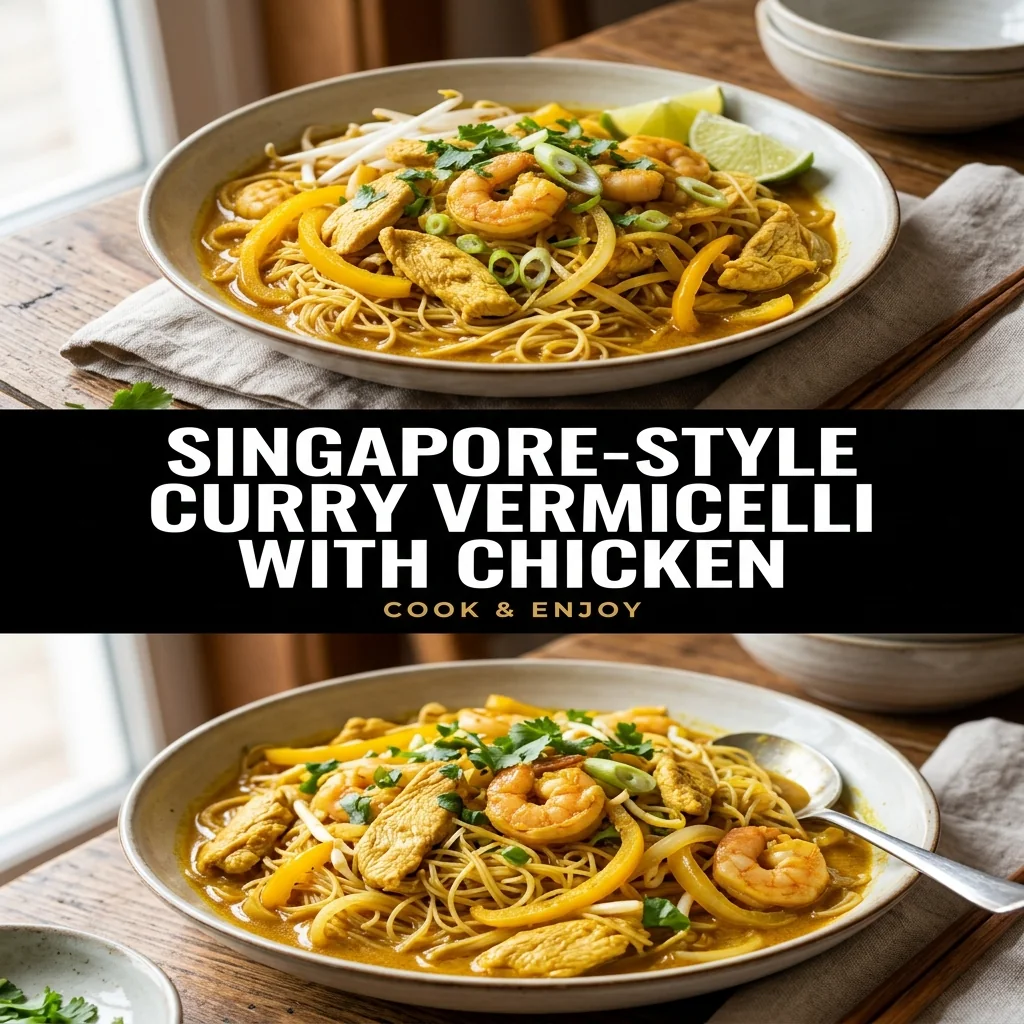
WHY MAKE IT
A little comfort, a lot of flavor.
Singapore-style curry vermicelli is an iconic Cantonese banquet and casual café dish renowned for its bright golden hue and lively wok aroma. Despite its name, this stir-fry originated in Hong Kong, where cooks ingeniously combined British colonial Madras curry powder with delicate rice noodles and fresh stir-fried aromatics. Thin vermicelli strands soak up the savory, spiced oil, turning vibrant yellow while remaining pleasantly separate and springy. Tender strips of halal chicken breast add lean protein, cooked swiftly over high heat to retain juiciness. Tossed with julienned red peppers, yellow onions, and crunchy mung bean sprouts, this quick stir-fry delivers fantastic contrast between tender noodles and crisp garden vegetables.
Marinating and Cooking Halal Chicken
Thinly slicing boneless halal chicken breast against the grain yields tender strips that cook in minutes without becoming stringy. Coating the meat in soy sauce and cornstarch, a classic velveting technique, locks in moisture and shields delicate poultry proteins against high wok heat. When stir-fried in hot oil, the cornstarch coating gelatinizes quickly, ensuring the meat browns evenly while remaining tender and juicy inside. Stir-fry the chicken until it reaches the safe internal cooking temperature of 165 degrees Fahrenheit (74 degrees Celsius) before briefly resting it on a side plate.
Blooming Madras Curry Powder
Curry powder contains raw ground spices including turmeric, coriander, cumin, fenugreek, and mustard seeds that taste gritty and bitter if not heat-activated. Blooming the spices in shimmering cooking oil alongside aromatics like ginger, garlic, and sliced yellow onions releases fat-soluble volatile flavor compounds. This brief frying process mellows the raw pungency of the spices and diffuses deep golden curcumin throughout the pan oil. When the soaked vermicelli enters the wok, this infused oil instantly coats every rice strand, ensuring uniform golden coloration and balanced flavor distribution.
Wok Temperature and Heat Control
Stir-frying delicate rice noodles requires brisk, high heat and rapid movement to achieve subtle smoky complexity without scorching the ingredients. A carbon steel wok or wide, heavy cast-iron skillet provides the thermal retention necessary to keep temperatures elevated when cold vegetables and noodles are introduced. Work quickly using a wide spatula or cooking chopsticks to lift and fluff the noodles rather than pressing them downward against the metal. This lifting action allows steam to escape, keeping noodles separate and preserving the snappy crunch of fresh bean sprouts.
Before you start
The key to preventing rice vermicelli from turning into a mushy, broken mess in the wok is avoiding boiling water. Submerge dried rice noodles in warm tap water for ten minutes until pliable yet still firm in the center, then drain thoroughly in a colander. Shake out excess moisture and snip long bundles with kitchen shears into six-inch lengths. When added to the hot wok, the moist noodles absorb seasoning sauces directly without overcooking or disintegrating during vigorous tossing.
THE RECIPE
Singapore-Style Curry Vermicelli with Chicken
4 servings · 20 minutes preparation · 12 minutes cooking · 10 minutes cooling, chilling or resting
Ingredients
Step-by-step instructions
- Place the 7 ounces of dried rice vermicelli into a large heatproof bowl, cover completely with warm tap water, and let rest for 10 minutes until softened and pliable yet firm to the bite.
- Drain the softened vermicelli thoroughly in a colander, use kitchen shears to cut the noodles into manageable 6-inch lengths, and set aside on a clean tray.
- In a medium bowl, toss the sliced halal chicken breast strips with 1 tablespoon halal soy sauce and 1 teaspoon cornstarch until evenly coated, allowing it to marinate at room temperature for 10 minutes.
- In a small ramekin, mix 1.5 tablespoons Madras curry powder, 0.5 teaspoon ground turmeric, 1 tablespoon vegetarian oyster sauce, 0.5 teaspoon sea salt, and 2 tablespoons halal chicken broth until smooth.
- Heat 1 tablespoon cooking oil in a large 14-inch flat-bottom wok or heavy skillet over high heat until shimmering; add the marinated chicken strips in a single layer and stir-fry for 3 to 4 minutes until fully cooked through to an internal temperature of 165 degrees Fahrenheit (74 degrees Celsius), then transfer to a clean plate.
- Wipe out the wok, add the remaining 1.5 tablespoons cooking oil over medium-high heat, and add the sliced onion, red bell pepper, garlic, and ginger, stir-frying rapidly for 2 minutes until aromatic and tender-crisp.
- Pour the prepared curry spice liquid directly into the wok with the vegetables, stirring constantly for 30 seconds until the spices bloom and become fragrant in the bubbling oil.
- Add the drained rice vermicelli and cooked chicken strips back to the wok, tossing continuously using two spatulas or long tongs for 2 to 3 minutes over medium heat until the noodles are uniformly dyed golden yellow and piping hot.
- Toss in 1.5 cups mung bean sprouts and scallion batons during the final 30 seconds of cooking, remove immediately from heat to preserve vegetable crunch, and serve warm.
Kitchen notes
The key to preventing rice vermicelli from turning into a mushy, broken mess in the wok is avoiding boiling water. Submerge dried rice noodles in warm tap water for ten minutes until pliable yet still firm in the center, then drain thoroughly in a colander. Shake out excess moisture and snip long bundles with kitchen shears into six-inch lengths. When added to the hot wok, the moist noodles absorb seasoning sauces directly without overcooking or disintegrating during vigorous tossing.
Storage & make-ahead
Cool leftover stir-fried vermicelli promptly and place in a sealed airtight container in the refrigerator within 2 hours; consume within 2 to 3 days. Reheat in a lightly oiled nonstick skillet or wok over medium-high heat with 1 to 2 tablespoons of water or halal broth to loosen the strands, tossing constantly until steaming hot and reaching an internal temperature of 165 degrees Fahrenheit (74 degrees Celsius). Avoid microwave reheating as it dries the rice noodles unevenly.
An original recipe guide inspired by themes in our Pinterest research. Recipe has not been independently kitchen-tested. AI-generated image is illustrative; your finished dish may look different.
Frequently asked questions
Why did my rice noodles break into small pieces?
Rice noodles break if they are soaked too long in boiling water or stirred aggressively with blunt utensils. Soak them in warm water until barely pliable, and use two pairs of tongs or chopsticks to gently lift and toss.
Can I use chicken thighs instead of chicken breast?
Yes, boneless skinless halal chicken thighs make an excellent alternative. Slice them into thin matchsticks and stir-fry until fully cooked to an internal temperature of 165 degrees Fahrenheit (74 degrees Celsius) before proceeding with the vegetable stir-fry.
Is Madras curry powder spicy?
Mild Madras curry powder offers deep aromatic warmth and earthy spice from turmeric, fenugreek, and cumin with very mild chili heat. If you prefer higher spice levels, select hot Madras curry or stir in fresh sliced chili peppers.


