WHY MAKE IT
A little comfort, a lot of flavor.
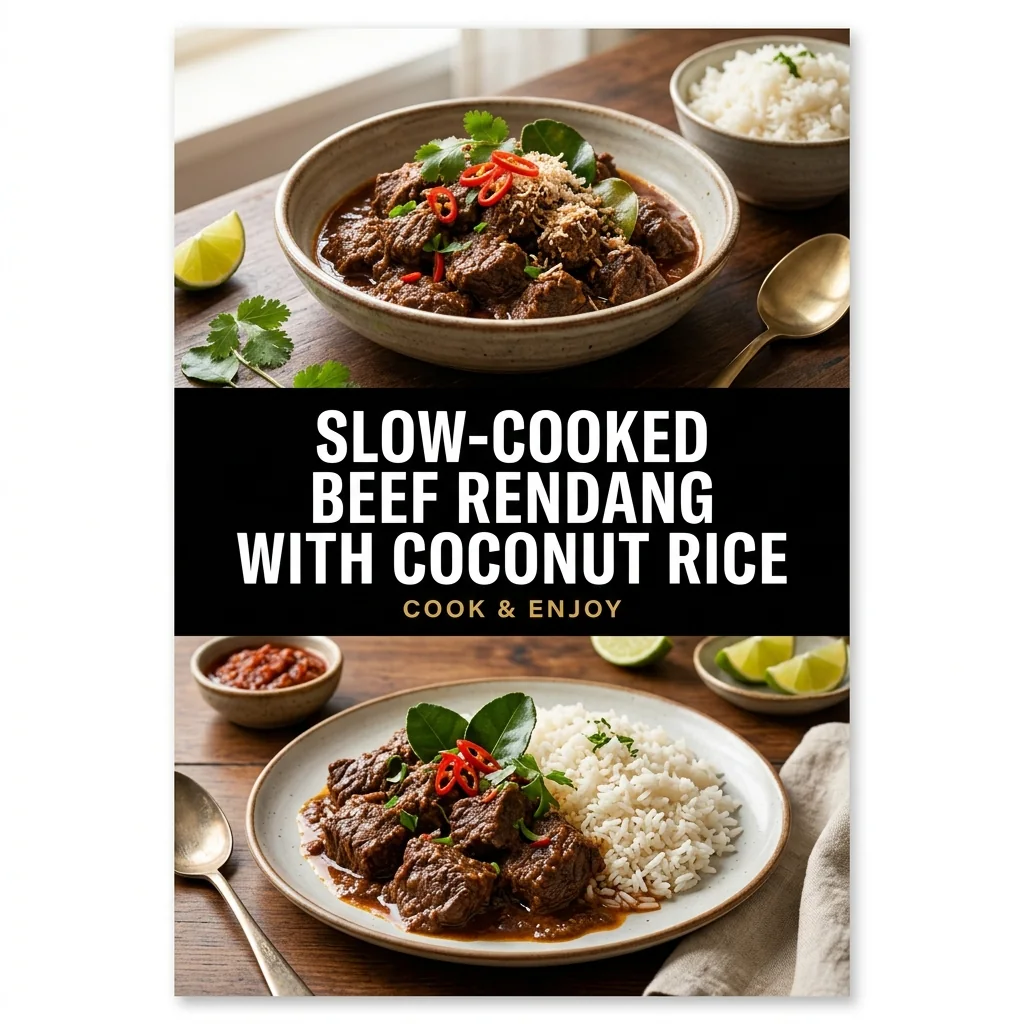
Beef rendang stands as a cornerstone of Southeast Asian celebratory cooking, revered for its complex spice profile and meltingly tender beef. Developed historically as an ingenious preservation method, this dish relies on slow simmering where coconut milk reduces completely, allowing the rich natural oils to slowly caramelize the meat cubes without burning. Prepared with certified halal beef chuck, fresh lemongrass, and fiery aromatics, every bite delivers warmth from galangal and gentle citrus lift from bruised kaffir lime leaves. Accompanied by fragrant coconut jasmine rice, this traditional meal represents patience rewarded, bringing restaurant-quality depth into the home kitchen through careful reduction.
Selecting Beef Chuck for Braising
Selecting the right cut of halal beef is fundamental to a succulent rendang. Lean cuts like sirloin or round dry out and become unpleasantly stringy during the lengthy reduction process. Halal-certified beef chuck roast offers generous intramuscular marbling and abundant connective tissue. As the meat simmers through the gentle braising phase, collagen breaks down into rich gelatin, keeping the individual cubes tender while holding their structural integrity throughout the concluding caramelization phase.
The Importance of Kerisik
Kerisik, or toasted coconut paste, provides the signature nutty aroma, gritty thickness, and deep mahogany color characteristic of authentic rendang. Toast raw, unsweetened coconut flakes slowly in a dry pan until uniformly amber, watching diligently to prevent burning. Pounding or finely grinding the warm flakes releases their natural oils, yielding a fragrant butter. Stirring this paste into the stew during the final hour acts as a natural thickening agent and flavor enhancer.
Mastering the Reduction Phases
Understanding the three cooking stages prevents anxiety during preparation. The first stage resembles a soup (gulai), while the second stage thickens into a glossy sauce (kalio). The final phase begins when water completely evaporates, leaving clear coconut oil at the bottom of the pot. Stir steadily as the beef turns from pale brown to dark mahogany, monitoring the heat to ensure deep flavor development without acrid scorching.
Before you start
True rendang is not a loose stew or wet curry; it is a reduction technique where beef braises in seasoned coconut milk until all moisture cooks away. Once the water content evaporates, the remaining coconut oil fries the spices and meat, creating a deep brown exterior. Keep the heat on low during the final 30 minutes and stir continuously with a flat wooden spoon to prevent the sugars from scorching against the bottom of your pot.
THE RECIPE
Slow-Cooked Beef Rendang with Coconut Rice
6 servings · 30 minutes preparation · 150 minutes cooking · 15 minutes cooling, chilling or resting
Ingredients
Step-by-step instructions
- In a food processor, blend the shallots, garlic, galangal, ginger, and softened rehydrated red chilies into a smooth aromatic paste, adding 2 tablespoons of water if needed to facilitate blending.
- Transfer the blended paste into a 6-quart heavy-bottomed Dutch oven set over medium heat, cooking dry for 4 minutes until the paste is fragrant and loses its raw aroma.
- Add the halal beef chuck cubes, 1 1/2 cups of full-fat coconut milk, bruised lemongrass stalks, torn kaffir lime leaves, sea salt, and palm sugar to the Dutch oven, stirring thoroughly to coat.
- Bring the liquid to a rolling boil over medium-high heat, then immediately drop the heat to low, maintaining an uncovered gentle simmer for 90 minutes while stirring occasionally.
- While the beef gently simmers, pulse the toasted shredded coconut flakes in a small grinder until finely ground and oily (forming kerisik), then stir this paste into the simmering beef.
- Continue simmering the beef uncovered over low heat for another 45 minutes, stirring frequently along the pot bottom as the liquid evaporates and the beef fries in its own separated coconut oil until dark brown and deeply caramelized.
- In a medium saucepan, combine the rinsed jasmine rice, 1.5 cups of water, and 1 cup of coconut milk; simmer covered over low heat for 15 minutes, remove from heat, and let rest covered for 15 minutes before fluffing and serving with the rendang.
Kitchen notes
True rendang is not a loose stew or wet curry; it is a reduction technique where beef braises in seasoned coconut milk until all moisture cooks away. Once the water content evaporates, the remaining coconut oil fries the spices and meat, creating a deep brown exterior. Keep the heat on low during the final 30 minutes and stir continuously with a flat wooden spoon to prevent the sugars from scorching against the bottom of your pot.
Storage & make-ahead
Allow the cooked rendang and rice to cool to room temperature, packing them within 2 hours into separate airtight containers. Refrigerate the rendang safely for up to 4 days, noting that flavors deepen substantially by the next day. Reheat leftover beef rendang in a covered pan over low heat with 2 tablespoons of water until the internal temperature reaches 165 F (74 C). Store leftover rice refrigerated for up to 3 days.
An original recipe guide inspired by themes in our Pinterest research. Recipe has not been independently kitchen-tested. AI-generated image is illustrative; your finished dish may look different.
Frequently asked questions
Can I prepare rendang in a pressure cooker?
You can tenderize the beef under high pressure for 35 minutes, but you must vent steam and reduce the sauce uncovered on the stovetop for 25 minutes to achieve the essential oil-fried caramelization.
What is the best substitute if fresh galangal is unavailable?
Frozen whole galangal thawed at room temperature works best. If completely unavailable, use extra fresh ginger combined with a small strip of fresh lime zest, though the distinct piney punch will be slightly subdued.
Why did my coconut milk curdle during simmering?
Full-fat coconut milk naturally breaks and separates during extended cooking. In traditional rendang, this separation is intentional, as the released coconut oil is required to gently fry and brown the beef once the water evaporates.