WHY MAKE IT
A little comfort, a lot of flavor.
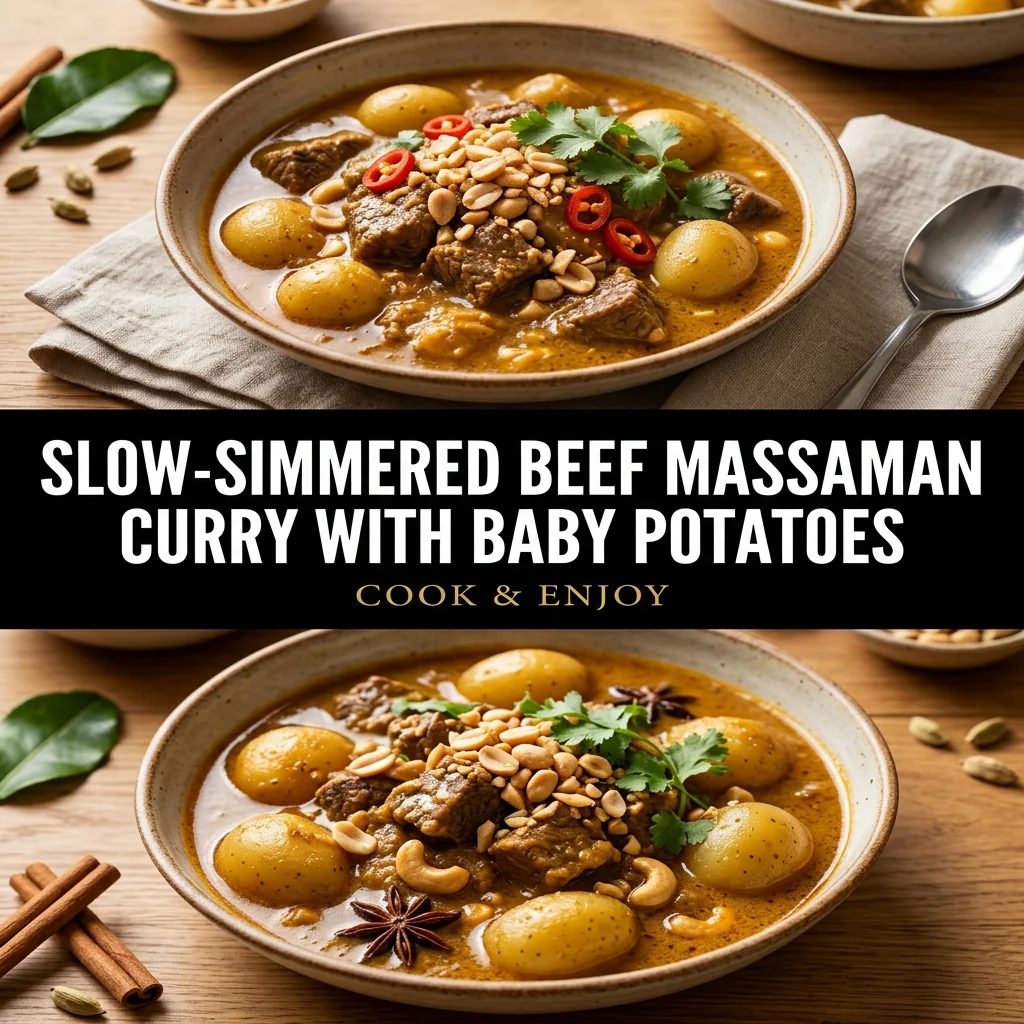
Massaman curry is celebrated across Southeast Asian cuisine for its warm, comforting spice architecture and luxuriously thick sauce. Influenced historically by Indian and Persian merchants, this dish departs from fiery green curries by featuring whole warming spices such as cinnamon, star anise, and green cardamom pods alongside nutty, roasted peanuts. Halal beef chuck roast is the ideal cut for this slow-simmered recipe, as its connective tissues break down gently during the braise, melting into the coconut milk to create an unctuous texture. Sweet baby potatoes absorb the savory broth, while tamarind paste and palm sugar create an irresistible balance of tart and sweet notes. Served over steamed jasmine rice, it offers a deeply satisfying meal that feels special yet approachable.
The Chemistry of Slow-Braised Beef Chuck
Tough cuts like beef chuck roast contain abundant collagen, which requires sustained, low-temperature cooking to convert into unctuous gelatin. High boiling temperatures squeeze moisture out of meat fibers, resulting in stringy beef. By holding the curry at a gentle simmer between 190°F and 200°F (88°C to 93°C), the collagen dissolves slowly into the braising liquid, creating succulent bites. Cutting the beef into uniform 1.5-inch pieces ensures even heat penetration and keeps the meat intact through the lengthy cooking process without disintegrating prematurely into shreds.
Balancing Sweet, Sour, and Savory Notes
A hallmark of authentic Massaman sauce is its nuanced tripartite seasoning balance: sour tamarind paste, sweet palm sugar, and salty, savory fish sauce. Unlike sharper citrus juices, tamarind provides a deep, fruity acidity that complements rich coconut cream without curdling dairy or plant proteins. Dark brown sugar can substitute for palm sugar, providing molasses undertones. Halal-certified fish sauce provides fundamental umami depth. Always taste the sauce near the end of cooking, as potato starches can soften the seasoning, requiring an extra splash of tamarind or pinch of salt.
Potato Selection and Timing
Baby yellow or Yukon Gold potatoes are ideal for braising because their waxy-to-medium starch content holds its structural shape during simmering. Russet potatoes contain excessive loose starch, which disintegrates and turns the curry unpleasantly grainy. Adding the halved baby potatoes during the final thirty minutes ensures they cook until completely tender without turning mushy. Cutting them into uniform halves exposes enough surface area to absorb the fragrant spiced coconut sauce while remaining intact when stirred, providing satisfying texture in every spoonful.
Before you start
Frying the curry paste in separated coconut cream rather than plain broth is the traditional foundation of Massaman curry. As the coconut cream splits into oil and solids, it blooms the essential oils in the dried chilies, lemongrass, and whole spices without scorching. If your canned coconut milk does not readily separate, cooking the paste in vegetable oil with a spoonful of coconut fat works reliably. Keep the braise at a bare simmer; boiling beef aggressively tightens muscle fibers and creates dry meat.
THE RECIPE
Slow-Simmered Beef Massaman Curry with Baby Potatoes
6 servings · 25 minutes preparation · 105 minutes cooking · 10 minutes cooling, chilling or resting
Ingredients
Step-by-step instructions
- Open one can of coconut milk without shaking, spoon off 0.5 cup of the thick top cream, and set the remainder aside.
- Heat the vegetable oil and the reserved coconut cream in a large Dutch oven or heavy-bottomed pot over medium heat, stirring frequently for 4 to 5 minutes until the oil separates and small bubbles form.
- Add the Massaman curry paste, crushed cardamom pods, cinnamon stick, and star anise; fry the paste in the bubbling coconut oil for 3 to 4 minutes until deeply fragrant and darkened in color.
- Add the cubed halal beef chuck to the pot and stir well to coat every piece thoroughly in the spiced curry paste base, searing the meat for 5 minutes.
- Pour in the remaining coconut milk from both cans, the halal beef broth, tamarind paste, coconut sugar, and fish sauce; stir well and bring the liquid to a gentle boil over medium-high heat.
- Reduce the heat to low, cover the Dutch oven with a tight-fitting lid, and simmer gently for 65 minutes, stirring occasionally to prevent sticking.
- Uncover the pot, add the halved baby potatoes and onion wedges, then stir so they are submerged in the braising liquid.
- Cover and continue simmering over low heat for 25 to 30 minutes until the beef is fork-tender and the potatoes are easily pierced with a knife.
- Stir in the roasted peanuts, remove the pot from the heat, and allow the curry to rest uncovered for 10 minutes before discarding the cinnamon stick and star anise and serving hot.
Kitchen notes
Frying the curry paste in separated coconut cream rather than plain broth is the traditional foundation of Massaman curry. As the coconut cream splits into oil and solids, it blooms the essential oils in the dried chilies, lemongrass, and whole spices without scorching. If your canned coconut milk does not readily separate, cooking the paste in vegetable oil with a spoonful of coconut fat works reliably. Keep the braise at a bare simmer; boiling beef aggressively tightens muscle fibers and creates dry meat.
Storage & make-ahead
Cool the curry completely and refrigerate within 2 hours in a covered glass or stainless steel container for up to 4 days. Curries taste even better the next day as spices penetrate the beef and potatoes. To reheat, transfer portions to a saucepan over medium-low heat, adding a splash of water or broth, and heat until bubbling and reaching 165°F (74°C).
An original recipe guide inspired by themes in our Pinterest research. Recipe has not been independently kitchen-tested. AI-generated image is illustrative; your finished dish may look different.
Frequently asked questions
Can I make this curry in a slow cooker instead?
Yes. Brown the paste, spices, and beef in a skillet first, then transfer everything with the liquids to your slow cooker. Cook on low heat for 6 to 7 hours, adding the potatoes and onions during the last 2 hours so they remain tender yet intact.
What if I cannot find tamarind paste?
You can mix equal parts fresh lime juice and dark brown sugar as a quick substitute. While lime delivers a brighter, sharper citrus acidity than fruity tamarind, it provides the essential sour contrast required to cut through the heavy coconut milk.
Can I freeze leftovers of this curry?
You can freeze the beef and sauce for up to 3 months. However, cooked potatoes can develop a watery, spongy texture upon thawing. For optimal frozen quality, consume the potatoes fresh or remove them before freezing, adding freshly boiled potatoes during reheating.