WHY MAKE IT
A little comfort, a lot of flavor.
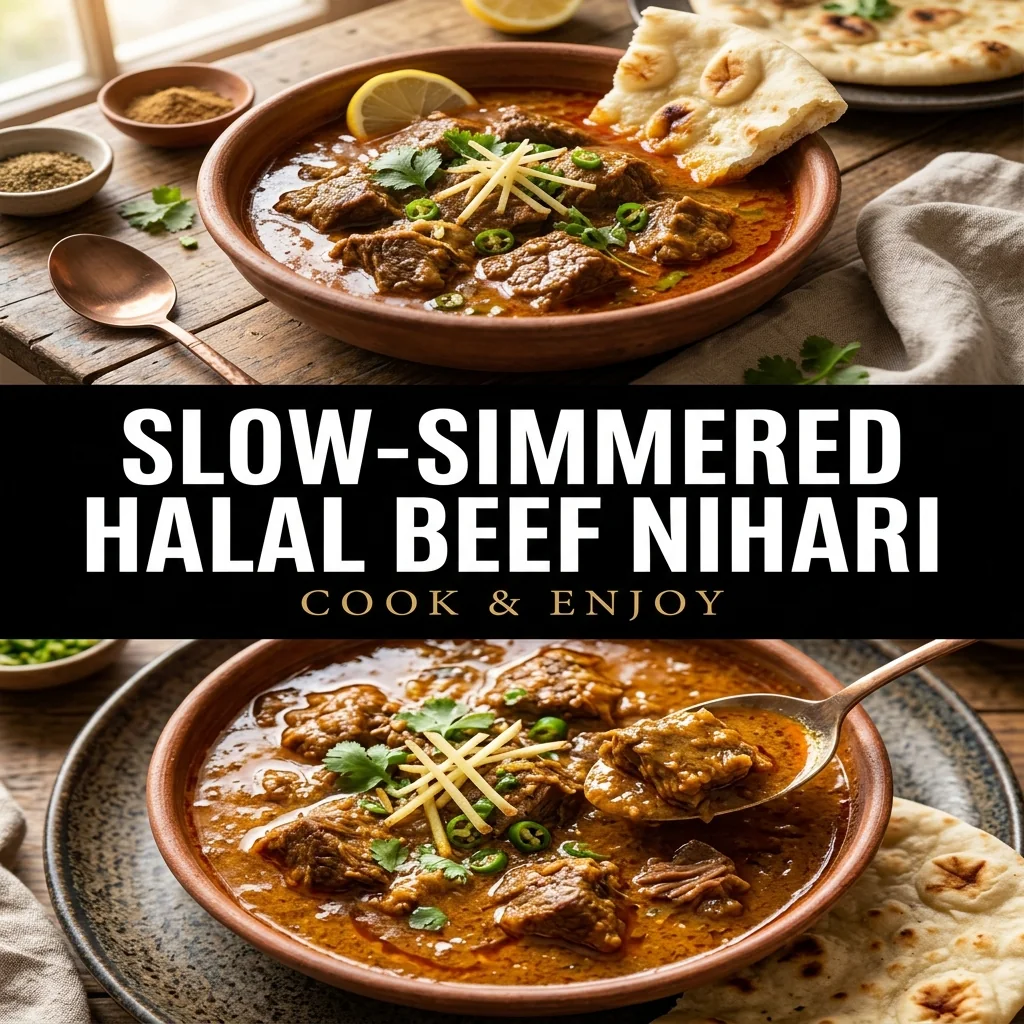
Nihari is a revered slow-cooked stew originating from Old Delhi and widely cherished across South Asia for its deeply spiced, velvety gravy and fall-apart tender beef. Traditionally simmered overnight, this daytime adaptation uses bone-in halal beef shank to yield rich gelatin, marrow, and unmatched savory depth. Spiced with fennel, mace, and vibrant Kashmiri chili, the stew develops an intoxicating aroma that permeates every tender fiber of meat. Thickened uniquely with toasted whole wheat flour rather than cornstarch, nihari achieves a signature silky texture crowned by a glistening layer of seasoned ghee. Served with piquant ginger, spicy chilies, and fresh lemon, it represents comfort food at its finest.
Choosing the Ideal Cut of Beef
The success of authentic nihari relies entirely on selecting bone-in halal beef shank, known regionally as machli. Shank contains high amounts of collagen, connective tissue, and rich marrow within the bone. As it simmers gently over several hours, this connective tissue breaks down into unctuous gelatin, naturally thickening the broth and infusing the gravy with luxurious body. The meat transforms from tough muscle fibers into tender, succulent strands that pull apart effortlessly with a fork, providing an incomparable mouthfeel that leaner cuts simply cannot deliver.
Mastering the Spiced Tari
A hallmark of classic nihari presentation is the gleaming red surface oil known as tari. When ghee is bloomed with Kashmiri chili powder, whole spices, and aromatics, it absorbs vibrant color and fat-soluble flavors. Before stirring in the wheat slurry—which naturally absorbs and obscures this surface sheen—a few spoonfuls of seasoned oil are skimmed and set aside. Drizzling this reserved tari back over each finished bowl just before serving restores that iconic ruby luster and delivers an immediate burst of fragrant aroma.
Essential Fresh Garnishes
Because nihari is inherently rich, heavy, and deeply spiced, fresh garnishes are not merely decorative; they are essential for flavor balance. Matchsticks of raw ginger provide sharp, clean heat that cuts through the savory marrow. Freshly sliced serrano or bird's eye chilies offer bright, vegetal spice, while a generous squeeze of fresh lemon juice introduces vital acidity that lifts the entire dish. Serve alongside warm, fluffy tandoori naan or khameeri roti to scoop up the luscious gravy.
Before you start
Dry-toasting the whole wheat flour (atta) before mixing it with water is the secret to an authentic nihari gravy. Uncooked flour gives the stew an unpleasant raw taste, whereas toasted flour imparts an earthy, nutty depth while thickening the broth evenly. If lumps form in your slurry, strain it through a fine-mesh sieve before pouring it into the simmering beef shank pot.
THE RECIPE
Slow-Simmered Halal Beef Nihari
6 servings · 20 minutes preparation · 210 minutes cooking · 10 minutes cooling, chilling or resting
Ingredients
Step-by-step instructions
- Heat 1/3 cup halal ghee in a heavy-bottomed 6-quart Dutch oven over medium heat, add the sliced red onion, and fry for 8 to 10 minutes until deeply golden brown.
- Stir in 2 tablespoons ginger-garlic paste and cook for 1 minute until fragrant, taking care not to burn the aromatics.
- Add the ground coriander, fennel, turmeric, Kashmiri chili powder, cumin, mace, and salt, stirring vigorously with 2 tablespoons of water for 1 minute to bloom the spices into a glossy paste.
- Add the halal beef shank pieces to the pot and sear over medium-high heat for 6 to 8 minutes, turning occasionally so all sides are coated in the spice base.
- Pour in 6 cups of water or halal beef broth, bring to a rolling boil, then reduce the heat to low, cover with a tight-fitting lid, and simmer gently for 2.5 to 3 hours (165 minutes) until the meat is fork-tender.
- In a small dry skillet over medium-low heat, toast 1/4 cup whole wheat flour for 3 minutes until fragrant, let it cool slightly, then whisk it with 1/2 cup cold water until smooth with no lumps.
- Skim roughly 3 to 4 tablespoons of the red seasoned oil (tari) from the surface of the simmering pot into a small heatproof bowl and reserve for plating.
- Slowly pour the flour slurry into the pot while whisking continuously, stir in 1 teaspoon garam masala, and simmer uncovered over low heat for 15 minutes until the gravy thickens to a glossy consistency.
- Remove from heat, let the pot rest for 10 minutes, then ladle into shallow serving bowls, drizzle with the reserved tari, and garnish with ginger matchsticks, serrano chili slices, and lemon wedges.
Kitchen notes
Dry-toasting the whole wheat flour (atta) before mixing it with water is the secret to an authentic nihari gravy. Uncooked flour gives the stew an unpleasant raw taste, whereas toasted flour imparts an earthy, nutty depth while thickening the broth evenly. If lumps form in your slurry, strain it through a fine-mesh sieve before pouring it into the simmering beef shank pot.
Storage & make-ahead
Allow the nihari to cool slightly, then refrigerate in an airtight container within 2 hours. It keeps refrigerated for up to 4 days and tastes even better the next day as spices deepen. Reheat over medium-low heat on the stove, stirring occasionally, until the beef is piping hot and reaches at least 165°F (74°C). Add a splash of water if the wheat gravy has thickened excessively during chilling.
An original recipe guide inspired by themes in our Pinterest research. Recipe has not been independently kitchen-tested. AI-generated image is illustrative; your finished dish may look different.
Frequently asked questions
Can I make this nihari in a pressure cooker?
Yes. After searing the spiced meat, seal your pressure cooker and cook on high pressure for 45 minutes. Release pressure naturally, skim the tari, whisk in the flour slurry, and simmer uncovered for 10 minutes to thicken.
What if I cannot find whole wheat atta flour?
You can substitute standard whole wheat flour or unbleached all-purpose flour. Toast it lightly in a dry skillet over low heat until pale tan and nutty before whisking with water into a smooth slurry.
Is bone-in meat strictly necessary?
While boneless halal stew beef can be used, bone-in shank is strongly recommended. The marrow inside the bone melts into the broth, imparting the authentic richness and gelatinous mouthfeel essential to traditional nihari.