WHY MAKE IT
A little comfort, a lot of flavor.
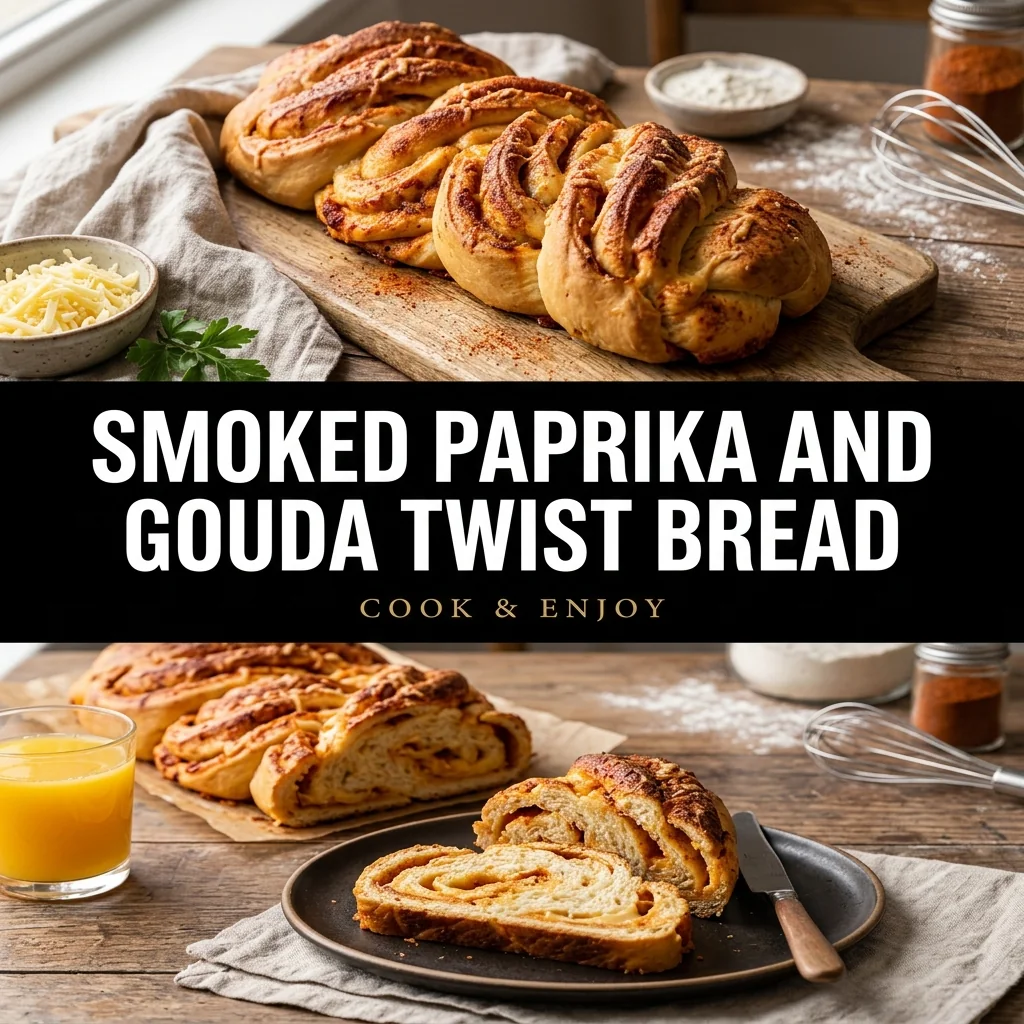
Smoked Paprika and Gouda Twist Bread delivers an exceptional balance of buttery enriched yeast dough, sweet wood-fired spice, and rich melted cheese in every slice. Originating from classic European hearth traditions, braided savory loaves rely on structural tension to create alternating pockets of crust and velvety crumb. The dark amber ribboning provides an eye-catching presentation suitable for communal tables, pairing effortlessly with comforting vegetable soups, lentil broths, or crisp garden salads. Aged Gouda brings a concentrated nuttiness that stands up firmly to aromatic smoked paprika without turning greasy. With simple kitchen tools and steady shaping, home bakers can achieve bakery-quality layering and remarkable depth of flavor right in their home kitchen.
Selecting Cheese and Paprika
For the most satisfying profile, seek out sweet Spanish smoked paprika (pimentón dulce) dried slowly over oak wood, which imparts warmth without bitter heat. Pair this spice paste with an aged Gouda produced using verified microbial or vegetarian rennet. Younger varieties melt too quickly and can leak out of the braid during baking, while a semi-firm cheese aged six to nine months holds its integrity within the layered folds. Grating the Gouda fresh from a block ensures even distribution and superior melting properties compared to commercial pre-shredded cheese coated in anti-caking starches.
Managing Dough Elasticity and Proofing
Enriched doughs containing milk, butter, and egg require patient handling to ensure proper gluten structure. If the dough springs back resistantly during rolling, pause for five minutes under a clean cloth to allow gluten relaxation before resuming. Monitoring the rise by volume rather than strictly by the clock prevents over-proofing, which causes the intricate braid to collapse or turn doughy in the oven. The dough should feel supple, tacky without sticking to dry hands, and should slowly spring back when lightly indented with your fingertip.
Shaping and Braiding Mechanics
Rolling the filled dough into a firm, tight log keeps the paprika paste and shredded cheese securely trapped within the inner rings. When cutting the cylinder lengthwise, exposing the inner layers upward before crossing the halves ensures the striking red and ivory swirl remains visible on the loaf exterior. Pinch the ends securely under the loaf to prevent unraveling during the second proof. Transferring the loaf carefully to parchment paper before braiding guarantees seamless transport directly into your baking vessel without disturbing the risen structure.
Before you start
To achieve distinct visible layers without tearing the tender dough, ensure the softened butter is thoroughly integrated during initial kneading so the gluten develops evenly. When splitting the rolled cylinder, use a very sharp chef's knife or a baker's bench knife in one clean, decisive stroke rather than sawing back and forth. If the cheese begins browning too quickly during the final ten minutes in the oven, tent the top loosely with aluminum foil to protect the crust while the interior finishes baking.
THE RECIPE
Smoked Paprika and Gouda Twist Bread
8 servings · 30 minutes preparation · 35 minutes cooking · 90 minutes cooling, chilling or resting
Ingredients
Step-by-step instructions
- Whisk warm whole milk, active dry yeast, and granulated sugar in a stand mixer bowl; let stand for 8 minutes until frothy.
- Add unbleached all-purpose flour, 1 teaspoon fine sea salt, room-temperature egg, and softened butter; knead with dough hook on medium-low speed for 7 minutes until smooth and elastic.
- Transfer dough to a lightly oiled bowl, cover tightly with a damp towel, and let rise at warm room temperature for 60 minutes until doubled in bulk.
- Combine sweet smoked paprika, extra-virgin olive oil, grated garlic, and remaining 1/4 teaspoon fine sea salt in a small bowl to form a spreadable paste.
- Punch down dough, turn out onto a lightly floured surface, and roll into an even 12x18-inch rectangle using a floured rolling pin.
- Spread paprika paste evenly across dough surface, leaving a 1/2-inch border, then scatter shredded aged Gouda cheese uniformly over the top.
- Roll dough tightly from the long edge into an 18-inch cylinder, pinch the seam closed, slice lengthwise down the center to expose layers, and twist the two strands together into a braid, pinching both ends.
- Transfer braid onto a parchment-lined 9x5-inch loaf pan or baking sheet, cover loosely, and let rest for 20 minutes while preheating oven to 375°F (190°C).
- Brush exposed dough edges gently with egg wash, bake at 375°F (190°C) for 32 to 35 minutes until deep golden brown, and cool in pan for 10 minutes before slicing on a wire rack.
Kitchen notes
To achieve distinct visible layers without tearing the tender dough, ensure the softened butter is thoroughly integrated during initial kneading so the gluten develops evenly. When splitting the rolled cylinder, use a very sharp chef's knife or a baker's bench knife in one clean, decisive stroke rather than sawing back and forth. If the cheese begins browning too quickly during the final ten minutes in the oven, tent the top loosely with aluminum foil to protect the crust while the interior finishes baking.
Storage & make-ahead
Cool briefly, then refrigerate leftovers in an airtight container within 2 hours of baking for up to 3 days. Freeze tightly wrapped portions for up to 2 months. Reheat in a 350 F (177 C) oven until the center reaches 165 F (74 C).
An original recipe guide inspired by themes in our Pinterest research. Recipe has not been independently kitchen-tested. AI-generated image is illustrative; your finished dish may look different.
Frequently asked questions
Can I prepare this dough the day before baking?
Yes. After the initial kneading step, place the covered dough directly into the refrigerator overnight for a slow first rise. Bring the chilled dough to room temperature for 30 minutes before rolling, filling, shaping, and giving it the standard final proof.
How do I ensure the Gouda used is strictly halal-suitable?
Check package labels explicitly for vegetarian rennet or certified halal microbial enzymes. Traditional animal rennet from unverified slaughter must be avoided. Many imported and domestic Dutch-style Gouda cheeses clearly label their microbial coagulants on the nutrition panel.
Why did my filling leak onto the baking sheet?
Filling leakage occurs if the dough is rolled too thinly or if the braid is shaped loosely. Rolling to an even 1/4-inch thickness and pinching the cylinder seam firmly along its entire length will keep the aromatic oil and melting cheese encased.