WHY MAKE IT
A little comfort, a lot of flavor.
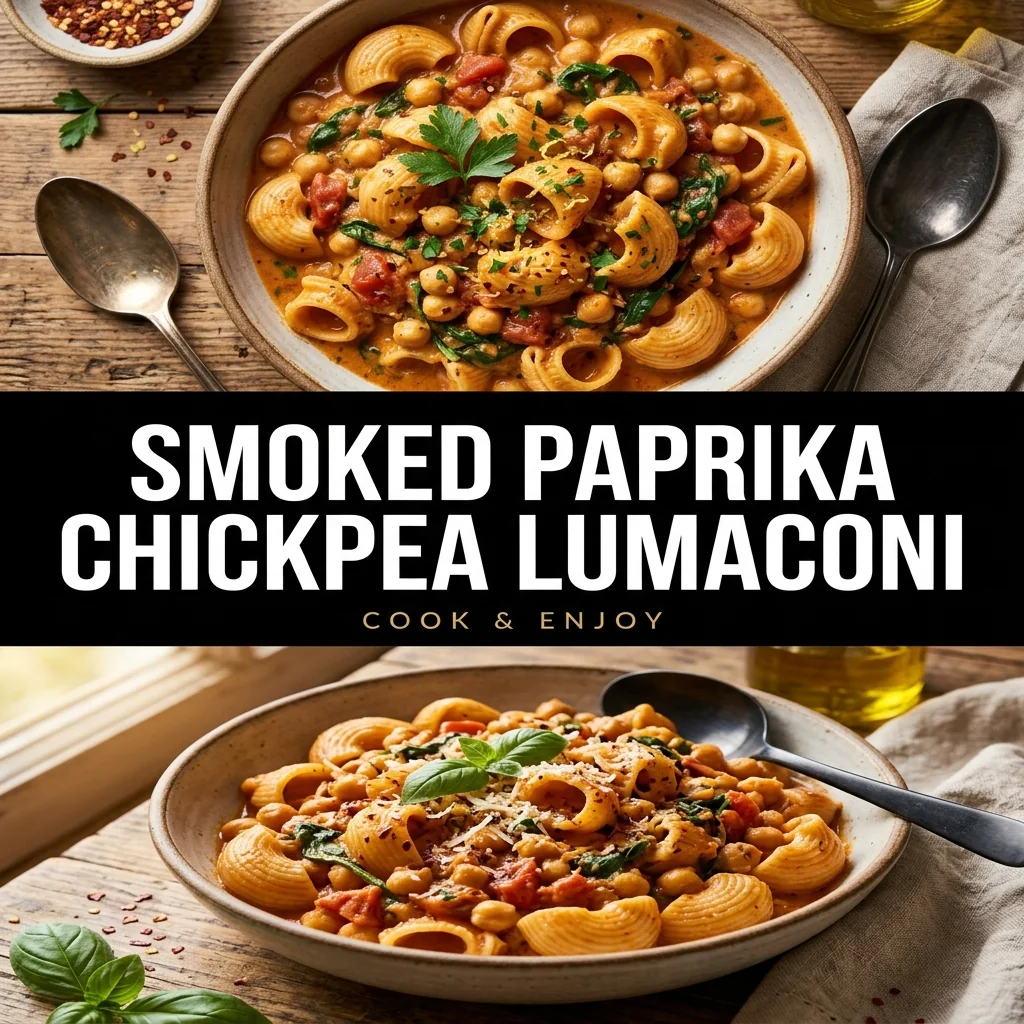
Lumaconi, named after snail shells, features broad openings and curved ridges specifically designed to cradle thick, textured sauces. This rustic pasta dish pairs robust shells with earthy chickpeas bathed in a vibrant Mediterranean tomato reduction. Highlighting sweet smoked paprika and finely chopped wild rosemary, the sauce balances earthy pine aromas with deep, wood-fired warmth. Chickpeas deliver hearty plant protein, turning an uncomplicated bowl of pasta into an exceptionally satisfying meal. Finished with a dusting of sharp, halal-suitable aged pecorino, this preparation demonstrates how pantry-friendly staples can be elevated into a refined weeknight centerpiece. The sauce clings tenaciously to every curve, delivering comforting richness with each forkful.
The Power of Smoked Paprika and Rosemary
Smoked paprika, or pimenton, provides distinctive depth that mimics the savory woodsmoke qualities often sought in slow-cooked sauces. Sourced from slow-dried pimiento peppers smoked over oak logs, it infuses the crushed tomatoes with an earthy, bacon-like warmth without requiring cured meats. Pairing this pungent spice with finely minced fresh rosemary introduces resinous, herbal brightness that cuts through rich tomato acidity. Cooking these aromatics briefly in warm olive oil dissolves their fat-soluble flavor compounds, ensuring the sauce carries complex, multidimensional seasoning throughout rather than tasting flat or powdery.
Optimizing Pasta Texture and Shape
Lumaconi provides an architectural advantage over simple tubular pastas. Its wide opening invites chickpeas and reduced tomato fond inside the pasta shell itself, ensuring each bite contains a balanced proportion of legume, sauce, and pasta. Cooking the lumaconi slightly short of standard al dente allows the pasta to finish cooking directly inside the bubbling chickpea sauce. This direct finishing method pulls savory cooking liquid into the pasta walls, while surface starches unite with the olive oil to produce a cohesive glaze that will not separate on the plate.
Legume Starch Integration
Chickpeas contribute more than texture; they act as a natural sauce thickener. Rinsing canned chickpeas removes excess canning liquid, ensuring a clean flavor foundation. As the chickpeas simmer within the acidic tomato base, they soften slightly while retaining structural integrity. Pressing a small portion of the chickpeas against the pan wall releases interior starches directly into the sauce. This simple culinary technique creates a creamy body without relying on heavy creams or starches, allowing the rustic flavors of tomato, smoked pepper, and pecorino to shine cleanly.
Before you start
Lumaconi pasta resembles oversized snail shells with pinched ends, making them exceptional vessels for catching whole legumes and chunky sauces. When simmering the sauce, crush a quarter of the chickpeas against the side of the skillet using the back of a wooden spoon; releasing their interior starches naturally binds the tomato sauce into a velvety consistency. Be vigilant when toasting smoked paprika, as ground dried peppers can turn bitter if exposed to dry heat without enough oil.
THE RECIPE
Smoked Paprika Chickpea Lumaconi
4 servings · 15 minutes preparation · 35 minutes cooking · 5 minutes cooling, chilling or resting
Ingredients
Step-by-step instructions
- Bring a large 6-quart pot of generously salted water to a rolling boil over high heat.
- Heat the extra-virgin olive oil in a wide, deep 4-quart skillet or Dutch oven over medium heat.
- Add the diced yellow onion and cook for 6 to 8 minutes, stirring frequently until soft and translucent.
- Add the sliced garlic, minced rosemary, smoked paprika, and crushed red pepper flakes, stirring continuously for 90 seconds until the spices release their aroma without burning.
- Stir in the tomato paste and cook for 2 minutes, coating the aromatics until the paste darkens to a deep brick red.
- Pour in the crushed San Marzano tomatoes, rinsed chickpeas, vegetable broth, fine sea salt, and black pepper, stirring thoroughly to incorporate.
- Bring the sauce to a lively simmer, then reduce heat to medium-low and cook uncovered for 20 minutes, stirring occasionally, until the sauce reduces and thickens slightly.
- Add the lumaconi pasta to the boiling water and cook for 11 minutes until barely al dente, reserving 0.5 cup of starchy pasta water before draining.
- Transfer the drained lumaconi directly into the simmering chickpea sauce, toss over low heat for 2 minutes using reserved pasta water if needed to loosen, then rest 5 minutes and finish with parsley and grated pecorino cheese.
Kitchen notes
Lumaconi pasta resembles oversized snail shells with pinched ends, making them exceptional vessels for catching whole legumes and chunky sauces. When simmering the sauce, crush a quarter of the chickpeas against the side of the skillet using the back of a wooden spoon; releasing their interior starches naturally binds the tomato sauce into a velvety consistency. Be vigilant when toasting smoked paprika, as ground dried peppers can turn bitter if exposed to dry heat without enough oil.
Storage & make-ahead
Refrigerate leftover lumaconi in an airtight container within 2 hours of cooking. Keep chilled at or below 40 F (4 C) for up to 4 days. Reheat gently in a saucepan over medium-low heat with a splash of broth or water until steaming hot throughout, reaching at least 165 F (74 C). Make the chickpea sauce up to 3 days ahead for enhanced depth.
An original recipe guide inspired by themes in our Pinterest research. Recipe has not been independently kitchen-tested. AI-generated image is illustrative; your finished dish may look different.
Frequently asked questions
Can I substitute dried chickpeas cooked from scratch?
Yes, use 1.5 cups of home-cooked chickpeas. Ensure they are simmered until tender before adding them to the skillet, as the acid in tomatoes will prevent raw chickpeas from softening.
What can I substitute if I cannot find lumaconi?
Conchiglioni (large shells), pipe rigate, or calamarata serve as excellent substitutes, providing ample internal space to capture the tender chickpeas and thick paprika tomato sauce.
Is pecorino cheese always halal-compliant?
Traditional pecorino utilizes animal rennet. Verify the label specifically confirms microbial rennet, vegetarian coagulant, or a reputable halal certification symbol to guarantee full compliance.


