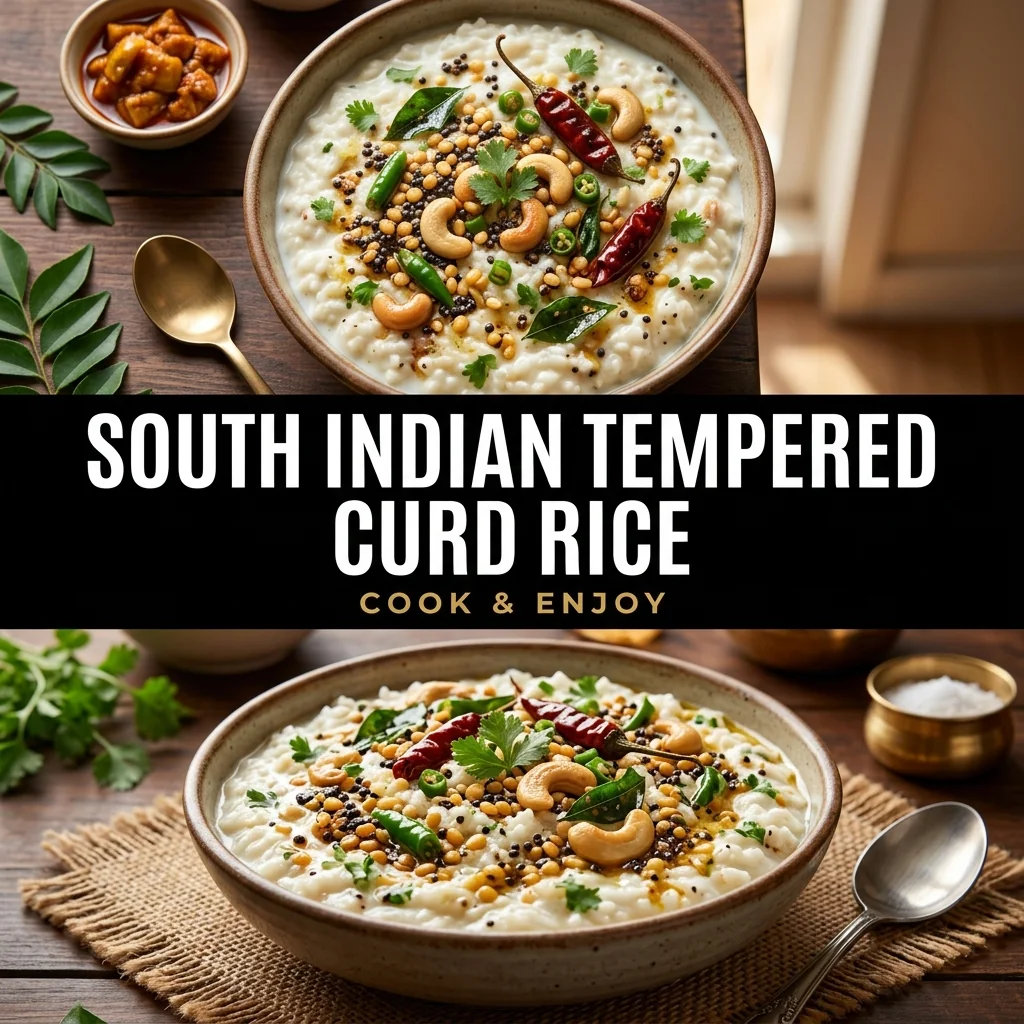
WHY MAKE IT
A little comfort, a lot of flavor.
Known variously as Thayir Sadam or Daddojanam, curd rice is the soothing finale of a traditional South Indian meal. Celebrated for its gentle cooling properties and creamy mouthfeel, this humble dish combines tender, mashed short-grain rice with whole-milk yogurt, finished with a fragrant tempering of spices known as tadka. The rice is deliberately cooked past al dente to allow the soft grains to absorb the dairy without separating. Crackling black mustard seeds, earthy curry leaves, zesty fresh ginger, and nutty urad dal offer textural crunch and aromatic contrast against the luscious yogurt base. Wholesome and easy on the digestion, tempered curd rice is ideal for warm afternoons or as a calming counterpart to bold, spicy curries.
The Purpose of Overcooking and Mashing
Unlike pilafs or biryanis where distinct, separated grains are prized, authentic curd rice requires soft, yielding starch. Cooking the short-grain rice with extra water ensures the grains swell and soften completely. Mashing the rice while it is warm ruptures the cell walls, releasing starch molecules that bond seamlessly with the fats in the yogurt. If the grains remain firm and separate, the yogurt simply sits around the rice like a dressing rather than melding into a rich, pudding-like consistency. Mash gently so small fragments remain, avoiding a smooth, pureed paste.
Mastering the Tadka Tempering
The tempering, or tadka, forms the soul of curd rice, introducing textural contrast and botanical warmth to an otherwise mild base. Ghee or oil must be heated adequately before adding the black mustard seeds; they must pop vigorously to release their nutty flavor and shed bitterness. The split urad dal provides an essential toasted crunch, but it transitions from golden to scorched in seconds. Keep the heat controlled at medium, adding the fresh curry leaves, minced green chili, and aromatic asafoetida at the end so their aromatic volatile oils perfume the hot fat without burning.
Acidity Control and the Role of Milk
As curd rice sits, the live cultures present in plain yogurt continue to ferment the lactose, gradually increasing the dish's sourness while the starch absorbs residual free water. Blending whole milk with whole-milk yogurt buffers this natural acidification, maintaining a delicate, balanced creaminess for hours. If preparing the dish in the morning to serve later in the day, increase the proportion of milk to yogurt; by lunchtime, the live cultures will have set the milk naturally into fresh, gently tangy curd without turning aggressively sharp or chalky.
Before you start
Never mix fresh yogurt into steaming hot rice. High heat instantly curdles the dairy, splitting the fats and whey, which turns the dish watery and grainy. Allow the mashed rice to cool down to room temperature before incorporating the whisked yogurt and milk. Adding a half cup of whole milk alongside the yogurt keeps the mixture luxuriously creamy over several hours, preventing the rice from becoming excessively thick or sour.
THE RECIPE
South Indian Tempered Curd Rice
4 servings · 15 minutes preparation · 25 minutes cooking · 20 minutes cooling, chilling or resting
Ingredients
Step-by-step instructions
- Rinse 1 cup short-grain white rice thoroughly under cold running water until the runoff is clear, then drain completely.
- Combine the rinsed rice and 3 cups water in a heavy 3-quart saucepan, bring to a rolling boil over medium-high heat, reduce heat to low, cover tightly, and simmer for 20 minutes until the rice is noticeably soft and slightly overcooked.
- Remove the pot from the heat and immediately mash the hot grains coarsely using a potato masher or the back of a wide spoon; leave the lid ajar and allow the rice to cool for 20 minutes until it reaches room temperature.
- Once cooled, stir 1 1/2 cups whisked plain whole-milk yogurt, 1/2 cup cold whole milk, and 1 1/4 teaspoons fine sea salt into the mashed rice until thoroughly combined and creamy.
- Heat 1 1/2 tablespoons of ghee or neutral vegetable oil in a small tempering pan (tadka pan) or skillet over medium heat.
- Add 1 teaspoon black mustard seeds to the hot ghee; when they begin popping, immediately add 1 teaspoon urad dal and fry for 30 to 45 seconds until the dal turns light golden brown.
- Stir in 1 tablespoon grated fresh ginger, 1 minced green chili, 10 to 12 curry leaves, and 1/8 teaspoon asafoetida powder; sauté for 30 seconds until the curry leaves are crisp and fragrant, then immediately remove from the heat.
- Pour the hot aromatic tempering oil and fried spices directly over the prepared curd rice mixture, folding gently to distribute the seasonings evenly throughout.
- Transfer to a serving bowl, garnish with 2 tablespoons fresh pomegranate arils or chopped cilantro, and serve at cool room temperature.
Kitchen notes
Never mix fresh yogurt into steaming hot rice. High heat instantly curdles the dairy, splitting the fats and whey, which turns the dish watery and grainy. Allow the mashed rice to cool down to room temperature before incorporating the whisked yogurt and milk. Adding a half cup of whole milk alongside the yogurt keeps the mixture luxuriously creamy over several hours, preventing the rice from becoming excessively thick or sour.
Storage & make-ahead
Store leftover curd rice in an airtight glass container in the refrigerator within 2 hours. Keep refrigerated at 40°F (4°C) or colder for up to 2 days. Because curd rice is traditionally consumed cool or at room temperature, enjoy leftovers cold or let the dish sit on the counter for 15 minutes before serving; avoid high microwave heat to prevent yogurt curdling.
An original recipe guide inspired by themes in our Pinterest research. Recipe has not been independently kitchen-tested. AI-generated image is illustrative; your finished dish may look different.
Frequently asked questions
Can I use Greek yogurt instead of regular whole-milk yogurt?
Greek yogurt is strained and contains much less moisture than traditional Indian curd. If using Greek yogurt, thin it by whisking with equal parts whole milk or water until it reaches the consistency of heavy cream before stirring it into the mashed rice.
What is the purpose of split urad dal in the tempering?
Raw split urad dal fries into a crunchy, nutty element that contrasts the smooth, creamy texture of the mashed rice. Ensure it turns light golden without turning dark brown, which would impart a bitter taste.
Is asafoetida essential, and what does it do?
Asafoetida (hing) provides an unmistakable savory, allium-like depth reminiscent of leeks and garlic, which balances the cooling yogurt. It also traditionally aids digestion. If strictly gluten-free, verify your brand is compounded with rice flour rather than wheat.


