WHY MAKE IT
A little comfort, a lot of flavor.
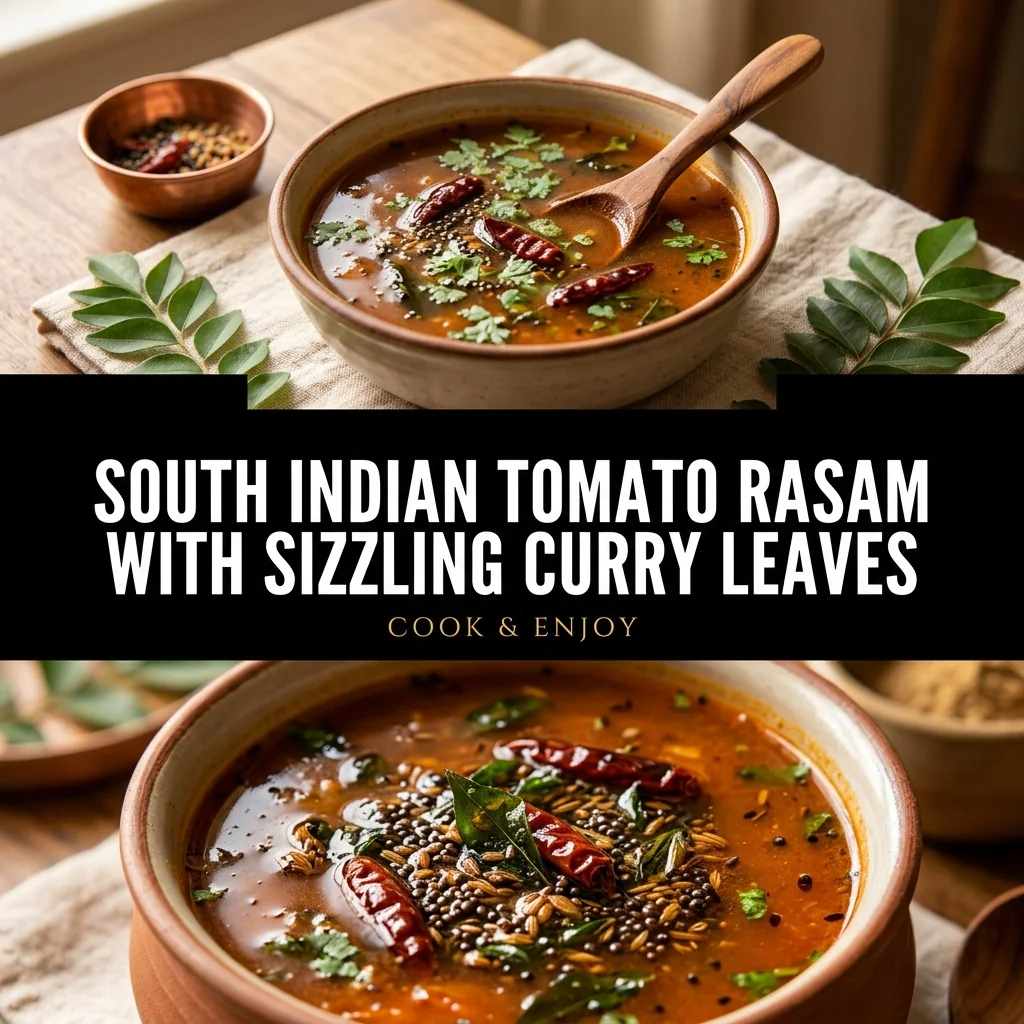
South Indian rasam is cherished as both a daily staple and a revitalizing home tonic, renowned for its brisk tang and assertive black pepper kick. Unlike thick gravies or puréed vegetable soups, traditional rasam offers a light, broth-like clarity centered on the lively acidity of sun-ripened tomatoes and sour tamarind fruit. Crushing whole spices moments before simmering releases essential volatile oils that awaken the palate, while the crowning tadka—a rapid flash-fry of black mustard seeds and glossy curry leaves in halal-certified ghee—infuses the broth with irresistible nutty complexity. Enjoyed warm in a small cup before a meal or poured generously over fragrant basmati rice, it provides instant digestive comfort.
The Chemistry of Freshly Pounded Aromatics
Pre-ground spices lack the lively bite required for authentic rasam. Black peppercorns and cumin seeds contain aromatic terpenes and piperine that oxidize quickly once shattered. Pounding them in a mortar alongside skin-on garlic cloves creates a coarse, irregular paste where juices and fractured seeds unite. Because the garlic remains coarsely crushed rather than pureed, it gently diffuses its sweet pungency into the simmering tamarind without overwhelming the clean profile. Adding this spice blend toward the end of the simmer ensures the bold essential oils stay suspended in the broth.
Balancing Tartness and Salt
The defining characteristic of tomato rasam is its bright sourness, derived from the synergy between juicy tomatoes and concentrated tamarind fruit. Selecting fully ripe, fragrant tomatoes provides natural sweetness that softens the mouth-puckering edge of tamarind pulp. If your tomatoes are underripe or overly acidic, a tiny pinch of unrefined jaggery or brown sugar helps round out the sharper edges without making the broth sweet. Generous kosher salt is necessary to bind the tartness to the earthy cumin, ensuring the liquid tastes restorative rather than harsh.
The Finishing Tadka Technique
Tempering, or tadka, transforms a simple herbal broth into a multi-layered sensory dish. Heating halal-certified ghee or cold-pressed coconut oil to near smoking point allows black mustard seeds to burst their hulls within seconds, shedding their raw bitterness in favor of a nutty flavor. Adding dried chilies, asafoetida, and fresh curry leaves into the hot fat captures their volatile compounds in the lipids. Pouring this bubbling oil into the resting pot locks the aromatics beneath the surface, distributing fragrant fat droplets throughout the clear broth.
Before you start
Never allow rasam to boil aggressively after adding the coarsely crushed cumin-pepper-garlic paste. Prolonged boiling dulls the sharp, refreshing punch of black pepper and turns garlic unpleasantly bitter. Look for the characteristic layer of golden, fragrant froth forming around the saucepan rim; that visual cue signals the exact moment to extinguish the flame. Fresh curry leaves are indispensable here—substituting dried leaves will forfeit the crackling herbaceous oil released during the hot ghee tempering.
THE RECIPE
South Indian Tomato Rasam with Sizzling Curry Leaves
4 servings · 15 minutes preparation · 20 minutes cooking · 5 minutes cooling, chilling or resting
Ingredients
Step-by-step instructions
- Place the whole black peppercorns, cumin seeds, and smashed garlic into a stone mortar; pound roughly into a coarse, textured paste without turning it into a fine powder.
- In a medium bowl, combine the chopped ripe tomatoes with the dissolved tamarind liquid and use clean hands to mash the tomatoes firmly, breaking down the pulpy flesh into the sour liquid.
- Pour the mashed tomato-tamarind mixture into a 3-quart stainless steel saucepan, then stir in 3 cups of water, ground turmeric, and kosher salt.
- Bring the tomato liquid to a gentle boil over medium heat and cook for 8 to 10 minutes until the raw edge of the tamarind dissipates and the tomatoes soften completely.
- Stir the pounded garlic, cumin, and black pepper paste into the simmering saucepan, lower the heat to medium-low, and let it bubble gently for 4 minutes until deeply fragrant.
- As soon as frothy bubbles rise across the surface of the rasam, turn off the heat immediately to preserve the lively volatile aromas of the freshly ground spices.
- Melt the halal-certified ghee in a small tadka pan or small skillet over medium-high heat until hot; add the mustard seeds and let them pop vigorously.
- Immediately drop the broken dried red chilies, fresh curry leaves, and asafoetida powder into the popping seeds, letting the curry leaves crackle and crisp for 15 seconds.
- Pour the sizzling tempered spices directly into the rested rasam pot, garnish generously with fresh chopped cilantro, cover with a tight lid for 5 minutes, and serve warm.
Kitchen notes
Never allow rasam to boil aggressively after adding the coarsely crushed cumin-pepper-garlic paste. Prolonged boiling dulls the sharp, refreshing punch of black pepper and turns garlic unpleasantly bitter. Look for the characteristic layer of golden, fragrant froth forming around the saucepan rim; that visual cue signals the exact moment to extinguish the flame. Fresh curry leaves are indispensable here—substituting dried leaves will forfeit the crackling herbaceous oil released during the hot ghee tempering.
Storage & make-ahead
Store rasam in an airtight glass container in the refrigerator within 2 hours of cooking; it holds beautifully for up to 3 days as the flavors meld. Reheat gently in a small saucepan over medium-low heat until steaming and registering 165 F (74 C). Avoid vigorous microwave boiling to maintain clear aromatics.
An original recipe guide inspired by themes in our Pinterest research. Recipe has not been independently kitchen-tested. AI-generated image is illustrative; your finished dish may look different.
Frequently asked questions
Can I make this rasam completely vegan?
Yes, simply replace the halal ghee with an equal measurement of cold-pressed virgin coconut oil or neutral sesame oil during the final spice tempering. Coconut oil adds an authentic Coastal Indian fragrance that complements tamarind exceptionally well.
What if I cannot find fresh curry leaves?
Fresh curry leaves provide a singular citrus-resinous aroma that dried leaves cannot mimic. If fresh leaves are unavailable, omit them and increase the fresh cilantro stems during cooking; do not substitute curry powder, which is an unrelated spice blend.
Can I strain out the tomato pulp and spices?
Traditional rasam retains the rustic pulp, seeds, and cracked spices at the bottom of the bowl. However, if serving as a drinking broth in a mug, you may strain the liquid through a coarse sieve after steeping for five minutes.