WHY MAKE IT
A little comfort, a lot of flavor.
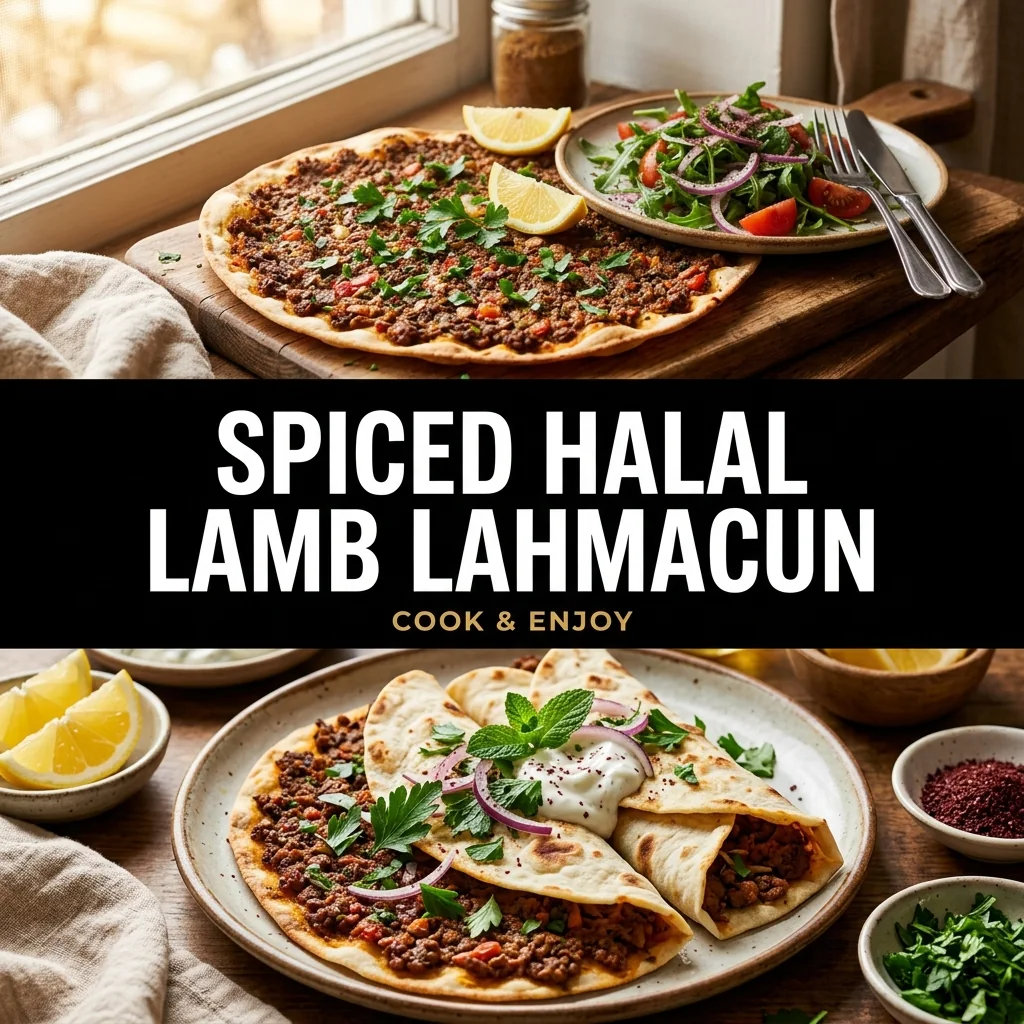
Spiced Halal Lamb Lahmacun represents one of the most revered culinary gems of Anatolian and Levantine baking. Often affectionately described as Middle Eastern flatbread pizza, this historic specialty relies on a paper-thin yeast dough baked at blistering heat under a finely blended blanket of minced meat, vegetables, and aromatic spices. Halal lamb provides succulent richness that melds seamlessly with sweet red peppers, robust garlic, and sun-concentrated tomato paste. Aleppo pepper imparts a fruity, mild warmth that elevates the savory meat without overpowering the palate. Eaten traditionally by spritzing fresh lemon juice over the center, scattering fresh parsley sprigs, and rolling the flatbread into a neat wrap, it delivers extraordinary crunch and vivid flavor.
Crafting the Delicate Flatbread Dough
Unlike standard pizza dough which requires substantial thickness to hold heavy toppings, lahmacun dough must be stretched paper-thin. High-protein unbleached bread flour provides the requisite tensile strength, allowing the dough to be rolled down to nearly one-eighth of an inch without tearing. Using instant dry yeast alongside a warm water hydration ensures swift, reliable proofing. A brief five-minute rest between portioning and rolling relaxes the gluten network completely, preventing the stretched rounds from snapping inward before the meat paste is applied.
Vegetable Extraction and Meat Pasting
Processing the aromatic vegetables releases significant cell water that can compromise the structural integrity of the flatbread. Pressing the processed onion, bell pepper, and tomato mash through a fine-mesh sieve removes this excess liquid while preserving intense vegetable flavor. Blending this dry pulp into ground halal lamb with tomato paste creates a cohesive, spreadable paste. Applying this mixture in an ultra-thin layer ensures the meat cooks thoroughly in under six minutes while adhering tightly to the par-baked crust.
High-Heat Baking and Traditional Service
Baking at maximum oven temperature—ideally 500°F (260°C)—mimics the ferocious thermal energy of traditional stone hearth ovens. A preheated baking stone transfers immediate conductive heat into the base, puffing micro-bubbles into the dough and blistering the edges before the meat dries out. Serve lahmacun immediately out of the oven. Classic street-side presentation involves squeezing fresh lemon juice over the bubbling top, adding extra fresh mint or parsley, and rolling the flatbread lengthwise into a convenient wrap.
Before you start
The definitive mark of authentic lahmacun is an impossibly thin crust that stays crisp on the rim while remaining pliable enough to roll up around fresh garnishes. Squeezing the water out of the processed vegetables is the most crucial step; raw vegetable juices will make the thin dough wet and gummy instead of blistered and crisp. When spreading the raw lamb paste, smear it as thinly as possible. A thick layer will steam the bread rather than roast into the dough.
THE RECIPE
Spiced Halal Lamb Lahmacun
4 servings · 35 minutes preparation · 24 minutes cooking · 65 minutes cooling, chilling or resting
Ingredients
Step-by-step instructions
- Combine unbleached bread flour, instant dry yeast, granulated sugar, and 1 teaspoon fine sea salt in a large mixing bowl.
- Add lukewarm water and 1 tablespoon olive oil; stir until a cohesive dough forms, then knead on a lightly floured counter for 8 minutes until elastic; cover and let rise for 60 minutes.
- Pulse onion, red bell pepper, Roma tomatoes, garlic, and flat-leaf parsley in a food processor until finely minced; tip mixture into a fine-mesh strainer and press firmly with a spoon to extract excess liquid.
- Transfer drained vegetable pulp to a bowl; mix thoroughly with ground halal lamb, tomato paste, Aleppo pepper, ground cumin, remaining 1 tablespoon olive oil, and 1/2 teaspoon fine sea salt until paste-like.
- Position a baking stone or heavy upside-down baking sheet on the lowest oven rack and preheat oven to its maximum setting of 500°F (260°C).
- Punch down risen dough and divide into 4 equal balls (about 155g each); let rest under a damp towel for 5 minutes.
- Roll one ball on floured parchment paper into a paper-thin 10-inch round, stretching gently with your hands if necessary.
- Spread 1/4 of the spiced lamb mixture across the dough in an ultra-thin, edge-to-edge layer using the back of a spoon or fingertips.
- Slide flatbread with parchment onto the preheated stone; bake at 500°F (260°C) for 5 to 6 minutes until edges blister and meat is fully cooked; repeat for all 4 rounds and serve with lemon wedges. Before serving, verify the center of the ground-meat filling or meatballs reaches at least 160 F (71 C) on a food thermometer; extend cooking as needed.
Kitchen notes
The definitive mark of authentic lahmacun is an impossibly thin crust that stays crisp on the rim while remaining pliable enough to roll up around fresh garnishes. Squeezing the water out of the processed vegetables is the most crucial step; raw vegetable juices will make the thin dough wet and gummy instead of blistered and crisp. When spreading the raw lamb paste, smear it as thinly as possible. A thick layer will steam the bread rather than roast into the dough.
Storage & make-ahead
Wrap cooled lahmacun rounds in foil or stack them separated by parchment paper inside an airtight container. Refrigerate within 2 hours for up to 3 days, or freeze for up to 1 month. To reheat, warm flatbreads directly on a dry, hot skillet over medium heat for 2 to 3 minutes, or in a 400°F (204°C) oven until edges re-crisp and the internal temperature reaches 165°F (74°C).
An original recipe guide inspired by themes in our Pinterest research. Recipe has not been independently kitchen-tested. AI-generated image is illustrative; your finished dish may look different.
Frequently asked questions
Can I make this recipe with ground beef instead of lamb?
Yes. Lean halal ground beef (85/15 ratio) makes an excellent alternative to ground lamb. Ensure the beef has sufficient fat content so the meat topping stays tender and flavorful during the high-heat bake.
How do I slide the raw dough onto the hot pizza stone safely?
Roll and top each flatbread directly on parchment paper cut to size. Use a flat baking sheet or wooden pizza peel to slide the parchment paper and flatbread together directly onto the scorching stone without collapsing the dough.
Why is my flatbread dough tearing when rolling it thin?
Dough tears if the gluten is insufficiently developed or has not rested enough. Knead thoroughly during step two and allow divided portions to rest under a damp cloth for an extra 5 minutes before applying your rolling pin.