WHY MAKE IT
A little comfort, a lot of flavor.
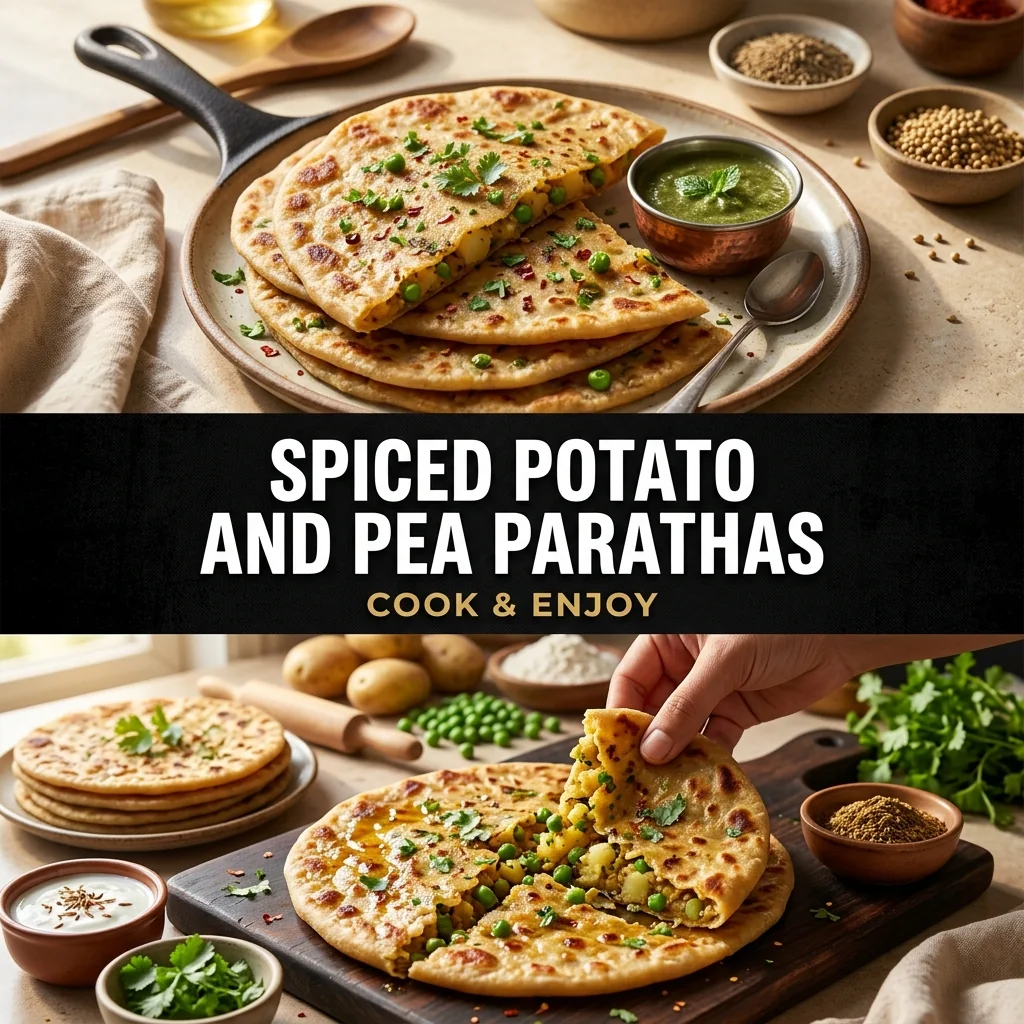
Stuffed parathas are among the most revered comfort flatbreads of North India and Pakistan. Known as aloo matar paratha when featuring potatoes and sweet green peas, these layered breads combine wholesome stone-ground atta flour with an aromatic, spiced vegetable core. Unlike leavened rolls, paratha relies on simple unleavened dough kneaded to pliable perfection and rested to release internal gluten tension. Pan-toasting on a smoking cast-iron griddle with rich halal ghee creates a speckled, blistered surface that crackles beneath the teeth before giving way to smooth, steaming spiced potato. Perfectly matched with cool yogurt, tart vegetable pickles, or simply folded fresh off the tava, they represent comforting culinary craft.
Understanding Atta Flour Dynamics
Traditional parathas rely on South Asian atta flour, which is milled from hard durum wheat to a fine powder while retaining bran elements. Unlike standard whole-wheat flour found in Western grocers, atta absorbs water quickly without becoming gritty, producing a pliable, silky dough that stretches thinly around fillings. Resting the kneaded dough for a full thirty minutes allows hydration to permeate starches thoroughly, relaxing the gluten strands so the stuffed parcel expands evenly under the rolling pin without snapping back or tearing open.
Balancing Spices and Texture in Filling
The filling must strike a balance between structural dryness and vibrant seasoning. Russet potatoes provide high starch and low moisture, absorbing fragrant dry spices cleanly. Toasted cumin seeds release earthy volatile oils, while dry mango powder (amchur) introduces essential fruit acidity that cuts through dense potato starch. Green peas are lightly crushed so they disperse evenly without acting as solid wedges that pierce dough walls during rolling. Finely chopped fresh cilantro leaves supply herbaceous brightness throughout the warm starch.
Griddling and Ghee Application
Baking parathas requires a smoking-hot heavy cast-iron skillet or traditional convex tava. Initial contact must be completely dry; searing the raw dough on an ungreased pan establishes structure and traps steam inside the bread pocket, which causes the paratha to puff gloriously. Halal ghee is applied only after the first flip. As the dairy fat contacts the hot crust, it fries outer micro-layers, imparting a golden, nutty sheen and crisp texture while keeping interior crumbs tender.
Before you start
Mashing potatoes completely smooth without hard lumps is the secret to rolling parathas without tearing the delicate whole-wheat exterior. Any hard chunk of potato or unmashed pea will puncture the thin dough during rolling, causing filling to squeeze onto your work surface. Let potato mixture cool entirely before stuffing, as warm steam will immediately weaken dough elasticity.
THE RECIPE
Spiced Potato and Pea Parathas
6 servings · 35 minutes preparation · 30 minutes cooking · 30 minutes cooling, chilling or resting
Ingredients
Step-by-step instructions
- Combine whole-wheat atta flour, fine sea salt, and 1 tablespoon vegetable oil in a bowl; gradually add lukewarm water while kneading for 6 minutes into a soft, non-sticky dough.
- Coat dough with 1 tablespoon vegetable oil, cover with a damp cloth, and rest at room temperature for 30 minutes to relax gluten.
- Place diced potatoes in a 2-quart saucepan, cover with cold salted water, bring to a boil, and cook for 15 minutes until fork-tender; drain thoroughly and mash smoothly in a bowl.
- In a small skillet over medium heat, toast cumin seeds for 1 minute until fragrant, then add green peas, turmeric, garam masala, chili powder, and amchur; stir for 2 minutes and fold into mashed potatoes with cilantro.
- Divide rested dough into 6 equal portions and divide potato filling into 6 equal balls; roll each dough ball into a 4-inch disc on a floured surface.
- Place a potato ball in center of dough disc, gather edges upward like a pouch, pleat together tightly to seal, flatten gently, and carefully roll into a uniform 7-inch round flatbread using light, even pressure.
- Heat a dry cast-iron skillet or tava over medium-high heat, place rolled paratha in pan, cook dry for 1 minute until small bubbles appear, flip, spread 1/2 teaspoon halal ghee on top, flip again and press edges gently for 1 minute until golden-brown spots appear, repeating for all flatbreads.
Kitchen notes
Mashing potatoes completely smooth without hard lumps is the secret to rolling parathas without tearing the delicate whole-wheat exterior. Any hard chunk of potato or unmashed pea will puncture the thin dough during rolling, causing filling to squeeze onto your work surface. Let potato mixture cool entirely before stuffing, as warm steam will immediately weaken dough elasticity.
Storage & make-ahead
Wrap cooled parathas in foil or store in an airtight container in the refrigerator promptly within 2 hours for up to 3 days. Reheat on a hot dry skillet over medium heat for 1 to 2 minutes per side until thoroughly hot and reaching 165°F (74°C). Parathas can be frozen with parchment between layers for up to 2 months.
An original recipe guide inspired by themes in our Pinterest research. Recipe has not been independently kitchen-tested. AI-generated image is illustrative; your finished dish may look different.
Frequently asked questions
Can I use standard all-purpose flour instead of atta?
You can substitute half all-purpose flour and half standard whole-wheat flour if atta is unavailable. Standard all-purpose alone lacks the characteristic nutty taste and rustic elasticity of whole durum wheat flour.
Why does my filling keep tearing through the dough during rolling?
Tearing happens if potato filling contains unmashed lumps, is rolled with too much downward force, or is stuffed while still warm. Always mash potatoes thoroughly, cool completely, and roll gently from center to perimeter using light pressure.
Is halal-certified ghee necessary, or can I substitute oil?
Halal-certified ghee provides traditional nutty richness, but neutral vegetable oil or avocado oil is an excellent dairy-free alternative that yields delicious, crisp flatbreads on the griddle.