WHY MAKE IT
A little comfort, a lot of flavor.
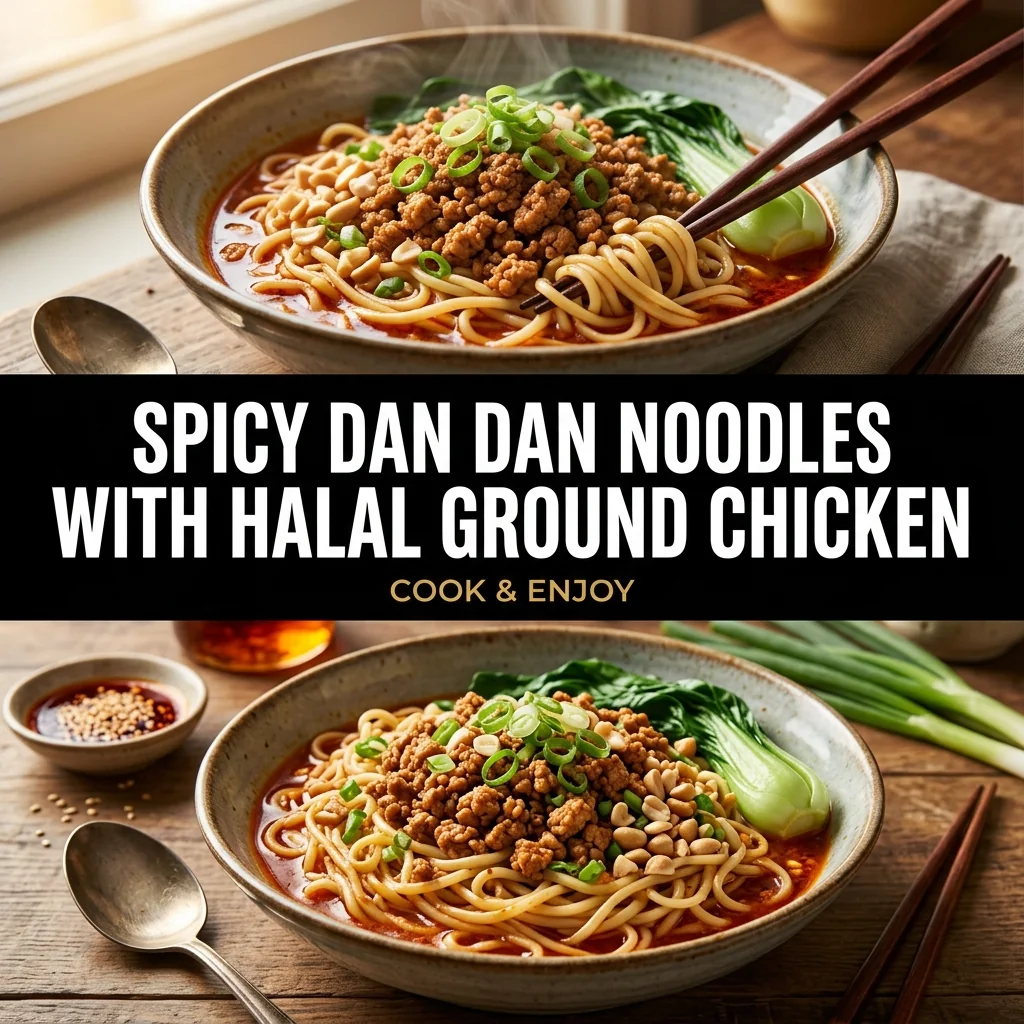
Originating as a portable street food carried on shoulder carrying poles (dan dan) throughout the bustling alleys of Chengdu, Dan Dan noodles have captivated global palates with their electrifying contrast of flavors. The magic of this dish hinges on sensory balance: nutty, earthy toasted sesame paste tempers the fiery heat of red chili oil, while ground Szechuan peppercorns introduce their distinctive numbing sensation (mala). In this halal iteration, coarsely ground chicken replaces the customary pork, crisped alongside tangy preserved mustard greens until deeply caramelized. Combined with chewy, wheat-rich noodles and crisp bok choy, every bowl offers a complex, addictive dining experience.
The Importance of Sui Mi Ya Cai
Sui mi ya cai is a traditional pickled mustard green hailing from Yibin in Szechuan province. Fermented with brown sugar and aromatic spices, it imparts an unmistakable savory-sweet, fermented funk that defines authentic Dan Dan noodle toppings. Substituting standard pickles fails to reproduce its layered profile. When fried in oil alongside halal ground chicken, the preserved greens release concentrated umami that permeates the poultry fat, neutralizing any gaminess and lending a savory crunch that contrasts brilliantly with tender, springy wheat noodles.
Sesame Paste Versus Tahini
Chinese sesame paste (zhi ma jiang) is made from deeply roasted unhulled sesame seeds, resulting in a dark tan color, thick viscosity, and pronounced toasty aroma. Middle Eastern tahini, by contrast, is typically produced from raw or lightly toasted hulled seeds, offering a paler color and more delicate flavor. While unsweetened tahini can serve as an emergency substitute, using genuine roasted Chinese sesame paste yields the authentic, heavy-bodied sauce essential to balance the intense heat of chili oil and acidity of Chinkiang black vinegar.
The Mechanics of Szechuan Pepper Mala
The numbing tingling sensation characteristic of Szechuan cuisine is known as 'ma', caused by hydroxy-alpha-sanshool compounds found exclusively in the outer husks of Szechuan peppercorns. This sensation is not true heat, but a vibration that activates tactile mechanoreceptors on the tongue. When paired with the capsaicin heat ('la') of chili oil, it awakens the palate, heightening perception of the rich sesame fats and savory broth. Always grind fresh toasted husks finely to avoid harsh grit in the finished bowl.
Before you start
To toast Szechuan peppercorns effectively, heat whole peppercorns in a dry skillet over medium-low heat for 2 minutes until fragrant, discard any black seeds or woody stems, and grind the brittle husks to a fine powder using a spice grinder or mortar. For the sauce, warm the chicken broth thoroughly before whisking it into the sesame paste; cold liquid causes dense sesame paste to seize into an unworkable lump instead of emulsifying smoothly.
THE RECIPE
Spicy Dan Dan Noodles with Halal Ground Chicken
4 servings · 20 minutes preparation · 15 minutes cooking
Ingredients
Step-by-step instructions
- Heat 1 tablespoon of vegetable oil in a large wok or heavy skillet over medium-high heat until shimmering.
- Add the halal ground chicken, breaking it apart with a wooden spoon into small crumbles, and cook for 5 to 6 minutes until the moisture evaporates and the meat begins to brown intensely.
- Add the minced garlic, grated ginger, chopped sui mi ya cai, 1/2 teaspoon toasted Szechuan peppercorn, and 1 tablespoon of the light soy sauce to the chicken; stir-fry vigorously for 2 to 3 minutes until the chicken is deeply browned, fragrant, and fully cooked through to an internal temperature of 165°F (74°C), then remove from heat.
- Prepare the serving sauce by whisking together the Chinese sesame paste, chili oil, remaining 2 tablespoons light soy sauce, and Chinese black vinegar in a heatproof glass measuring jug until smooth and creamy.
- Whisk 1 cup of hot halal chicken broth into the sesame mixture until emulsified, then divide this savory, spicy sauce equally among four deep noodle bowls.
- Bring a large 6-quart pot of unsalted water to a rolling boil over high heat, drop in the baby bok choy for 45 to 60 seconds until bright green and tender-crisp, remove with a slotted spoon, and divide among the bowls.
- Drop the fresh Chinese wheat noodles into the boiling water and cook for 3 to 4 minutes (or according to package instructions) until springy and chewy; drain thoroughly in a colander, shaking off excess water.
- Divide the hot noodles immediately into the bowls over the prepared sauce, top each portion generously with the crisped chicken mixture, arrange the blanched bok choy alongside, and garnish with sliced scallions; instruct diners to toss thoroughly before eating.
Kitchen notes
To toast Szechuan peppercorns effectively, heat whole peppercorns in a dry skillet over medium-low heat for 2 minutes until fragrant, discard any black seeds or woody stems, and grind the brittle husks to a fine powder using a spice grinder or mortar. For the sauce, warm the chicken broth thoroughly before whisking it into the sesame paste; cold liquid causes dense sesame paste to seize into an unworkable lump instead of emulsifying smoothly.
Storage & make-ahead
Store leftover crisped chicken, boiled noodles, and sauce components in separate airtight containers in the refrigerator within 2 hours of preparation to prevent noodles from soaking up sauce and turning soggy. Keep chilled for up to 3 days. Reheat the chicken topping in a hot dry skillet to restore crispness, ensuring it reaches an internal temperature of 165°F (74°C). Briefly dunk cold noodles in boiling water to refresh them before combining.
An original recipe guide inspired by themes in our Pinterest research. Recipe has not been independently kitchen-tested. AI-generated image is illustrative; your finished dish may look different.
Frequently asked questions
Where can I purchase authentic Sui Mi Ya Cai?
Sui mi ya cai is readily available in small plastic foil pouches at most East Asian grocery stores or through reputable specialty online retailers. If completely unavailable, finely minced pickled mustard tuber (zha cai) or thoroughly rinsed capers mixed with a pinch of dark brown sugar offer acceptable savory alternatives.
Can I substitute halal ground beef or lamb for chicken?
Yes. Ground beef or lamb works wonderfully and closely resembles the rich profile of traditional variations. Cook the red meat thoroughly until crisped and deeply browned, draining off excess rendered fat if necessary before adding the aromatics, preserved greens, and seasonings to the wok.
Why is the sauce placed at the bottom of the bowl?
Placing the dense sesame-chili sauce at the bottom keeps the boiled noodles warm from below and prevents the delicate crisped chicken topping from soaking in liquid before serving. It also provides the theatrical joy of tossing the entire bowl tableside, coating each strand uniformly.


