WHY MAKE IT
A little comfort, a lot of flavor.
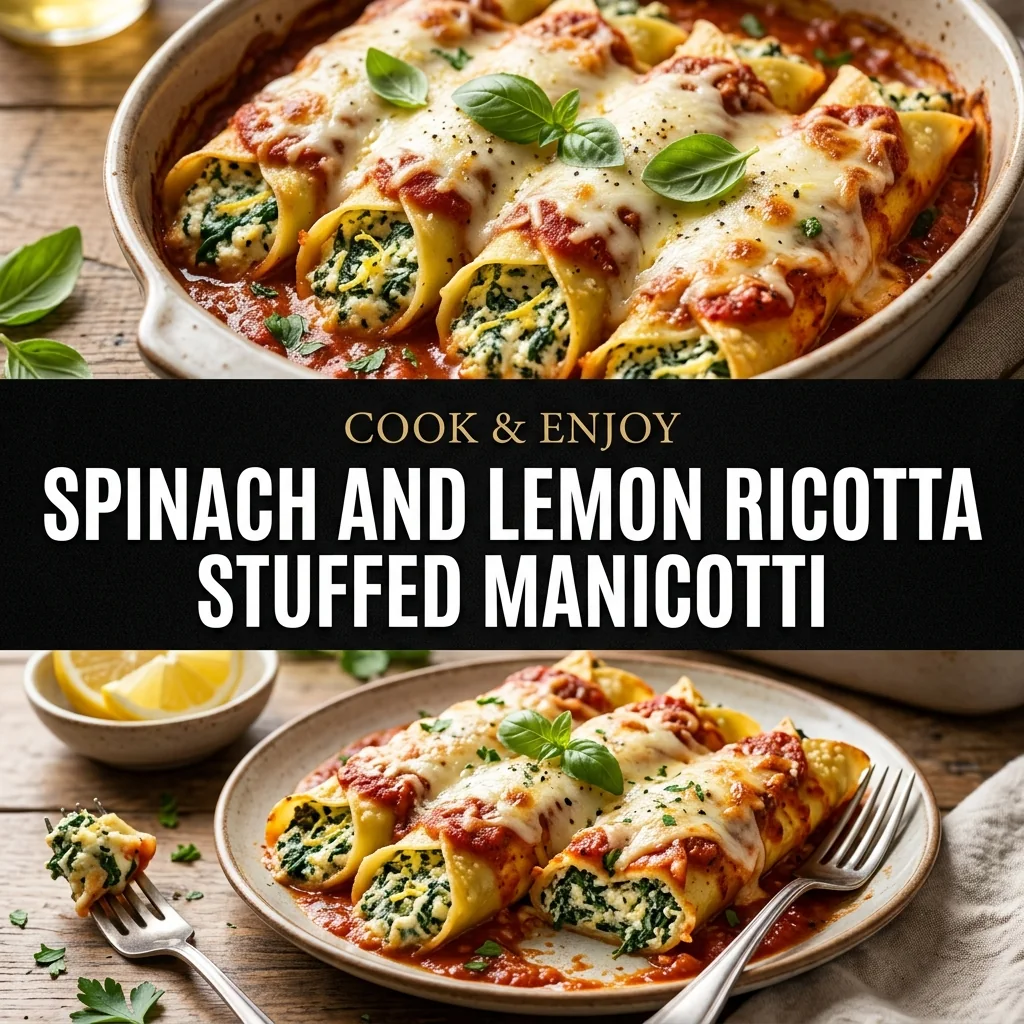
Spinach and Lemon Ricotta Stuffed Manicotti brings a vibrant, bright perspective to classical baked pasta dishes. While baked manicotti is often rich and heavy, introducing finely grated lemon zest directly into the creamy whole-milk ricotta cuts through the dairy fat and elevates the earthy notes of dark green spinach. Fontina cheese, chosen for its buttery melting properties, bubbles into a glossy, golden blanket over a rich marinara sauce. Sautéing the spinach with fresh garlic prior to blending ensures the filling remains dense and velvety without leaking excess water into the pasta shells. The resulting dish offers clean Italian comfort, satisfying structural integrity, and lively citrus brightness in every bite.
Filling Consistency and Piping
Excess moisture is the primary culprit behind watery baked manicotti. Choosing a dense, whole-milk ricotta and pressing it briefly in a cheesecloth-lined sieve removes surplus liquid. Sautéing the spinach evaporates intracellular water that would otherwise weep into the pasta during baking. Incorporating a single beaten egg binds the ricotta, lemon zest, and greens together, giving the piped mixture structural cohesion under oven heat. Using a wide piping bag makes filling effortless and minimizes handling of the parboiled pasta tubes.
Cheese Selection and Melting
Rather than standard mozzarella, fontina cheese offers an exceptional melt profile and complex nutty finish without excessive rubberiness. It contains optimal butterfat that liquefies smoothly under heat, melding seamlessly with the tomato sauce. Using cheeses produced strictly with microbial or halal-certified vegetarian rennet respects dietary integrity while yielding authentic texture. Adding a finely grated aged hard cheese to the interior filling contributes necessary umami and salinity, enhancing the citrus zest notes without overwhelming the tender pasta.
Baking and Resting Dynamics
Baking manicotti in two stages produces optimal texture. The initial covered stage traps steam under the foil, allowing the firm pasta tubes to finish cooking by absorbing seasoned moisture from the marinara sauce. Uncovering the dish for the final fifteen minutes allows surface moisture to evaporate and activates the Maillard reaction on the shredded fontina. A ten-minute resting period post-baking is essential; it allows the melted cheeses to stabilize so that portions can be plated cleanly without collapsing.
Before you start
Avoid boiling manicotti tubes until fully soft. Because the tubes absorb moisture from the marinara sauce and ricotta filling during the forty minutes in the oven, undercooking them by two minutes during the stovetop boil prevents them from tearing while being filled or turning mushy when baked. Using a piping bag or a heavy-duty gallon storage bag with the corner snipped off ensures rapid, clean filling without breaking delicate pasta walls.
THE RECIPE
Spinach and Lemon Ricotta Stuffed Manicotti
6 servings · 25 minutes preparation · 40 minutes cooking · 10 minutes cooling, chilling or resting
Ingredients
Step-by-step instructions
- Preheat the oven to 375 F (190 C) and lightly oil a 9x13-inch ceramic baking dish.
- Bring 4 quarts of generously salted water to a rolling boil in an 8-quart stockpot, add the manicotti tubes, and cook for 7 minutes until pliable but significantly firmer than al dente; drain carefully and arrange in a single layer on parchment paper to prevent sticking.
- Heat the extra virgin olive oil in a 10-inch skillet over medium heat, add the minced garlic and chopped spinach, and sauté for 2 minutes until wilted and moisture has evaporated; transfer to a plate to cool completely.
- In a medium mixing bowl, combine the drained ricotta, beaten egg, cooled sautéed spinach and garlic, grated lemon zest, nutmeg, kosher salt, black pepper, and grated hard cheese; stir with a wooden spoon until completely homogeneous.
- Transfer the ricotta mixture into a large piping bag with a wide round opening, then gently pipe the filling into both open ends of each pre-cooked manicotti shell until completely filled.
- Spread 1.5 cups of marinara sauce evenly across the bottom of the prepared baking dish, arrange the stuffed manicotti side by side in a single layer, and spoon the remaining 1.5 cups of marinara sauce across the centers of the tubes, leaving the edges slightly exposed.
- Scatter the shredded fontina cheese evenly over the sauce-topped manicotti tubes.
- Cover the baking dish tightly with aluminum foil and bake at 375 F (190 C) for 25 minutes; remove the foil and bake uncovered for an additional 15 minutes until the fontina cheese is melted, lightly blistered, and bubbly throughout. Confirm the center of the filling reaches at least 165 F (74 C) before serving.
- Rest the casserole on a wire rack for 10 minutes before serving to allow the molten cheese and ricotta filling to set cleanly.
Kitchen notes
Avoid boiling manicotti tubes until fully soft. Because the tubes absorb moisture from the marinara sauce and ricotta filling during the forty minutes in the oven, undercooking them by two minutes during the stovetop boil prevents them from tearing while being filled or turning mushy when baked. Using a piping bag or a heavy-duty gallon storage bag with the corner snipped off ensures rapid, clean filling without breaking delicate pasta walls.
Storage & make-ahead
Allow leftover baked manicotti to cool completely, then cover tightly or transfer to airtight glass containers and refrigerate within 2 hours. Keep chilled for up to 3 days. To reheat, place portions in an oven-safe dish, cover with foil, and bake at 350 F (175 C) for 20 to 25 minutes until the internal temperature reaches at least 165 F / 74 C.
An original recipe guide inspired by themes in our Pinterest research. Recipe has not been independently kitchen-tested. AI-generated image is illustrative; your finished dish may look different.
Frequently asked questions
Can I assemble this manicotti casserole in advance?
Yes, you can assemble the entire dish up to 24 hours in advance. Cover the unbaked dish tightly with foil and refrigerate within two hours. When ready to cook, bake directly from the refrigerator, adding roughly five to ten minutes to the covered baking time.
Can I use frozen spinach instead of fresh?
Frozen spinach works well if properly prepped. Thaw 5 ounces of chopped frozen spinach completely, wrap it in a clean tea towel, and squeeze vigorously over the sink to expel all liquid before stirring it into the ricotta cheese mixture.
Why did my pasta tubes tear when I boiled them?
Tearing occurs from vigorous boiling or overcooking. Cook the tubes in ample boiling water with gentle heat circulation, stir very sparingly, and remove them while they remain sturdy and partially firm. Cool them flat on parchment paper immediately.


