WHY MAKE IT
A little comfort, a lot of flavor.
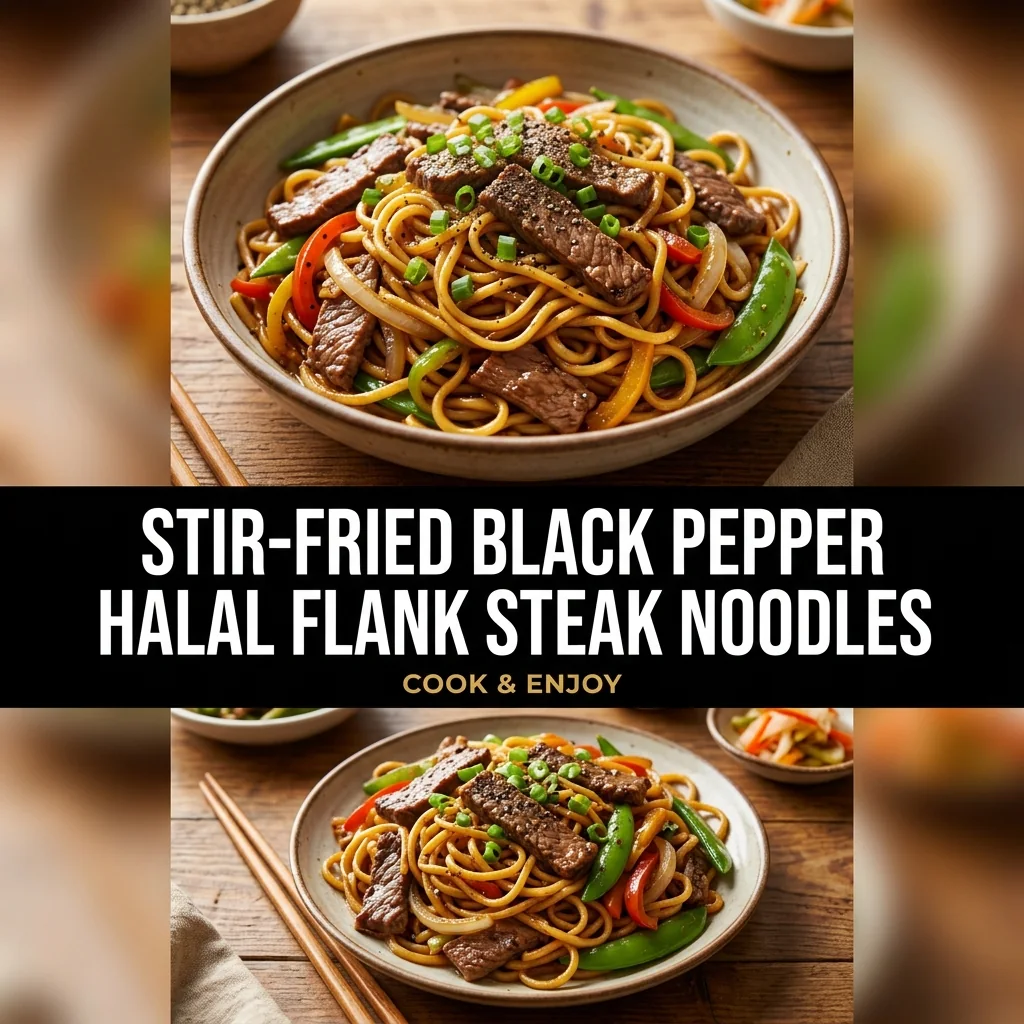
Stir-Fried Black Pepper Halal Flank Steak Noodles combines the intense smoky heat of wok cooking with a punchy, deeply savory black pepper glaze. Marinated strips of halal flank steak are flash-seared at high temperatures to lock in rich meat juices while cultivating a caramelized crust. Crisp sweet bell peppers and tender yellow onions provide sweetness and vibrant color, cutting through the heat of the crushed peppercorns. Thick, chewy lo mein noodles soak up every drop of the unctuous dark soy and oyster glaze, making every bite robust and complex. This takeout classic is readily achieved in the home kitchen with simple wok techniques, yielding a nourishing, restaurant-quality meal that satisfies cravings for savory Chinese-style stir-fry.
The Science of Velveted Flank Steak
Flank steak is a lean, flavorful cut that excels in high-heat stir-fries when treated properly. Slicing the meat strictly perpendicular to the grain shortens the dense muscle fibers, ensuring an exceptionally tender chew. Incorporating a light marinade containing water, soy sauce, sesame oil, and cornstarch creates a protective barrier around the meat fibers. This process seals in internal moisture during the ferocious heat of the wok, preventing the beef from drying out or toughening while allowing a beautiful, deep mahogany sear to develop on the exterior.
Achieving Proper Wok Heat and Sear
A smoking-hot vessel is essential for authentic stir-fry texture. Whether using a traditional carbon steel wok or a heavy flat-bottom skillet, allow the pan to preheat thoroughly before introducing cooking fat. Spreading the beef strips in a single layer allows immediate conductive searing rather than stewing in pooled juices. Cooking in disciplined stages—searing the beef first, blistering the aromatics and peppers second, and finally combining everything with the noodles and sauce—prevents the pan temperature from dropping, which preserves the vegetables' crisp bite and imparts that coveted hint of wok aroma.
Crafting the Coarse Pepper Glaze
The soul of this dish rests in the contrast between savory soy notes and pungent black pepper. Using freshly crushed whole peppercorns releases aromatic piperine oils that produce a warm, blooming heat across the palate rather than harsh acidity. Blending dark soy sauce for earthy color, light soy sauce for salinity, and halal oyster sauce for sweet marine depth creates an intricate foundation. A balanced touch of cornstarch suspended in halal beef broth ensures the sauce rapidly reduces into a glossy, clingy glaze that adheres evenly to the thick noodles.
Before you start
Coarsely cracking whole black peppercorns in a mortar or spice mill right before cooking provides the essential pungent bite and warm aroma that defines this dish. Pre-ground, dusty black pepper lacks essential volatile oils and turns unpleasantly gritty rather than aromatic. Slicing the flank steak strictly across the grain disrupts long muscle fibers, ensuring the seared beef strips remain melt-in-your-mouth tender rather than chewy under high-heat stir-frying.
THE RECIPE
Stir-Fried Black Pepper Halal Flank Steak Noodles
4 servings · 25 minutes preparation · 12 minutes cooking · 20 minutes cooling, chilling or resting
Ingredients
Step-by-step instructions
- Place the sliced halal flank steak in a medium bowl, add 1 tablespoon light soy sauce, 1 tablespoon toasted sesame oil, 1 teaspoon cornstarch, and 1 tablespoon water, massaging thoroughly with your hands until the liquid is fully absorbed, then let rest for 20 minutes to marinate.
- In a small bowl, whisk together 3 tablespoons halal oyster sauce, 2 tablespoons dark soy sauce, 1 tablespoon light soy sauce, 0.5 cup halal beef broth, 1.5 tablespoons coarsely cracked black pepper, and the remaining 2 teaspoons cornstarch to form the stir-fry glaze.
- Bring a 4-quart pot of water to a boil over high heat, drop in the fresh lo mein noodles, boil for 2 to 3 minutes until just tender, drain in a colander, rinse briefly with cold water, shake dry, and toss with 1 teaspoon of neutral oil to prevent sticking.
- Heat a large 14-inch carbon steel wok or heavy cast-iron skillet over high heat until wisps of smoke appear, then swirl in 1.5 tablespoons of neutral oil.
- Spread the marinated flank steak strips in a single layer across the smoking wok surface and sear undisturbed for 90 seconds to develop a deep brown crust, then toss and stir-fry for 1 minute until browned on both sides; transfer the steak onto a clean plate.
- Add the remaining 1.5 tablespoons of neutral oil to the hot wok, toss in the sliced yellow onion, red bell pepper, and green bell pepper, and stir-fry over high heat for 2 minutes until blistered yet crisp-tender.
- Push the vegetables to the wok perimeter, drop the minced garlic and grated ginger into the center, and stir-fry for 30 seconds until fragrant without burning.
- Return the seared flank steak and drained lo mein noodles to the wok, pour the prepared black pepper glaze around the rim of the pan, and toss everything vigorously over high heat for 2 minutes until the sauce bubbles, thickens, and glazes every strand.
- Toss in the 2-inch scallion segments, remove the wok from heat, and transfer the stir-fried noodles immediately onto warmed platters.
Kitchen notes
Coarsely cracking whole black peppercorns in a mortar or spice mill right before cooking provides the essential pungent bite and warm aroma that defines this dish. Pre-ground, dusty black pepper lacks essential volatile oils and turns unpleasantly gritty rather than aromatic. Slicing the flank steak strictly across the grain disrupts long muscle fibers, ensuring the seared beef strips remain melt-in-your-mouth tender rather than chewy under high-heat stir-frying.
Storage & make-ahead
Store leftovers in an airtight glass container in the refrigerator within 2 hours of cooking. Kept cold, the noodles will maintain good quality for up to 3 days. Reheat in a well-seasoned wok or skillet over medium-high heat with a tablespoon of water or halal beef broth to loosen the sauce, tossing until steaming hot and reaching an internal temperature of 165 F (74 C). Avoid microwaving on high heat to prevent toughening the beef.
An original recipe guide inspired by themes in our Pinterest research. Recipe has not been independently kitchen-tested. AI-generated image is illustrative; your finished dish may look different.
Frequently asked questions
Can I use dry spaghetti if I cannot find fresh lo mein?
Yes. Standard dry spaghetti works well as a substitute. Boil it in salted water until just al dente, drain, rinse with cold water, and toss with a teaspoon of oil before adding to the wok during the final stir-fry step.
How spicy is the black pepper glaze?
Coarsely cracked black pepper delivers a sharp, warming heat rather than the searing capsaicin burn of chili peppers. If you prefer a milder dish, reduce the cracked pepper to 1 tablespoon; if you prefer intense heat, increase it to 2 tablespoons.
Why did my flank steak release water into the wok?
Excess moisture in the wok occurs if the pan was not hot enough before adding the beef, or if the pan was overcrowded. Cook the steak in two smaller batches if your burner lacks sufficient heat output to maintain a vigorous sizzle.


