WHY MAKE IT
A little comfort, a lot of flavor.
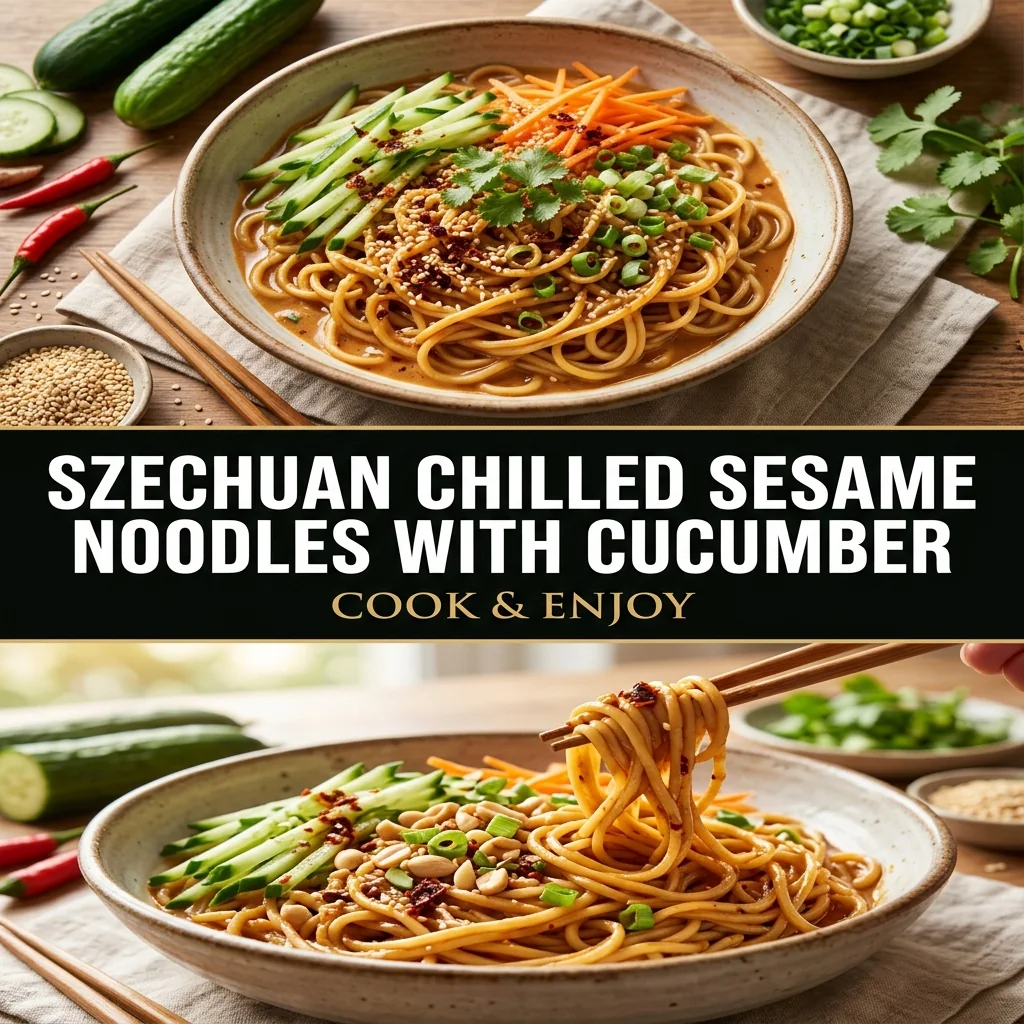
Chilled sesame noodles stand as a classic Szechuan street-food staple, celebrated for balancing nutty richness with electric numbing spice and bright acidity. Central to this dish is Chinese roasted sesame paste, which yields a deeper, more toasted profile than standard Western tahini. Whisked together with dark soy sauce, aged black vinegar, aromatic chili oil, and crushed Szechuan peppercorns, the sauce becomes an unctuous emulsion that clings tenaciously to cooled wheat noodles. Served cold or at room temperature, the comforting chew of thick noodles is counterbalanced by the refreshing snap of julienned Persian cucumbers and scallions. It delivers an invigorating harmony of cooling freshness and lingering, aromatic heat.
The Core of Szechuan Sauce Architecture
A traditional cold noodle dressing balances four key pillars: toasted nuttiness, savory umami, dark acidity, and tingling heat. Chinese sesame paste, pressed from deeply roasted whole seeds, forms the foundation. Unlike raw Middle Eastern tahini, it possesses a dark tan hue and rich, smoky sweetness. Chinkiang black vinegar provides a malty, fermented tartness that prevents the heavy sesame oil from overwhelming the palate. Halal chili oil with sediment adds roasted chili flakes and warmth, while finely pulverized Szechuan peppercorns introduce hydroxy-alpha-sanshool, the compound responsible for the signature citrusy, numbing sensation known as mala.
Boiling and Shocking Wheat Noodles
Achieving the ideal springy bite, or al dente chew, requires precise timing and immediate thermal shock. Boil fresh or dried medium-thickness wheat noodles in unsalted boiling water until just cooked through, avoiding any mushiness. Immediately plunge the drained noodles into an ice-water bath for sixty seconds to arrest cooking and rinse away loose surface starches. Once chilled, drain thoroughly and toss with one teaspoon of toasted sesame oil. The oil creates a protective hydrophobic barrier that prevents the strands from fusing into a dense block while waiting to be dressed.
Texture and Vegetable Pairing
While the sauce provides intense aromatic depth, fresh garnishes prevent the dish from feeling heavy on the palate. Persian cucumbers are ideal because of their thin skins, minimal watery seed pulp, and crisp texture. Slicing them into fine julienne matchsticks matches the gauge of the wheat noodles, ensuring you get both tender starch and crisp vegetable in every forkful or chopstick pull. Sliced scallions and toasted white sesame seeds add fresh sharp pungency and textural crunch, completing the multi-layered sensory profile of this cold noodle preparation.
Before you start
Chinese sesame paste is dense and separates naturally in the jar. Stir the paste thoroughly before measuring, then whisk in the liquid seasonings gradually. If the sauce seizes or thickens into a pasty clump when combining with black vinegar and soy sauce, do not panic; simply whisk in warm water one tablespoon at a time until the mixture transforms into a silky, pourable ribbon. It should coat the back of a spoon effortlessly before tossing with cold noodles.
THE RECIPE
Szechuan Chilled Sesame Noodles with Cucumber
4 servings · 15 minutes preparation · 6 minutes cooking · 15 minutes cooling, chilling or resting
Ingredients
Step-by-step instructions
- Bring 3 quarts of water to a boil in a large pot over high heat, add the 12 ounces of wheat noodles, and boil according to package directions for 4 to 6 minutes until cooked through with a slight chew.
- Drain the cooked noodles in a colander and immediately plunge them into a large bowl filled with ice water, agitating the noodles gently for 60 seconds to halt the cooking process and rinse away surface starch.
- Drain the chilled noodles thoroughly, pressing gently to expel excess water, transfer them to a dry mixing bowl, and toss with 1 teaspoon of toasted sesame oil to prevent sticking.
- Place the bowl of oiled noodles into the refrigerator to chill for 15 minutes while preparing the sauce and vegetable garnishes.
- In a medium ceramic bowl, combine 4 tablespoons Chinese sesame paste, 2.5 tablespoons halal soy sauce, 2 tablespoons alcohol-free black vinegar, remaining 1 tablespoon toasted sesame oil, 2 tablespoons Szechuan chili oil, 1 tablespoon granulated sugar, minced garlic, grated ginger, and 0.5 teaspoon ground Szechuan peppercorn.
- Whisk 3 tablespoons of warm water into the sesame paste mixture one tablespoon at a time, beating continuously with a small whisk until the sauce transforms from a thick clump into a smooth, glossy, pourable consistency.
- Remove the chilled wheat noodles from the refrigerator, pour the prepared sesame dressing over the noodles, and toss thoroughly using kitchen tongs until every strand is completely coated.
- Divide the dressed sesame noodles evenly among four shallow serving bowls.
- Top each portion with julienned Persian cucumber matchsticks, sliced scallions, and a sprinkle of toasted white sesame seeds, serving immediately while cold.
Kitchen notes
Chinese sesame paste is dense and separates naturally in the jar. Stir the paste thoroughly before measuring, then whisk in the liquid seasonings gradually. If the sauce seizes or thickens into a pasty clump when combining with black vinegar and soy sauce, do not panic; simply whisk in warm water one tablespoon at a time until the mixture transforms into a silky, pourable ribbon. It should coat the back of a spoon effortlessly before tossing with cold noodles.
Storage & make-ahead
Store leftover dressed noodles or separate sauce and noodles in an airtight container in the refrigerator within 2 hours of preparation; enjoy within 2 days. The noodles absorb the sauce over time, so if serving leftovers, splash in 1 tablespoon of cold water or additional sesame oil and toss well to loosen the strands. Because this is served chilled, do not reheat. Cucumber matchsticks are best stored separately to maintain crispness.
An original recipe guide inspired by themes in our Pinterest research. Recipe has not been independently kitchen-tested. AI-generated image is illustrative; your finished dish may look different.
Frequently asked questions
Can I use peanut butter instead of Chinese sesame paste?
Yes, you can substitute unsweetened natural creamy peanut butter mixed with one teaspoon of toasted sesame oil. While it alters the flavor to resemble Dan Dan or Taiwanese peanut noodles, it yields an equally luscious, nutty sauce.
How do I grind whole Szechuan peppercorns finely?
Toast whole dried peppercorns in a dry skillet over medium-low heat for two minutes until fragrant. Let cool completely, discard black internal seeds, and crush the outer red husks into fine powder using a mortar and pestle.
Can I make the sesame sauce in advance?
Yes. Whisk the sauce ingredients together and store in a sealed jar in the refrigerator for up to four days. Whisk in a tablespoon of warm water before using if the sesame oils have solidified or thickened.


