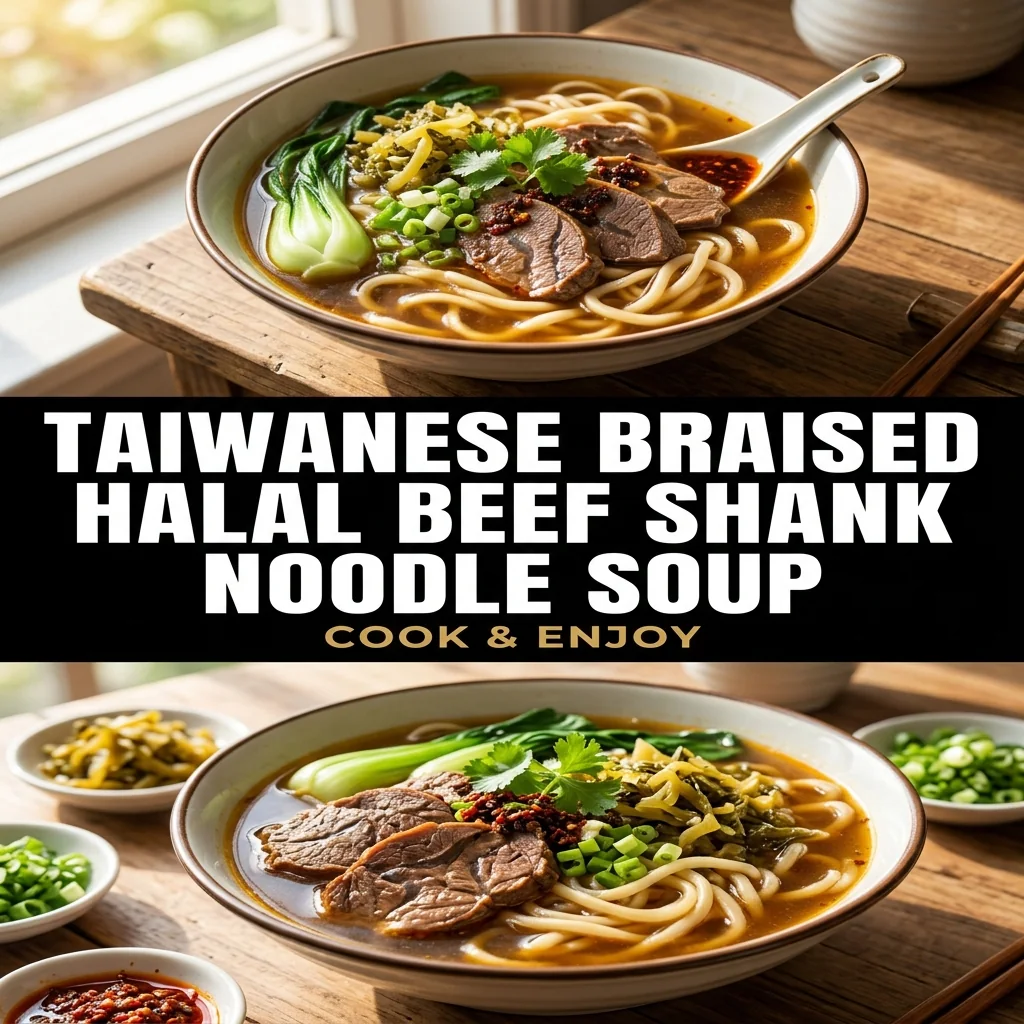
WHY MAKE IT
A little comfort, a lot of flavor.
Taiwanese beef noodle soup represents the ultimate expression of comfort, uniting rich halal beef shank with an aromatic broth infused with aromatic spices. The braising liquid draws deep complexity from fermented doubanjiang, caramelized aromatics, and whole spices like star anise and Sichuan peppercorns. Beef shank is particularly suited to this slow-simmered technique; its dense network of intramuscular collagen and connective tissue gently melts over two hours, yielding succulent, melt-in-the-mouth morsels surrounded by a glossy, richly flavored broth. Freshly blanched baby bok choy introduces a crisp, vegetal counterbalance to the deep soy braise, while chewy wheat noodles provide the ideal vehicle for absorbing the nuanced broth.
Selecting and Preparing Halal Shank
Beef shank contains tough connective tissue and marrow-rich bone that transforms into silky gelatin through gentle braising. Sourcing halal-certified beef ensures proper adherence to ethical and religious dietary requirements. Cut the shank across the grain into thick disks so individual portions remain intact throughout the long simmer. Rinsing thoroughly after the initial parboil strips away stray denatured blood proteins without reducing the deep savory richness trapped within the muscle fibers.
Balancing the Spiced Aromatic Base
The savory backbone relies on frying fermented chili bean paste (doubanjiang) and tomato paste in oil before adding liquids. This blooming step mellows sharp fermented notes into deep umami and imparts a vibrant reddish hue. Whole star anise, cinnamon, and Sichuan peppercorns supply warm floral and tingling woodsy aromas that define the regional Taiwanese profile. Tomatoes contribute subtle acidity, naturally breaking through beef fat and creating clean balance across the palate.
Noodle Texture and Assembly
Choose medium-to-thick fresh wheat noodles or wide knife-cut noodles with structural chew (often described as 'Q texture'). Always boil noodles separately in unseasoned water rather than directly in the braising broth; cooking noodles directly in the soup releases surface flour that thickens and clouds the clear braise. Assemble individual bowls fresh with cooked noodles, tender shank pieces, and crisp bok choy just before pouring over ladlefuls of piping hot soup.
Before you start
Parboiling the raw halal beef shank and washing the pot before starting the aromatic base is an essential culinary step for clear, pure-tasting broth. It removes coagulated surface albumins and bone dust that would otherwise make the soup cloudy and impart an undesirable metallic bitterness to the finished Taiwanese broth.
THE RECIPE
Taiwanese Braised Halal Beef Shank Noodle Soup
4 servings · 25 minutes preparation · 120 minutes cooking · 15 minutes cooling, chilling or resting
Ingredients
Step-by-step instructions
- Place the cut halal beef shank into a 6-quart stockpot, cover completely with cold tap water, and bring to a rapid boil over high heat for 5 minutes to release foam and impurities.
- Pour the contents through a colander into the sink, rinse the parboiled shank pieces thoroughly under cool running water to clean away scum, and wash the interior of the stockpot.
- Dry the cleaned pot and place it back over medium heat with 2 tablespoons of vegetable oil. Add the sliced ginger, crushed garlic, yellow onion wedges, and half of the scallion pieces, frying for 3 to 4 minutes until fragrant and lightly golden.
- Stir in 1.5 tablespoons of doubanjiang and 1 tablespoon of tomato paste, cooking in the oil for 1 to 2 minutes until the oil turns a deep red-orange color.
- Return the rinsed beef shank pieces to the pot, then add the light soy sauce, dark soy sauce, and brown sugar, turning the beef pieces to coat evenly for 2 minutes.
- Tie the star anise, cinnamon stick, and Sichuan peppercorns into a small cheesecloth spice bundle and drop it into the pot along with the Roma tomato wedges and 6 cups of water.
- Bring the liquid to a rolling boil over high heat, then immediately reduce heat to low, cover with a tight-fitting lid, and simmer gently for 90 to 100 minutes until the beef shank is fork-tender and gelatinous.
- Turn off the heat, discard the cheesecloth spice sachet and onion pieces, and let the broth and meat rest covered for 15 minutes off the burner to allow the rich braising liquid to settle and flavor the meat.
- While the broth rests, bring a separate 4-quart pot of water to a rolling boil over medium-high heat. Cook the baby bok choy for 90 seconds until bright green and tender-crisp, retrieve with tongs, and divide among four large soup bowls. In the same water, cook the wheat noodles according to package directions (about 3 to 5 minutes), drain thoroughly, and divide between the bowls.
- Ladle hot spiced broth and tender beef shank pieces generously over the cooked noodles, then garnish each bowl with the remaining freshly sliced scallions and serve hot.
Kitchen notes
Parboiling the raw halal beef shank and washing the pot before starting the aromatic base is an essential culinary step for clear, pure-tasting broth. It removes coagulated surface albumins and bone dust that would otherwise make the soup cloudy and impart an undesirable metallic bitterness to the finished Taiwanese broth.
Storage & make-ahead
Refrigerate leftover broth and beef separated from the cooked noodles in airtight containers within 2 hours of cooking. Store in the refrigerator for up to 3 days. Reheat broth and meat gently over medium heat until reaching at least 165 F / 74 C before pouring over freshly boiled noodles.
An original recipe guide inspired by themes in our Pinterest research. Recipe has not been independently kitchen-tested. AI-generated image is illustrative; your finished dish may look different.
Frequently asked questions
What can I use if I cannot find doubanjiang?
You can substitute doubanjiang with a mixture of one tablespoon soybean paste (doenjang or miso) blended with half a teaspoon of mild chili flakes, though fermented broad bean paste provides the most authentic flavor.
Can I cook this soup in an electric pressure cooker?
Yes. After parboiling and sautéing the aromatics, pressure cook the beef, seasonings, and water on high pressure for 35 minutes, followed by a natural pressure release for 15 minutes.
Why are the noodles cooked in a separate pot?
Boiling noodles separately washes away excess exterior wheat starch. Cooking them directly inside the braising pot makes the clear, fragrant broth muddy, starchy, and overly thick.


