WHY MAKE IT
A little comfort, a lot of flavor.
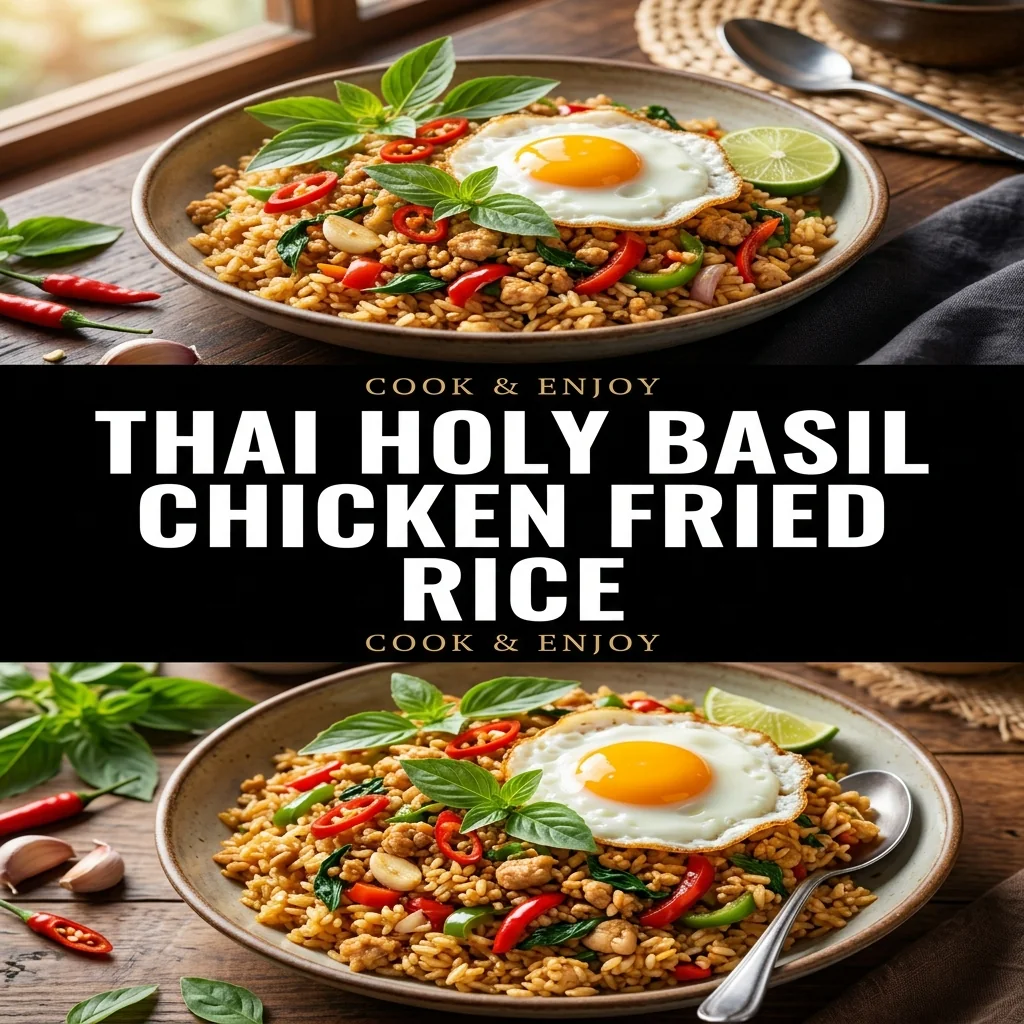
Known in Thailand as khao pad krapow, this dynamic stir-fry merges the spicy, pungent brilliance of classic pad krapow with the comforting substance of wok-charred fried rice. Ground halal chicken is rapidly browned alongside smashed garlic and fiery bird's eye chilies, creating an intensely aromatic foundation. The key herb is holy basil (bai krapow), celebrated for its peppery, clove-like complexity that cuts cleanly through the rich poultry and savory oyster-soy seasoning. Prepared over intense wok heat, chilled jasmine grains blister and absorb the umami-laden sauce without turning soft. A final squeeze of tart lime balances the chili heat, delivering a punchy, balanced street-food classic directly to your home kitchen.
Holy Basil Versus Sweet Thai Basil
Authentic khao pad krapow demands holy basil, characterized by slightly hairy stems, serrated edges, and a distinct peppery, medicinal anise aroma. If authentic holy basil is unavailable at your local market, standard Thai sweet basil (bai horapha) serves as a functional substitute, though it imparts a sweeter, more licorice-forward note. Add the delicate leaves only after killing the stove flame; the residual heat of the rice is plenty to soften the herb, releasing its volatile oils without dulling its emerald color or muting its bright floral flavor.
Wok Heat and Halal Chicken Safety
Stir-frying relies on intense, rapid heat transfer. Using ground halal chicken requires careful temperature regulation so moisture evaporates rather than stews the meat. Spread the ground poultry across the sizzling metal surface, breaking it into small crumbles with your wok spatula. Continue tossing until every trace of pinkness disappears and the internal temperature reaches 165 F (74 C). Searing the meat properly creates browned edges that contribute concentrated savory flavor to the neutral rice grains added immediately afterward.
Balancing the Savory Sauce Matrix
A proper Thai stir-fry sauce balances salinity, umami, and faint sweetness. Halal-certified fish sauce provides sharp pungent salt, while thick oyster sauce supplies viscous body and caramelized depth. A touch of coconut sugar rounds out the aggressive chili heat without turning the fried rice sweet. Pouring this mixture around the hot outer rim of the wok rather than pouring it cold directly onto the rice caramelizes the sugars instantly, infusing the entire dish with a hint of authentic wok char.
Before you start
Day-old cold jasmine rice is essential for fried rice. Freshly cooked rice holds excessive surface steam, which turns into mush as soon as it encounters the hot wok and savory sauces. Spread freshly steamed rice onto a baking sheet, let it cool completely, and chill it uncovered in the refrigerator overnight. This firms up the starch structure so every grain fries individually while absorbing the savory basil and chili aromatics.
THE RECIPE
Thai Holy Basil Chicken Fried Rice
4 servings · 20 minutes preparation · 15 minutes cooking
Ingredients
Step-by-step instructions
- Using clean hands, gently break up any large clumps in the 4 cups of chilled jasmine rice so the grains separate freely.
- In a small bowl, whisk together 1 1/2 tablespoons of halal fish sauce, 2 tablespoons of halal oyster sauce, 1 tablespoon of tamari, and 1 teaspoon of coconut sugar until completely dissolved.
- Heat 2 tablespoons of neutral oil in a large wok or wide carbon steel skillet over medium-high heat until faintly smoking.
- Add 5 minced garlic cloves, 4 sliced bird's eye chilies, and 1 sliced shallot, stir-frying vigorously for 45 to 60 seconds until fragrant without letting the garlic burn.
- Add the 1 pound of ground halal chicken, breaking it apart with a wooden spatula, and stir-fry for 4 to 5 minutes until fully cooked, crumbly, and reaching an internal temperature of 165 F (74 C).
- Push the cooked chicken to the perimeter of the wok, add the remaining 1 tablespoon of oil to the center, and tip in the cold rice, tossing continuously over high heat for 2 minutes to sear the grains.
- Pour the prepared savory seasoning sauce around the perimeter of the wok so it sizzles instantly, then rapidly stir-fry for 2 minutes until the rice is evenly tinted and piping hot.
- Turn off the heat, immediately dump in 1 1/2 cups of fresh holy basil leaves, and toss gently for 30 seconds until the leaves wilt from the residual heat, serving immediately with lime wedges. Verify the reheated rice mixture reaches at least 165 F (74 C) throughout.
Kitchen notes
Day-old cold jasmine rice is essential for fried rice. Freshly cooked rice holds excessive surface steam, which turns into mush as soon as it encounters the hot wok and savory sauces. Spread freshly steamed rice onto a baking sheet, let it cool completely, and chill it uncovered in the refrigerator overnight. This firms up the starch structure so every grain fries individually while absorbing the savory basil and chili aromatics.
Storage & make-ahead
Cool and store leftovers in an airtight container in the refrigerator within 2 hours. Keep for up to 3 days. Reheat in a smoking hot wok or skillet with a small spoonful of water, tossing until sizzling and the internal temperature reaches at least 165 F / 74 C throughout.
An original recipe guide inspired by themes in our Pinterest research. Recipe has not been independently kitchen-tested. AI-generated image is illustrative; your finished dish may look different.
Frequently asked questions
Can I reduce the spice level of this dish?
Yes. Thai bird's eye chilies are very hot. You can reduce the quantity to 1 or 2 chilies, remove their inner seeds before slicing, or substitute a milder red jalapeño or serrano chili to maintain color with gentle warmth.
How do I keep the rice from sticking to my pan?
Ensure your wok or heavy skillet is preheated until very hot before adding oil, and verify that the jasmine rice is thoroughly chilled and broken up into individual grains before dropping it into the pan.
Are fish sauce and oyster sauce halal?
Many commercial brands contain non-halal flavor enhancers or lack oversight. Look specifically for brands labeled with certified halal packaging seals, which use permissible seafood bases processed in alcohol-free, contamination-free facilities.


