WHY MAKE IT
A little comfort, a lot of flavor.
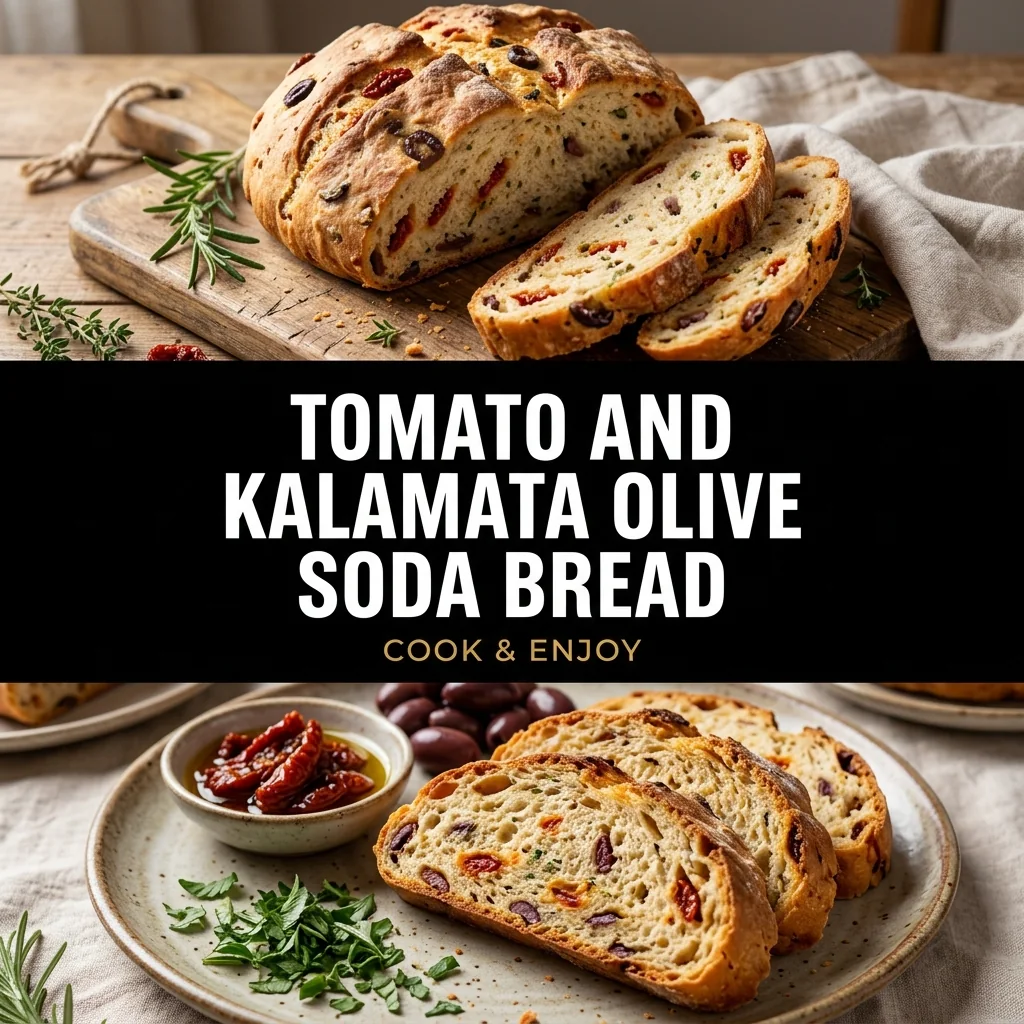
Soda bread is celebrated globally for its simplicity, rustic charm, and quick turnaround. Because it relies exclusively on the chemical reaction between acidic buttermilk and alkaline baking soda for leavening, there is no need for prolonged proofing or finicky yeast management. This Mediterranean-inspired variation introduces brine-cured Kalamata olives and sweet sun-dried tomatoes directly into the dough matrix, complemented by fragrant dried wild oregano. A fraction of whole wheat flour adds nutty fiber and structure, grounding the tangy dairy acidity. Cut with a deep cross across its crown, the bread blooms into a craggy, deeply browned loaf with a moist, tender crumb perfect for everyday tables and casual gathering spreads.
The Chemistry of Soda Bread Leavening
Traditional soda bread achieves lift without yeast through an acid-base reaction. Baking soda reacts instantly upon contacting the lactic acid in cultured buttermilk, producing carbon dioxide bubbles that expand inside the dough. Unlike biological yeast, which produces gas gradually, this chemical reaction starts immediately upon wetting the ingredients. For this reason, the baker must work efficiently: combine wet and dry ingredients quickly, shape the loaf with a light touch, score the crust, and transfer the dough into a preheated oven before the initial burst of leavening gas dissipates.
Balancing Wet Inclusions
Sun-dried tomatoes packed in olive oil and Kalamata olives cured in brine contain high levels of moisture and fats. If added directly without care, they can create wet, gummy pockets in the crumb. Draining the olives thoroughly and patting the chopped sun-dried tomatoes dry with paper towels eliminates excess surface liquid. Tossing them directly into the dry flour before adding buttermilk coats each savory piece in starch, ensuring they distribute evenly throughout the loaf instead of clumping or sinking to the base of the pan.
Scoring and Crust Formation
Scoring a deep cross across the crown of soda bread serves a vital mechanical function. As the loaf enters the intense heat of a 400°F (205°C) oven, the outer crust begins to set quickly. Slashing the dough 1/2-inch deep allows internal steam and expanding carbon dioxide to vent along controlled lines, preventing the loaf from rupturing irregularly around its sides. Brushing the crown with a light coat of buttermilk caramelizes milk sugars during baking, producing a rich mahogany crust that contrasts pleasingly with the soft crumb.
Before you start
Handle the soda bread dough as gently and briefly as possible. Unlike yeast breads that require prolonged kneading to develop an elastic gluten network, soda bread becomes tough and dense when overhandled. Stir just until the buttermilk absorbs the dry flour, shape the loaf with minimal pressure, and slash immediately before baking so the chemical reaction between buttermilk and baking soda begins expanding without delay.
THE RECIPE
Tomato and Kalamata Olive Soda Bread
8 servings · 15 minutes preparation · 40 minutes cooking · 30 minutes cooling, chilling or resting
Ingredients
Step-by-step instructions
- Preheat the oven to 400°F (205°C) and line a heavy baking sheet or seasoned cast-iron skillet with parchment paper.
- In a large mixing bowl, whisk together 360 g all-purpose flour, 90 g whole wheat flour, 1 tsp baking soda, 1 tsp fine sea salt, and 1 tbsp dried oregano.
- Add 30 g cold cubed butter to the bowl, rubbing it into the dry flour mixture using your fingertips until fine crumbs form.
- Stir in 80 g chopped Kalamata olives and 60 g chopped sun-dried tomatoes until evenly dispersed and coated with flour.
- Pour 350 ml cold buttermilk into the center and stir quickly with a wooden spoon just until a soft, moist dough forms without dry flour pockets.
- Turn dough onto a lightly floured surface, gently gather into a round ball with floured hands, and shape into a neat 7-inch round loaf.
- Place the shaped loaf onto the prepared baking sheet, brush top with 1 tbsp buttermilk, and sprinkle with 1/2 tsp flaky sea salt.
- Using a sharp serrated knife, slash a deep cross roughly 1/2-inch deep into the center of the loaf to facilitate even oven expansion.
- Bake at 400°F (205°C) for 38 to 40 minutes until deeply browned and the base sounds hollow when tapped, then cool on a wire rack for 30 minutes before slicing.
Kitchen notes
Handle the soda bread dough as gently and briefly as possible. Unlike yeast breads that require prolonged kneading to develop an elastic gluten network, soda bread becomes tough and dense when overhandled. Stir just until the buttermilk absorbs the dry flour, shape the loaf with minimal pressure, and slash immediately before baking so the chemical reaction between buttermilk and baking soda begins expanding without delay.
Storage & make-ahead
Store cooled soda bread wrapped tightly in parchment or a bread box at room temperature for up to 3 days. Refrigerate promptly within 2 hours if holding past 3 days, storing for up to 1 week. Reheat sliced wedges in a 350°F (175°C) oven or toaster until warm and reaching an internal temperature of 165°F (74°C). Slices can also be frozen for up to 2 months.
An original recipe guide inspired by themes in our Pinterest research. Recipe has not been independently kitchen-tested. AI-generated image is illustrative; your finished dish may look different.
Frequently asked questions
What can I substitute if I do not have cultured buttermilk?
You can make an emergency substitute by adding 1 tablespoon of fresh lemon juice or white vinegar to 350 ml of whole milk. Allow the mixture to stand for 10 minutes until slightly curdled and acidic before mixing into your dry ingredients.
Why did my soda bread turn out heavy and dense?
Density usually occurs if the dough was kneaded too long or if the baking soda was outdated. Kneading develops excess gluten, making soda bread rubbery. Mix only until the flour is moistened, and ensure your baking soda is active by testing a pinch in vinegar.
Can I bake this loaf in a Dutch oven?
Yes. Preheat a lidded cast-iron Dutch oven at 400°F (205°C). Lower the parchment-lined shaped loaf inside, cover with the lid, and bake for 25 minutes. Remove the lid and bake uncovered for an additional 15 minutes to crisp the crust thoroughly.