WHY MAKE IT
A little comfort, a lot of flavor.
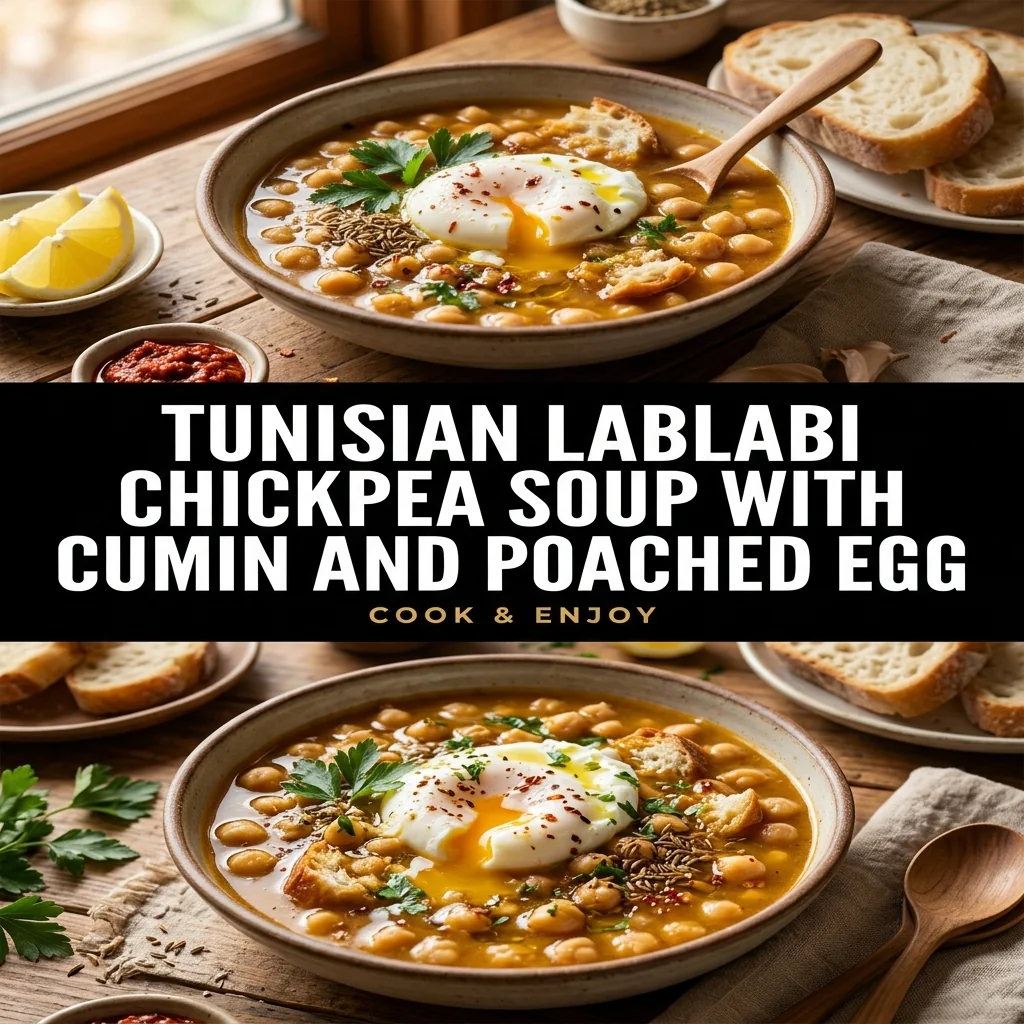
Lablabi is one of Tunisia’s most iconic and comforting street-food dishes, traditionally served in ceramic bowls to laborers seeking an invigorating, budget-friendly meal on brisk mornings. At its foundation, the dish is an exercise in resourcefulness, transforming hardened crusts of day-old bread into a sumptuous base by soaking them in a fiercely fragrant, garlic-and-cumin-spiced chickpea broth. The heat of authentic halal harissa, combined with the acidity of freshly squeezed lemon juice, awakens the palate with bold North African character. When crowned with a soft poached egg and a generous ribbon of peppery extra-virgin olive oil, the diner stirs everything together into a creamy, comforting, deeply flavorful stew.
The Tradition of Stale Bread and Broth
In Tunisian street stalls, customers are handed an empty bowl and a hunk of dry bread to tear with their own hands into rough chunks. The texture of the bread is vital: soft sandwich loaves will turn pasty, whereas hearty artisan loaves with dense crumbs and thick crusts absorb the cumin-laced broth while maintaining structural integrity. Pouring the piping-hot liquid directly over the dry bread softens the starches within seconds, thickening the base into an incredibly satisfying porridge-like consistency without any commercial binders.
Balancing Cumin, Garlic, and Harissa
The flavor profile of lablabi hinges on heavy doses of freshly ground cumin and garlic. Cumin provides an earthy, warm aromatic signature that calms the fiery punch of halal-certified harissa. Harissa—a paste made from smoked red chilies, garlic, and coriander—adds fruitiness, acid, and heat. Stirring a portion of harissa directly into the simmering pot builds a foundational warmth, while dolloping fresh paste on top before serving allows each diner to customize their desired level of spice.
Poaching and Assembling the Dish
The crowning glory of lablabi is a freshly poached egg. Adding a touch of vinegar to the poaching water stabilizes the albumen, keeping the egg whites compact around the rich yolk. When slipped into the hot soup bowl, the soft-cooked egg cooks slightly further from the broth's residual heat. Instruct your guests to pierce the egg yolk immediately with their spoons, folding the golden yolk into the spicy broth and bread for an instantly velvety sauce.
Before you start
Authentic lablabi relies on dry, stale bread rather than soft sandwich slices. Using day-old crusty sourdough or rustic country bread ensures the bread absorbs the flavorful cumin-scented liquid without dissolving into mush. For maximum aroma, toast whole cumin seeds lightly in a dry pan before grinding them fresh. Be sure to poach the eggs gently so their warm yolks break smoothly into the spiced broth upon serving.
THE RECIPE
Tunisian Lablabi Chickpea Soup with Cumin and Poached Egg
4 servings · 15 minutes preparation · 40 minutes cooking · 5 minutes cooling, chilling or resting
Ingredients
Step-by-step instructions
- In a large 4-quart soup pot, combine 3 cups cooked chickpeas, 5 cups water or halal vegetable broth, 6 minced garlic cloves, 1 1/2 tablespoons ground cumin, 1 teaspoon ground coriander, and 1 1/2 teaspoons fine sea salt.
- Bring the mixture to a lively boil over medium-high heat, then reduce the heat to medium-low, cover loosely, and simmer for 25 minutes so the chickpeas soften further and infuse the cooking broth.
- Use a potato masher or the back of a ladle to crush approximately one-fourth of the simmered chickpeas against the bottom of the pot, slightly thickening the broth while keeping the rest whole.
- While the broth finishes simmering, bring 3 inches of water and 1 tablespoon distilled white vinegar to a gentle simmer (around 185 F / 85 C) in a separate wide, shallow saucepan over medium heat.
- Crack each egg into a ramekin, slide carefully into the gently simmering water, and poach until both whites and yolks are firm, about 5 to 7 minutes depending on size. For a soft yolk, use pasteurized shell eggs and follow the package cooking guidance.
- Lift each poached egg out using a slotted spoon and transfer briefly to a paper towel-lined plate to drain excess water.
- Divide 4 cups of torn stale bread chunks equally among 4 deep wide soup bowls.
- Stir 3 tablespoons lemon juice and 1 tablespoon harissa into the hot chickpea pot, then ladle the boiling broth and chickpeas evenly over the torn bread chunks, allowing the bread to saturate for 1 to 2 minutes.
- Top each bowl with one poached egg, a dollop of remaining harissa paste, a drizzle of extra-virgin olive oil, and chopped parsley.
Kitchen notes
Authentic lablabi relies on dry, stale bread rather than soft sandwich slices. Using day-old crusty sourdough or rustic country bread ensures the bread absorbs the flavorful cumin-scented liquid without dissolving into mush. For maximum aroma, toast whole cumin seeds lightly in a dry pan before grinding them fresh. Be sure to poach the eggs gently so their warm yolks break smoothly into the spiced broth upon serving.
Storage & make-ahead
Store leftover chickpea broth separately from the bread and eggs in a sealed container in the refrigerator for up to 3 days. Do not store poached eggs or assembled bowls; poach fresh eggs and tear fresh bread when serving leftovers. Reheat the chickpea broth on the stovetop until boiling and registers at least 165 F (74 C) before pouring over freshly torn bread. Refrigerate perishable leftovers within 2 hours of preparation (within 1 hour in temperatures above 90 F / 32 C).
An original recipe guide inspired by themes in our Pinterest research. Recipe has not been independently kitchen-tested. AI-generated image is illustrative; your finished dish may look different.
Frequently asked questions
Can I use dried chickpeas instead of canned chickpeas?
Yes, dried chickpeas produce superior flavor and texture. Soak one cup of dried chickpeas in cold water overnight with half a teaspoon of baking soda, drain, and simmer in fresh water for sixty to ninety minutes until tender before proceeding with the garlic and cumin broth steps.
How can I make this soup milder for spice-sensitive guests?
To adjust the spice level, omit harissa from the main simmering pot and serve it exclusively on the side in a small condiment dish. This allows heat-sensitive diners to enjoy the earthy garlic, cumin, and lemon broth while allowing spice lovers to mix in harissa to taste.
Can I fry the egg instead of poaching it?
Yes, a sunny-side-up or softly basted fried egg with a runny yolk makes a delicious alternative. Fry the egg gently in olive oil over medium-low heat until the whites are fully set and edges are crisp, then slide it directly on top of the broth-soaked bread.