WHY MAKE IT
A little comfort, a lot of flavor.
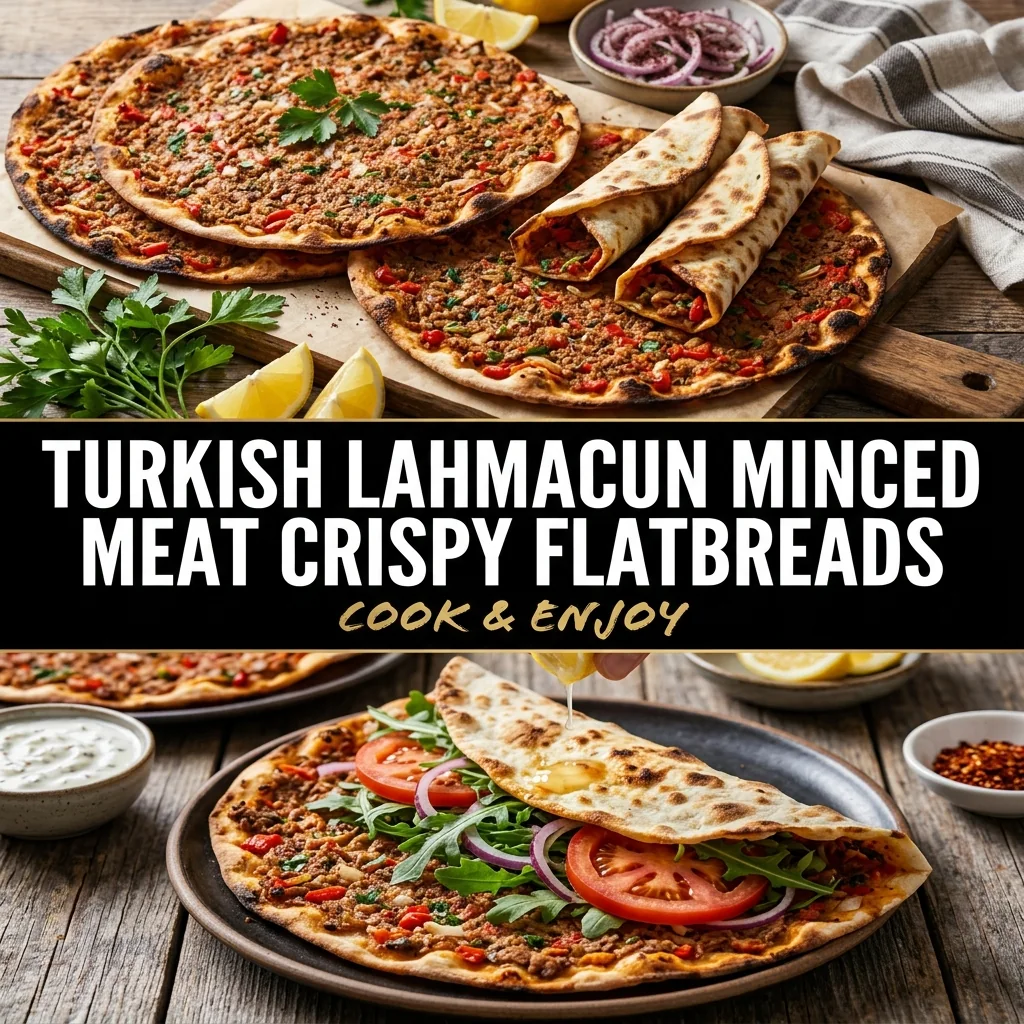
Turkish lahmacun is an iconic street food celebrated throughout the Middle East and Mediterranean for its ultra-crisp crust and deeply savory topping. Often referred to colloquially as Turkish thin pizza, it features a pliable yet crispy yeasted dough rolled out to translucent thinness. The topping blends halal-certified minced lamb and beef with pureed sweet peppers, ripe tomatoes, pungent garlic, and fragrant Aleppo pepper, delivering warmth without overwhelming pungency. Baked at intense heat on a screaming-hot stone, the edges bubble, char, and turn wonderfully crisp in just minutes. Lahmacun is traditionally served rolled around crisp fresh parsley, sliced red onions, and a vigorous squeeze of fresh lemon juice.
Achieving the Ideal Thin Dough
The dough for lahmacun is simple, consisting solely of flour, water, yeast, a trace of oil, and salt. The key lies in thorough gluten development followed by a generous resting phase. Proper resting relaxes the protein strands, preventing the dough from snapping back stubbornly when rolled thin. When rolling, dust the surface lightly with flour and stretch the sheet outward until you can almost see the work surface beneath. Baking immediately upon rolling preserves the dough's fine structure and yields the trademark crispness characteristic of artisanal Turkish bakeries.
Managing Moisture in the Meat Topping
Moisture control dictates the success of your topping. Fresh onions, bell peppers, and tomatoes contain substantial quantities of water that, if unaddressed, will turn the thin flatbread soggy during its rapid bake. Pulsing the produce in a food processor followed by pressing through a fine strainer expels excess vegetable juice while concentrating flavor. Mixing the reduced vegetables with finely ground halal lamb and beef produces an easily spreadable paste that adheres securely to the raw dough and crisps up under intense direct heat.
Traditional Service and Rolling Technique
Lahmacun is rarely eaten flat with a knife and fork; its cultural appeal rests in how it is folded and enjoyed by hand. As soon as the flatbread emerges blistering hot from the oven, top the steaming center with fresh sprigs of Italian flat-leaf parsley, wafer-thin red onion rings, and a dusting of tangy sumac. Finish with a squeeze of fresh lemon juice, fold or roll the flatbread tightly like a wrap, and consume immediately while the edges crackle and the interior remains supple.
Before you start
The defining characteristic of authentic lahmacun is its paper-thin crust and sparse, evenly distributed topping. Avoid the temptation to pile on the meat mixture like a thick pizza; excessive meat will introduce unwanted moisture, resulting in a soggy, doughy center. Use damp fingertips to work a thin smear of raw seasoned lamb and beef directly into the surface of the stretched dough so they bake together in harmony.
THE RECIPE
Turkish Lahmacun Minced Meat Crispy Flatbreads
4 servings · 30 minutes preparation · 24 minutes cooking · 60 minutes cooling, chilling or resting
Ingredients
Step-by-step instructions
- In a large bowl, whisk together the all-purpose flour, instant yeast, sugar, and 1 teaspoon of salt. Pour in the warm water and 1 tablespoon of olive oil, mixing until a shaggy dough comes together.
- Turn the dough onto a lightly floured work surface and knead firmly for 8 minutes until smooth and elastic. Shape into a smooth ball, place in a lightly oiled bowl, cover with a damp cloth, and rest for 60 minutes in a warm spot until doubled in size.
- While the dough rises, prepare the meat topping. In a food processor, combine the chopped onion, red bell pepper, plum tomatoes, and garlic cloves; pulse until very finely minced but not completely liquid.
- Transfer the minced vegetable mixture to a fine-mesh sieve and press gently with the back of a spoon to drain off excess liquid, leaving approximately 0.75 cup of concentrated paste.
- In a medium bowl, combine the drained vegetable paste, halal ground lamb, ground beef, tomato paste, sweet paprika, Aleppo pepper, minced parsley, remaining 0.25 teaspoon salt, and remaining 1 tablespoon olive oil. Knead the mixture thoroughly by hand until sticky and evenly integrated.
- Preheat your oven to 500°F (260°C) with an inverted baking sheet or baking stone placed on the lowest rack for at least 30 minutes.
- Punch down the risen dough and divide it evenly into 4 equal portions. On a floured surface, roll one piece of dough with a rolling pin into an extremely thin round, approximately 10 to 11 inches in diameter.
- Carefully transfer the rolled dough onto a sheet of parchment paper. Spread about one-quarter of the meat topping across the dough, using your fingertips to press the meat into an ultra-thin, even layer right to the outer edges.
- Slide the flatbread with the parchment directly onto the preheated baking stone. Bake at 500°F (260°C) for 5 to 6 minutes until the edges are blistered and crisp and the meat is thoroughly browned and cooked through. Repeat with remaining dough and meat portions, serving warm. Before serving, verify the center of the ground-meat filling or meatballs reaches at least 160 F (71 C) on a food thermometer; extend cooking as needed.
Kitchen notes
The defining characteristic of authentic lahmacun is its paper-thin crust and sparse, evenly distributed topping. Avoid the temptation to pile on the meat mixture like a thick pizza; excessive meat will introduce unwanted moisture, resulting in a soggy, doughy center. Use damp fingertips to work a thin smear of raw seasoned lamb and beef directly into the surface of the stretched dough so they bake together in harmony.
Storage & make-ahead
Store leftover baked lahmacun wrapped in foil or inside an airtight container in the refrigerator within 2 hours. Keep chilled for up to 3 days. Reheat on an ungreased skillet over medium heat for 3 to 4 minutes or on a preheated baking sheet at 400°F (200°C) for 5 minutes until fully crisp and warmed through to 165°F (74°C).
An original recipe guide inspired by themes in our Pinterest research. Recipe has not been independently kitchen-tested. AI-generated image is illustrative; your finished dish may look different.
Frequently asked questions
Can I bake lahmacun on a standard baking sheet?
Yes. Place a heavy baking sheet upside down on the lowest oven rack while preheating to 500°F (260°C). Sliding the parchment paper holding your flatbread onto this hot surface mimics the rapid heat transfer of a professional stone oven.
Can I use ground beef alone without lamb?
You can use 100% halal ground beef, but ensure it contains roughly 15% to 20% fat content. The natural richness of lamb provides traditional flavor, but beef with adequate fat maintains moisture during the high-heat bake.
Can I freeze unbaked lahmacun?
It is better to bake the flatbreads completely first. Once cooled, stack the baked flatbreads separated by parchment paper, wrap tightly in foil, and freeze for up to one month. Reheat directly from frozen in a hot oven.