WHY MAKE IT
A little comfort, a lot of flavor.
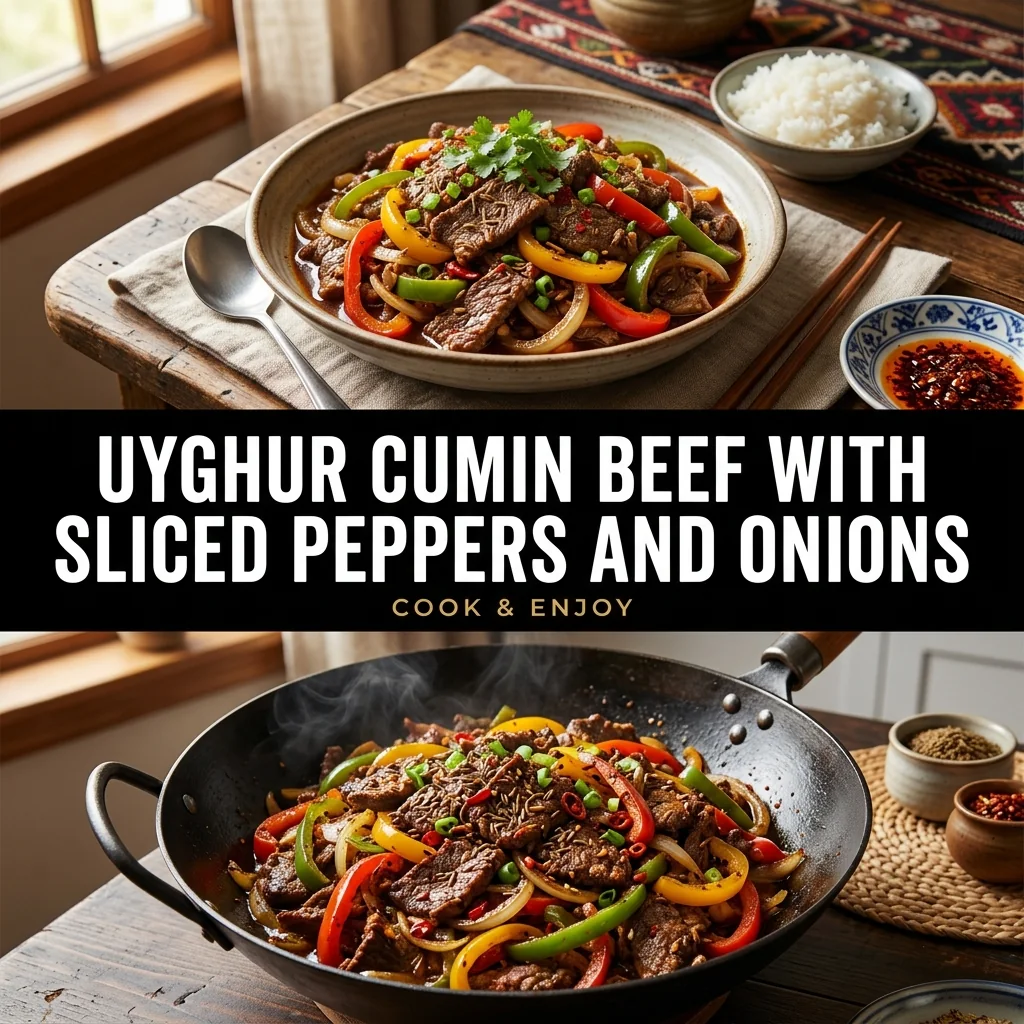
Uyghur cumin beef is a celebrated specialty hailing from Central Asia and Northwest China, renowned for its intensely savory, aromatic profile and lightning-fast wok technique. Thinly sliced halal flank steak is briefly marinated in a light cornstarch and soy sauce mixture, protecting the delicate muscle fibers against the searing heat of the pan. Once the beef hits a smoking-hot carbon steel wok, it cooks in mere minutes, retaining incredible tenderness while picking up smoky caramelization. Generous quantities of freshly toasted, coarsely crushed cumin seeds and dried chili flakes coat the beef alongside crisp bell peppers and sweet red onions, producing an unmistakably pungent, earthy aroma and vibrant chili heat that pairs naturally with steamed rice or flatbread.
Slicing Technique and Cornstarch Velveting
Flank steak contains long, defined muscle grains that can become tough and chewy if sliced incorrectly. Always position your knife perpendicular to the grain lines, cutting the meat into thin strips about one-eighth inch thick. The brief marination step, known in wok cookery as velveting, coats the meat fibers in cornstarch, oil, and halal-certified soy sauce. This delicate starch barrier locks in natural juices and insulates the meat against the scorching heat of the wok, preventing moisture evaporation and ensuring that the high-heat stir-fry produces tender, succulent beef strips rather than rubbery textures.
The Importance of Freshly Crushed Cumin
Pre-ground cumin from a spice jar cannot replicate the bold intensity essential to authentic Uyghur cooking. Ground cumin oxidizes quickly, leaving behind flat bitterness. By using whole cumin seeds, gently dry-toasting them in a pan until fragrant, and crushing them coarsely in a mortar, you release potent essential oils immediately before cooking. The broad, jagged fragments cling to the beef strips and vegetables, delivering sudden bursts of earthy warmth and aromatic crunch that define the dish. Balancing this rich seed flavor with spicy dried chili flakes creates the signature flavor profile.
Heat Management in Wok Cookery
Successful stir-frying relies entirely on intense heat and rapid movement. A heavy carbon steel wok or cast-iron skillet must be brought to smoking temperatures before adding oil, which prevents meat from sticking. Cooking in stages is vital: searing the beef undisturbed first establishes deep browning without drawing out juices, while cooking the peppers and onions separately keeps them pleasantly crisp. Combining everything in the final sixty seconds unites the ingredients without steaming them. If your stove lacks commercial burner output, cook the beef in two smaller batches to preserve pan heat and prevent stewing.
Before you start
Partially freeze your flank steak for twenty minutes before slicing. Chilling firms the beef muscle tissue, allowing you to slice extraordinarily thin, uniform strips across the grain with minimal effort. Have all sliced vegetables, aromatics, and crushed spices arranged in small prep bowls right next to your cooking station before turning on the burner; the entire active wok process takes under ten minutes and leaves no time for chopping midway.
THE RECIPE
Uyghur Cumin Beef with Sliced Peppers and Onions
4 servings · 20 minutes preparation · 10 minutes cooking · 20 minutes cooling, chilling or resting
Ingredients
Step-by-step instructions
- In a medium mixing bowl, whisk together the halal soy sauce, cornstarch, water, and toasted sesame oil until smooth, then add the sliced flank steak and massage gently to coat evenly.
- Allow the marinated beef to rest at cool room temperature for 20 minutes so the marinade absorbs and tenderizes the meat fibers.
- Place a dry 14-inch carbon steel wok or heavy skillet over medium heat, toast the whole cumin seeds for 2 minutes until fragrant, then transfer to a mortar and coarsely crush them.
- Increase the wok heat to high until lightly smoking, add 2 tablespoons cooking oil, swirl to coat, and lay the marinated beef strips in a single layer to sear undisturbed for 90 seconds.
- Stir-fry the beef briskly for another 60 seconds until the exterior is browned but the interior remains slightly pink, then transfer the beef immediately onto a clean plate.
- Pour the remaining 1 tablespoon cooking oil into the hot wok, add the red onion wedges, red bell pepper, and green bell pepper, and stir-fry over high heat for 2 minutes until blistered yet crisp.
- Add the sliced garlic, matchstick ginger, crushed cumin seeds, and chili flakes to the wok, tossing constantly for 30 seconds to release the fragrant essential oils without scorching.
- Return the seared beef and any resting juices to the wok, tossing with the scallion lengths and fine sea salt for 60 seconds until everything is glossy and uniformly distributed.
- Remove from heat immediately and transfer the sizzling cumin beef to a wide serving platter to serve hot alongside steamed white rice. Verify the thickest meat portion reaches at least 145 F (63 C) before removing from the heat, then rest for at least 3 minutes before serving.
Kitchen notes
Partially freeze your flank steak for twenty minutes before slicing. Chilling firms the beef muscle tissue, allowing you to slice extraordinarily thin, uniform strips across the grain with minimal effort. Have all sliced vegetables, aromatics, and crushed spices arranged in small prep bowls right next to your cooking station before turning on the burner; the entire active wok process takes under ten minutes and leaves no time for chopping midway.
Storage & make-ahead
Refrigerate any leftover stir-fried beef and vegetables in an airtight container promptly within 2 hours. Leftovers can be kept safely in the refrigerator for up to 3 days. When ready to enjoy, reheat the beef in a hot skillet over medium-high heat with a splash of water or broth, tossing briskly until steaming and heated to at least 165°F (74°C) throughout. Microwave reheating works but may soften the peppers.
An original recipe guide inspired by themes in our Pinterest research. Recipe has not been independently kitchen-tested. AI-generated image is illustrative; your finished dish may look different.
Frequently asked questions
Can I use sirloin or ribeye instead of flank steak?
Yes, halal sirloin or ribeye cuts work wonderfully. Sirloin offers great beefy flavor with moderate tenderness, while ribeye brings richer fat content. Adjust your slicing thickness slightly thicker if using ribeye, as tender cuts cook even faster than flank steak.
How do I ensure my soy sauce is strictly halal-certified?
Many commercial soy sauces contain naturally occurring alcohol as a fermentation byproduct. Look for bottles bearing an official halal certification logo or select naturally brewed alcohol-free tamari or halal liquid aminos, which provide rich umami flavor without any non-compliant ingredients.
What if I do not own a traditional wok?
A wide, heavy 12-inch cast-iron skillet or stainless steel fry pan makes an excellent alternative. The thick metal holds thermal energy effectively, allowing you to achieve the essential high-heat sear on the beef strips without dropping cooking temperature when ingredients are added.