WHY MAKE IT
A little comfort, a lot of flavor.
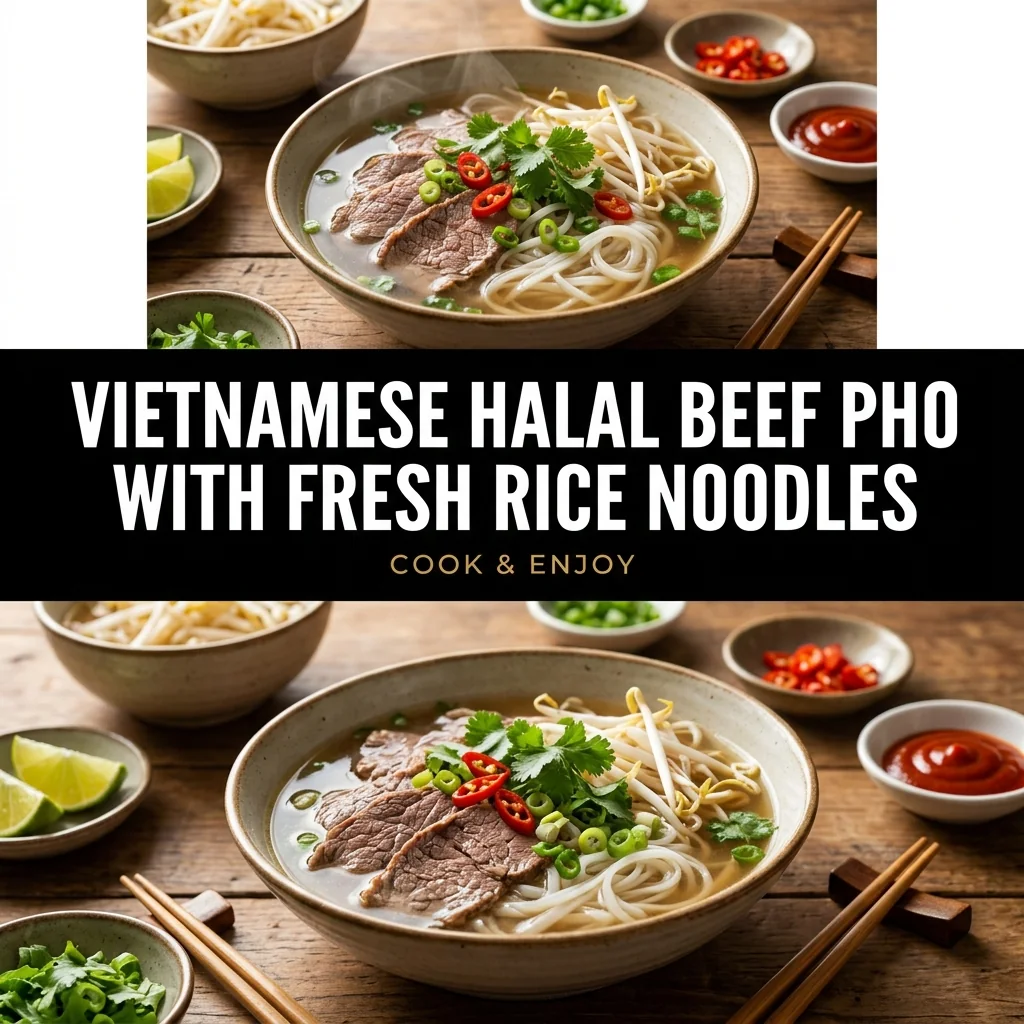
Vietnamese pho is celebrated worldwide for its nuanced aromatic profile and restorative clarity. Achieving an authentic bowl using strictly halal ingredients requires honoring traditional simmering techniques while sourcing halal-certified beef cuts. The soul of this noodle soup rests within its 12-hour broth, slowly coaxing rich collagen from marrow bones alongside warm charred spices including star anise, cinnamon, and black cardamom. Paired with soft, pliable fresh rice noodles, tender brisket, and flash-cooked sirloin, this bowl represents culinary balance. The aromatic perfume of fresh Thai basil, zesty lime, and pungent halal fish sauce delivers a complete multi-sensory experience that is nourishing, wholesome, and deeply satisfying for gatherings.
The Art of Clear Bone Broth
A successful pho broth relies on thorough bone purification. Halal knuckle and marrow bones contain significant blood and protein fragments that will cloud the broth if not addressed early. The initial ten-minute blanch releases these impurities rapidly. Washing the parboiled bones ensures pristine water clarity during the long simmer. Throughout the twelve-hour cooking window, maintaining low heat keeps fat from emulsifying into the liquid. The resulting broth remains luminous, displaying an amber shimmer and a clean, silky mouthfeel derived purely from naturally extracted gelatin without artificial thickeners.
Balancing Aromatics and Seasoning
Charring alliums creates essential smokiness and mellows sulfur sharpness into round sweetness. Toasting the dry spices awakens volatile oils before steeping, infusing warm, floral notes without overpowering the foundational beef flavor. Vietnamese rock sugar provides clean, balanced sweetness without the cloying molasses edge of raw cane sugars. Sourcing certified halal fish sauce is critical; pure fish sauce contains solely wild-caught anchovies, salt, and water, delivering profound umami while maintaining strict halal integrity. Careful tasting before serving ensures salt, fish sauce, and aromatic warmth align harmoniously.
Assembly and Serving Rituals
Pho is assembled fresh to maintain distinct textural contrasts. Fresh banh pho noodles require only a brief flash bath in boiling water to soften without turning mushy. Slicing raw sirloin across the grain ensures tenderness, letting scalding broth poach the thin meat to medium-rare within seconds inside the serving bowl. Fresh accoutrements—crunchy bean sprouts, fragrant Thai basil, and bright lime juice—should be served alongside rather than mixed into the communal pot, permitting each diner to customize freshness and acidity with every bite.
Before you start
Achieving crystal-clear pho broth requires two non-negotiable steps: vigorously parboiling the bones first, and never allowing the stockpot to boil violently during the 12-hour extraction. A violent boil emulsifies fat droplets and suspended particles into the liquid, producing a muddy soup. Maintain a bare, lazy simmer where single bubbles break gently across the perimeter. Slicing the raw sirloin while it is partially frozen allows paper-thin ribbons that cook instantly under hot broth.
THE RECIPE
Vietnamese Halal Beef Pho with Fresh Rice Noodles
6 servings · 30 minutes preparation · 740 minutes cooking · 3 minutes cooling, chilling or resting
Ingredients
Step-by-step instructions
- Place the halal beef marrow bones, knuckle bones, and brisket into a 12-quart stockpot, cover completely with cold tap water, and bring to a rolling boil over high heat for 10 minutes to expel impurities.
- Drain the bones and brisket thoroughly in a colander, discard the murky blanching liquid, and wash each bone individually under cold running water to remove coagulated protein.
- Char the halved yellow onion and sliced ginger directly over an open flame or on a dry cast-iron skillet over high heat for 6 to 8 minutes until blackened spots develop.
- Toast the black cardamom, star anise, cinnamon stick, coriander seeds, and fennel seeds in a dry skillet over medium-low heat for 3 to 4 minutes until fragrant, then secure them inside a cotton spice bag.
- Return the cleaned bones and brisket to the clean 12-quart stockpot, pour in 6 quarts of fresh cold water, and bring to a gentle simmer over medium-high heat.
- Skim any remaining froth from the surface, reduce heat to low, add the charred onion, ginger, spice bag, rock sugar, halal fish sauce, and sea salt, and simmer uncovered at a bare bubble for 12 hours, topping with boiling water as needed to maintain volume.
- Remove the tender brisket after 3 hours of cooking, cool completely, wrap tightly, and refrigerate until assembly; at the 12-hour mark, strain the broth through a fine-mesh sieve lined with cheesecloth into a clean pot, discard solids, and adjust seasoning with salt.
- Cook the fresh rice noodles in a separate pot of rapidly boiling water for 30 to 45 seconds until soft yet resilient, drain well, and divide equally among 6 deep serving bowls.
- Top each noodle bowl with sliced cooked brisket and thin slices of raw halal sirloin, then ladle scalding boiling broth directly over the beef to ensure it reaches an internal temperature of 145 F (63 C), resting 3 minutes before serving with bean sprouts, herbs, and lime.
Kitchen notes
Achieving crystal-clear pho broth requires two non-negotiable steps: vigorously parboiling the bones first, and never allowing the stockpot to boil violently during the 12-hour extraction. A violent boil emulsifies fat droplets and suspended particles into the liquid, producing a muddy soup. Maintain a bare, lazy simmer where single bubbles break gently across the perimeter. Slicing the raw sirloin while it is partially frozen allows paper-thin ribbons that cook instantly under hot broth.
Storage & make-ahead
Promptly refrigerate strained broth and meats in separate airtight containers within 2 hours. Keep the broth chilled below 40 F (4 C) for up to 4 days, or freeze for up to 3 months. Always store fresh noodles separate from liquid. Reheat the broth to a rolling boil reaching at least 165 F (74 C) before ladling over assembled bowls.
An original recipe guide inspired by themes in our Pinterest research. Recipe has not been independently kitchen-tested. AI-generated image is illustrative; your finished dish may look different.
Frequently asked questions
Can I substitute dried rice noodles if fresh are unavailable?
Yes, dried flat rice noodles can be used. Soak them in warm water for 20 minutes, then boil in fresh water for 2 to 3 minutes until tender before draining thoroughly.
Why must the broth be at a rolling boil when serving?
The scalding broth provides the heat necessary to cook the paper-thin raw sirloin slices directly in the serving bowl while warming the blanched noodles to optimal eating temperature.
How can I remove excess fat from the finished broth?
Chill the strained broth overnight in the refrigerator; the congealed fat cap will solidify on top and can be easily lifted off with a spoon before reheating.


