WHY MAKE IT
A little comfort, a lot of flavor.
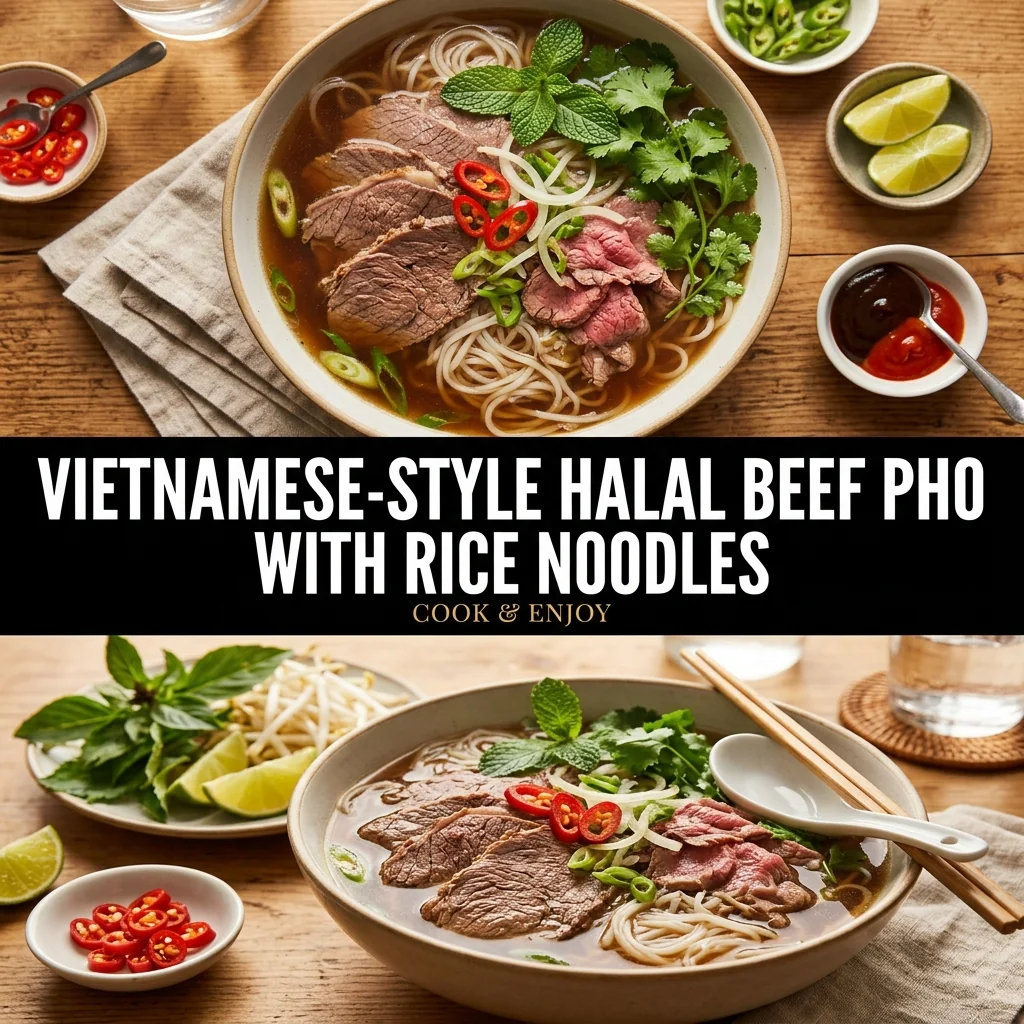
Vietnamese-style beef pho is celebrated globally for its delicate balance of deep savory richness and bright, fragrant spices. This halal preparation builds its foundation on clean halal beef marrow bones and brisket, slowly coaxing gelatin and umami into water over several quiet hours. Charred ginger and onions lend sweet smokiness, while toasted spices like star anise and black cardamom fill the kitchen with their distinctive perfume. By parboiling the bones and keeping the extraction heat low, the finished broth remains jewel-clear yet deeply satisfying. Ladled steaming hot over tender flat rice noodles and thinly cut brisket, each bowl provides comfort alongside crisp herbal garnishes that allow every diner to personalize their meal at the table.
Clarifying Halal Beef Bones
Achieving a clean, crystalline pho broth begins with thorough bone preparation. Halal beef marrow, knuckle, and neck bones often contain residual proteins and blood within the cavities that can discolor the soup if not purged. A rigorous ten-minute preliminary boil forces these impurities to the surface as dense foam. Once drained and washed thoroughly under warm tap water, the bones enter fresh cold water completely clean. Maintaining a low, steady simmer ensures these elements never emulsify, yielding an aromatic broth that highlights the pure savoriness of quality halal beef.
Charring and Toasting Aromatics
The unmistakable complexity of traditional pho broth relies on purposeful heat application to the spices and alliums. Broiling halved yellow onions and unpeeled ginger until blistered and charred softens their sharp pungency, converting raw juices into mellow sweetness with a hint of camp smoke. Simultaneously, gently toasting star anise, cinnamon, black cardamom, coriander, and fennel in a dry pan unlocks fat-soluble essential oils. Enclosing them in a cheesecloth spice bag prevents loose seeds from clouding the broth while allowing aromatic oils to infuse the simmering liquid seamlessly.
Assembly and Temperature Control
Temperature control is paramount when serving noodle soups. Rice noodles chill rapidly after draining, so ladling lukewarm broth produces an underwhelming bowl. Cook dried rice noodles just before assembling, rinsing them briefly in warm water to wash away excess surface starch that might thicken the clear soup. The strained beef broth must reach a rolling boil right before it hits the bowls. The intense heat of the broth instantly warms the noodles and cooked brisket slices, activating the fragrant oils in fresh Thai basil leaves upon contact.
Before you start
Clarity in the broth depends entirely on two non-negotiable steps: the initial high-heat parboil and avoiding an aggressive rolling boil later. When boiling bone marrow vigorously, suspended fats emulsify into the liquid, producing a cloudy, greasy stock instead of an amber, translucent consommé. Keep your stove burner adjusted so only small bubbles gently breach the surface. If excess rendered fat collects atop the broth, skim it gently with a wide flat ladle or chill the strained broth overnight so the hardened fat cap lifts off effortlessly.
THE RECIPE
Vietnamese-Style Halal Beef Pho with Rice Noodles
6 servings · 35 minutes preparation · 270 minutes cooking · 15 minutes cooling, chilling or resting
Ingredients
Step-by-step instructions
- Place 3 pounds of halal beef bones and 1.5 pounds of brisket into a large 12-quart stockpot, cover completely with cold tap water, and bring to a rolling boil over high heat for 10 minutes to release surface impurities.
- Drain the bones and brisket thoroughly in a colander, discard the murky boil water, and wash the meat and pot interior under warm running water to remove stubborn coagulated foam.
- Arrange the halved onions and sliced ginger cut-side up on a rimmed baking sheet; broil on high 6 inches from the heat source for 10 to 12 minutes until deeply blackened around the edges.
- Toast 5 star anise, 1 cinnamon stick, 4 cracked black cardamom pods, 1 tablespoon coriander seeds, and 1 teaspoon fennel seeds in a dry skillet over medium heat for 3 to 4 minutes until intensely fragrant, then seal inside a culinary spice sachet.
- Return the blanched bones and brisket to the clean stockpot, pour in 16 cups of cold water, and bring to a gentle simmer over medium-low heat; add the charred aromatics, spice sachet, 3 tablespoons halal fish sauce, 1 tablespoon rock sugar, and 1 tablespoon kosher salt.
- Simmer uncovered at a faint bare bubble (around 195°F / 90°C) for 2 hours, using a slotted spoon to transfer the cooked brisket to a cutting board once tender; let the brisket cool, wrap tightly, and refrigerate.
- Continue simmering the bone broth gently for another 2.5 hours, occasionally skimming surface oil and foam, then lift out bones and aromatics before straining the liquid through a fine-mesh sieve lined with cheesecloth into a clean pot.
- Cook 16 ounces of flat rice noodles in a separate 4-quart pot of boiling water for 3 to 5 minutes according to package directions, drain thoroughly, and divide evenly among 6 wide serving bowls.
- Thinly slice the chilled cooked brisket against the grain. Bring the strained broth to a rolling boil, add the sliced cooked brisket and bean sprouts, and heat until the brisket reaches 165 F (74 C) and sprouts are steaming hot. Ladle the broth, meat and sprouts over the noodles and serve with Thai basil and jalapenos.
Kitchen notes
Clarity in the broth depends entirely on two non-negotiable steps: the initial high-heat parboil and avoiding an aggressive rolling boil later. When boiling bone marrow vigorously, suspended fats emulsify into the liquid, producing a cloudy, greasy stock instead of an amber, translucent consommé. Keep your stove burner adjusted so only small bubbles gently breach the surface. If excess rendered fat collects atop the broth, skim it gently with a wide flat ladle or chill the strained broth overnight so the hardened fat cap lifts off effortlessly.
Storage & make-ahead
Refrigerate leftover broth and cooked brisket separately in airtight glass containers within 2 hours of cooking for up to 4 days. Do not store rice noodles submerged in broth, as they absorb liquid and turn mushy. Reheat broth on the stovetop until it reaches a full rolling boil of at least 165°F (74°C) before pouring over freshly softened noodles and sliced brisket. Broth freezes exceptionally well without meat for up to 3 months.
An original recipe guide inspired by themes in our Pinterest research. Recipe has not been independently kitchen-tested. AI-generated image is illustrative; your finished dish may look different.
Frequently asked questions
What cuts of halal beef work best for pho broth?
Combine gelatin-rich bones like knuckles, joints, and marrow bones with a flavorful meat cut such as brisket or chuck. The bones create body and silky mouthfeel, while the meat enriches the broth with savory depth before being sliced as a topping.
How can I keep the broth from tasting overly sweet?
Add the rock sugar gradually. Rock sugar imparts a rounder, softer sweetness than white table sugar, but simmering charred onions also releases natural sugars. Taste your broth during the final hour of simmering and adjust salt and halal fish sauce to balance.
Can I make the pho broth in advance?
Yes, the broth improves in flavor when made 24 hours ahead. Strain into shallow containers and refrigerate promptly within 2 hours; use an ice bath to cool a large batch quickly. Scrape away the solidified fat disc on top before reheating to at least 165°F (74°C) throughout.