WHY MAKE IT
A little comfort, a lot of flavor.
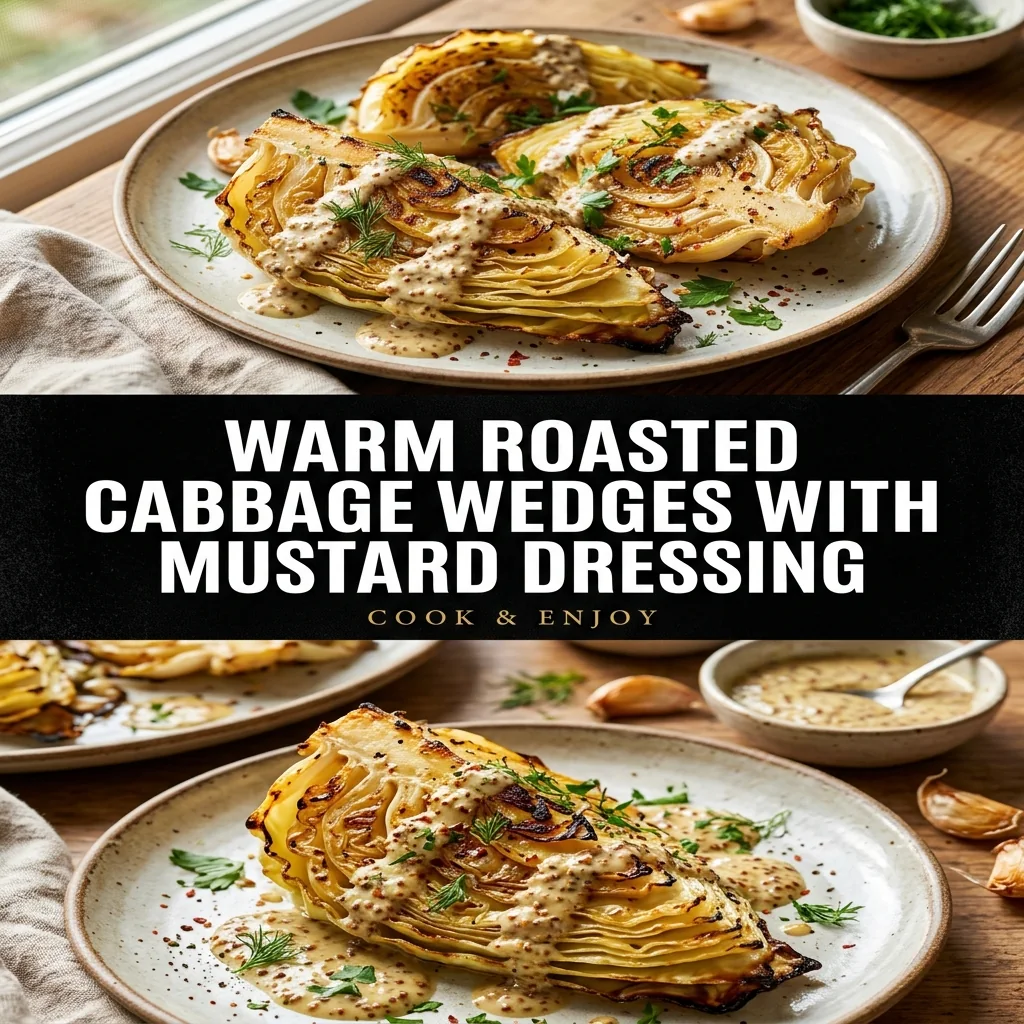
Roasting green cabbage under high heat transforms an everyday, fibrous head into sweet, buttery wedges with deeply browned, frizzled outer edges. Green cabbage has a tight leaf structure and natural sugars that caramelize thoroughly without turning mushy when roasted in whole wedges. Leaving the root core intact provides structural stability, allowing you to flip the wedges halfway through cooking without them scattering across the pan. The warmth of the freshly roasted brassica leaves absorbs the dressing readily, so pairing them with a pungent, whole-grain mustard and shallot vinaigrette creates balance against the vegetable's natural sweetness. This reliable side dish comes together with pantry ingredients and pairs seamlessly with roast chicken, grilled beef, or braised lentils.
Selecting and Cutting the Cabbage
Choose a green cabbage that feels heavy for its size with tightly packed leaves and an unblemished base. Avoid heads with loose outer layers or dry, cracked stems. To cut uniform wedges, slice the head cleanly in half through the center of the stem first. Lay each flat half down on a steady cutting board and cut each half into four equal wedges, aiming your knife straight through the core. Leaving a portion of the stem attached to each individual wedge prevents the leaves from detaching during roasting, ensuring neat presentation and even heat distribution across every piece.
Achieving Proper Caramelization
High oven heat is critical for roasting cabbage. At 425°F (220°C), moisture quickly evaporates from the leaf surfaces, allowing browning before the interior turns overly soft. Crowding the pan creates trapped steam, which leads to soggy, pale wedges rather than crisp margins. Give each wedge at least one inch of clearance on the rimmed sheet pan. A sturdy metal spatula is the best tool for turning the wedges at the eighteen-minute mark. Pressing the newly turned flat sides gently against the hot metal sheet promotes immediate contact and uniform charring across both cut surfaces.
Balancing the Warm Mustard Emulsion
The dressing relies on gentle residual heat rather than a rolling boil, keeping the whole-grain mustard seeds intact and the lemon juice bright. Warming the minced shallot in olive oil softens its raw sulfur bite without turning it bitter. Whisking the vinegar, lemon juice, and maple syrup off the heat creates a loose vinaigrette that seeps into the crevasses of the warm cabbage leaves. Spooning the dressing over the wedges while they remain hot allows the flavors to penetrate deep beyond the surface, delivering acidity and crunch in every bite.
Before you start
Cut the wedges carefully through the solid stem core so the individual leaves stay bonded throughout roasting and flipping. If some outer leaves separate, gather them onto the tray; they will roast into brittle, tasty crisps alongside the wedges. Use a heavy rimmed sheet pan rather than a glass dish to ensure direct heat transfer, which delivers the deep browning necessary to counterbalance the brassica sharpness of green cabbage.
THE RECIPE
Warm Roasted Cabbage Wedges with Mustard Dressing
4 servings · 15 minutes preparation · 30 minutes cooking · 5 minutes cooling, chilling or resting
Ingredients
Step-by-step instructions
- Position an oven rack in the center position and preheat the oven to 425°F (220°C). Line a heavy rimmed 18x13-inch baking sheet with parchment paper.
- Trim the base of the cabbage stem slightly, keeping the core intact so the wedges hold together, then slice the head lengthwise through the core into 8 equal wedges.
- Arrange the cabbage wedges cut-side down across the prepared baking sheet with space between each piece. Drizzle 1 1/2 tablespoons of the extra-virgin olive oil evenly over both cut sides, and season with 1/2 teaspoon of the sea salt and 1/4 teaspoon of the black pepper.
- Roast undisturbed for 18 minutes, then carefully flip each wedge using a wide metal spatula to expose the second cut side, and continue roasting for 10 to 12 minutes until the edges are deep golden-brown and the core is tender when pierced with a paring knife.
- While the cabbage finishes roasting, warm the remaining 1 1/2 tablespoons of olive oil in a small skillet over medium-low heat. Add the minced shallot and cook for 2 to 3 minutes until translucent but not browned.
- Stir the grated garlic into the skillet and cook for 30 seconds until fragrant. Remove the skillet from the heat and whisk in the whole-grain mustard, lemon juice, apple cider vinegar, maple syrup, remaining 1/4 teaspoon sea salt, and remaining 1/4 teaspoon black pepper until emulsified.
- Transfer the roasted cabbage wedges to a warm serving platter, spoon the warm dressing immediately over the caramelized surfaces, garnish with chopped parsley, and let rest for 5 minutes before serving.
Kitchen notes
Cut the wedges carefully through the solid stem core so the individual leaves stay bonded throughout roasting and flipping. If some outer leaves separate, gather them onto the tray; they will roast into brittle, tasty crisps alongside the wedges. Use a heavy rimmed sheet pan rather than a glass dish to ensure direct heat transfer, which delivers the deep browning necessary to counterbalance the brassica sharpness of green cabbage.
Storage & make-ahead
Store leftover cabbage and dressing in an airtight container in the refrigerator within 2 hours of cooking for up to 3 days. Reheat on a parchment-lined baking sheet at 375°F (190°C) until heated thoroughly to an internal temperature of 165°F (74°C). The dressing can be made up to 2 days ahead and warmed gently before serving.
An original recipe guide inspired by themes in our Pinterest research. Recipe has not been independently kitchen-tested. AI-generated image is illustrative; your finished dish may look different.
Frequently asked questions
Can I substitute red cabbage for green cabbage?
Yes, red cabbage works well and roasts in the same timeframe. Keep in mind that red cabbage possesses slightly thicker leaves and a firmer texture, so ensure the core is pierced easily with a paring knife before pulling the baking sheet from the oven.
Why did my cabbage wedges fall apart during cooking?
Wedges separate when trimmed too close to the base. The solid center core must remain attached to every piece when slicing. Cut directly through the stem each time rather than cutting off the root end entirely.
Can I make the dressing in advance?
Yes, whisk the dressing ingredients together and store them in a sealed jar in the refrigerator for up to 3 days. Reheat gently in a small saucepan over low heat until warm before spooning over the freshly roasted cabbage.