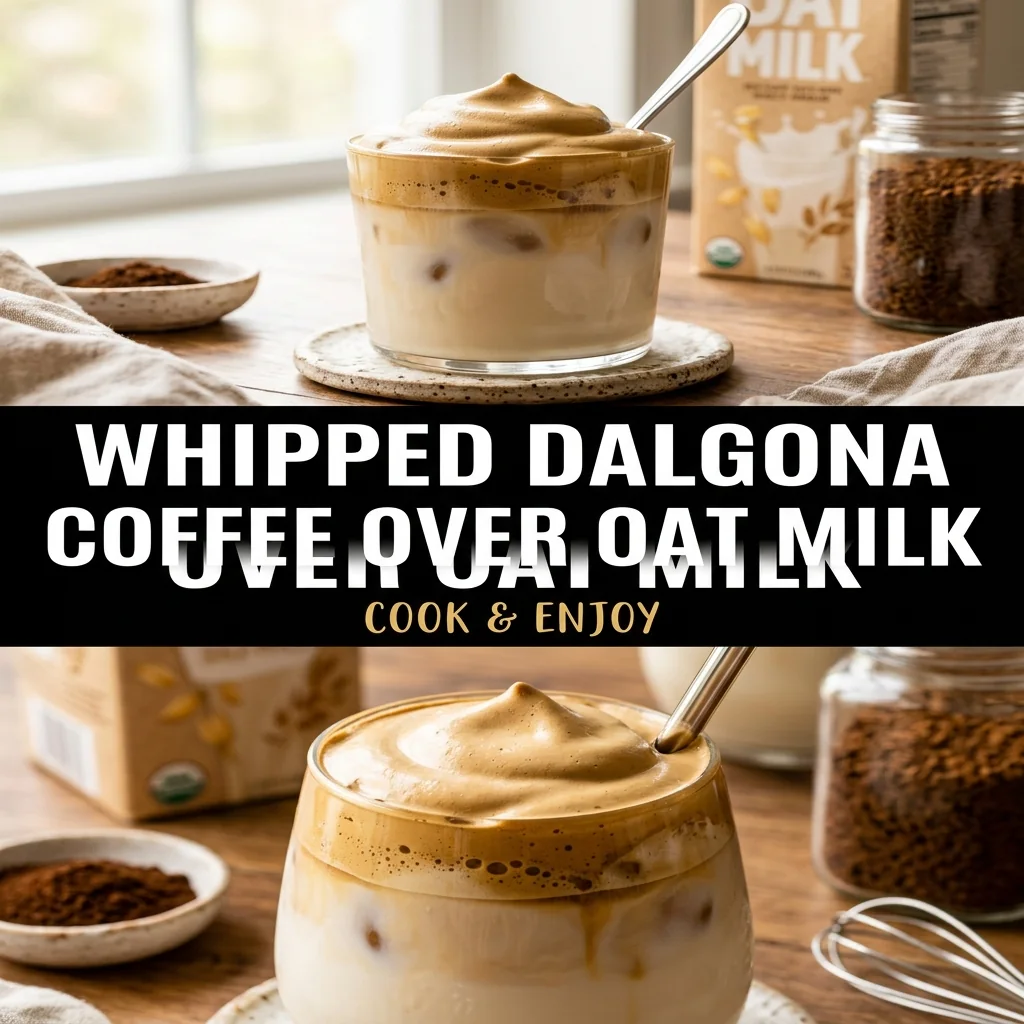
WHY MAKE IT
A little comfort, a lot of flavor.
Whipped dalgona coffee over oat milk offers a striking contrast of textures, pairing an ultra-light, aerated coffee cloud with chilled, naturally sweet plant milk. The aerated topping relies entirely on the mechanical whipping of dried coffee solids, dissolved sugar, and boiling water to trap micro-bubbles within a resilient syrup matrix. Oat milk provides an ideal dairy-free foundation, as its naturally rounded cereal notes temper the concentrated, roasty bitterness of the whipped foam. Unlike heavily diluted iced coffees, this layered beverage retains its structural integrity as you sip, allowing you to gradually fold the dense foam into the milk to create a custom balance of sweetness and roastiness. It requires zero commercial syrups or dairy stabilizers to achieve a luscious mouthfeel.
Coffee Selection and Foaming Chemistry
The success of dalgona foam hinges entirely on dehydrated instant coffee. Instant granules contain concentrated soluble coffee solids and natural oils that have been pre-extracted and dried, which lower surface tension and allow air bubbles to remain suspended when agitated. Standard drip grounds or freshly pulled espresso lack the high concentration of dried solids per drop of liquid, meaning they will not achieve the required stiff peaks. Granulated cane sugar acts as a critical structural stabilizer, thickening the liquid film around trapped air bubbles to keep the whip upright for hours without collapsing or weeping prematurely.
Selecting the Best Oat Milk
A full-bodied, unsweetened oat milk yields the cleanest taste and best suspension for the dense foam. Look for plain varieties without added flavorings or artificial gums that might compete with the bitter-sweet profile of the coffee whip. Barista-edition oat milks contain balanced vegetable fats that give a velvet body akin to whole dairy milk, preventing the heavy coffee cap from immediately dropping to the base of the glass. Always chill the oat milk thoroughly before pouring; warm or room-temperature liquid will dissolve the bottom layer of foam rapidly upon contact.
Serving and Mixing Dynamics
Presentation is central to the dalgona experience. Presenting the beverage with distinct layers highlights the contrast between the pale, ivory oat milk and the rich, golden foam floating overhead. When drinking, use a long spoon or reusable straw to vigorously blend the top foam into the cold milk. Drinking the dense foam straight can overwhelm the palate with concentrated bitterness and sugar, whereas folding the components together creates a silky, thick iced latte with consistent sweetness and a frothy head from the first sip to the last.
Before you start
For the fastest and most stable foam, use an electric hand mixer with a single whisk in a narrow, tall bowl to prevent splattering. The equal 1:1:1 ratio of instant coffee, granulated sugar, and boiling water is critical; reducing the sugar decreases structural foam stability, while hot water dissolves the granules instantly without deflating the whip. Ground coffee beans or espresso will not foam properly, so stick to dried instant coffee crystals or powder.
THE RECIPE
Whipped Dalgona Coffee over Oat Milk
2 servings · 8 minutes preparation · 0 minutes cooking
Ingredients
Step-by-step instructions
- Combine 2 tablespoons instant coffee granules, 2 tablespoons granulated cane sugar, and 2 tablespoons boiling water in a deep medium mixing bowl.
- Beat the mixture using a handheld electric mixer fitted with a whisk attachment on medium-high speed for 3 to 4 minutes, or vigorously by hand with a wire whisk for 7 to 8 minutes, until stiff, glossy peaks form and the color lightens to a pale caramel shade.
- Divide 1 cup of ice cubes equally between two 12-ounce beverage glasses.
- Pour 3/4 cup of cold unsweetened oat milk into each glass over the ice cubes.
- Spoon the whipped coffee foam evenly over the surface of the oat milk in both glasses and serve immediately with a straw or spoon for stirring.
Kitchen notes
For the fastest and most stable foam, use an electric hand mixer with a single whisk in a narrow, tall bowl to prevent splattering. The equal 1:1:1 ratio of instant coffee, granulated sugar, and boiling water is critical; reducing the sugar decreases structural foam stability, while hot water dissolves the granules instantly without deflating the whip. Ground coffee beans or espresso will not foam properly, so stick to dried instant coffee crystals or powder.
Storage & make-ahead
The prepared whipped foam can be stored in an airtight glass container in the refrigerator for up to 12 hours without completely deflating, though some separation will occur. Whisk briefly by hand for 30 seconds before serving over fresh cold oat milk. Do not freeze the whip. Oat milk should remain refrigerated at or below 40 F (4 C) until assembling.
An original recipe guide inspired by themes in our Pinterest research. Recipe has not been independently kitchen-tested. AI-generated image is illustrative; your finished dish may look different.
Frequently asked questions
Can I use ground espresso instead of instant coffee?
No, ground espresso will not whip into foam. The process relies specifically on the concentrated soluble solids found exclusively in dehydrated instant coffee granules or powder to capture and stabilize air pockets.
Can I reduce the amount of sugar in the foam?
You can reduce the sugar to 1 tablespoon, but the foam will be significantly softer, less glossy, and will begin to dissolve into liquid within several minutes rather than holding stiff peaks.
Why did my coffee mixture fail to whip into peaks?
Under-whipping or incorrect liquid proportions are the common culprits. Ensure water is boiling when added, adhere strictly to the equal tablespoon ratio, and use an electric mixer on medium-high speed for a full 3 to 4 minutes.