WHY MAKE IT
A little comfort, a lot of flavor.
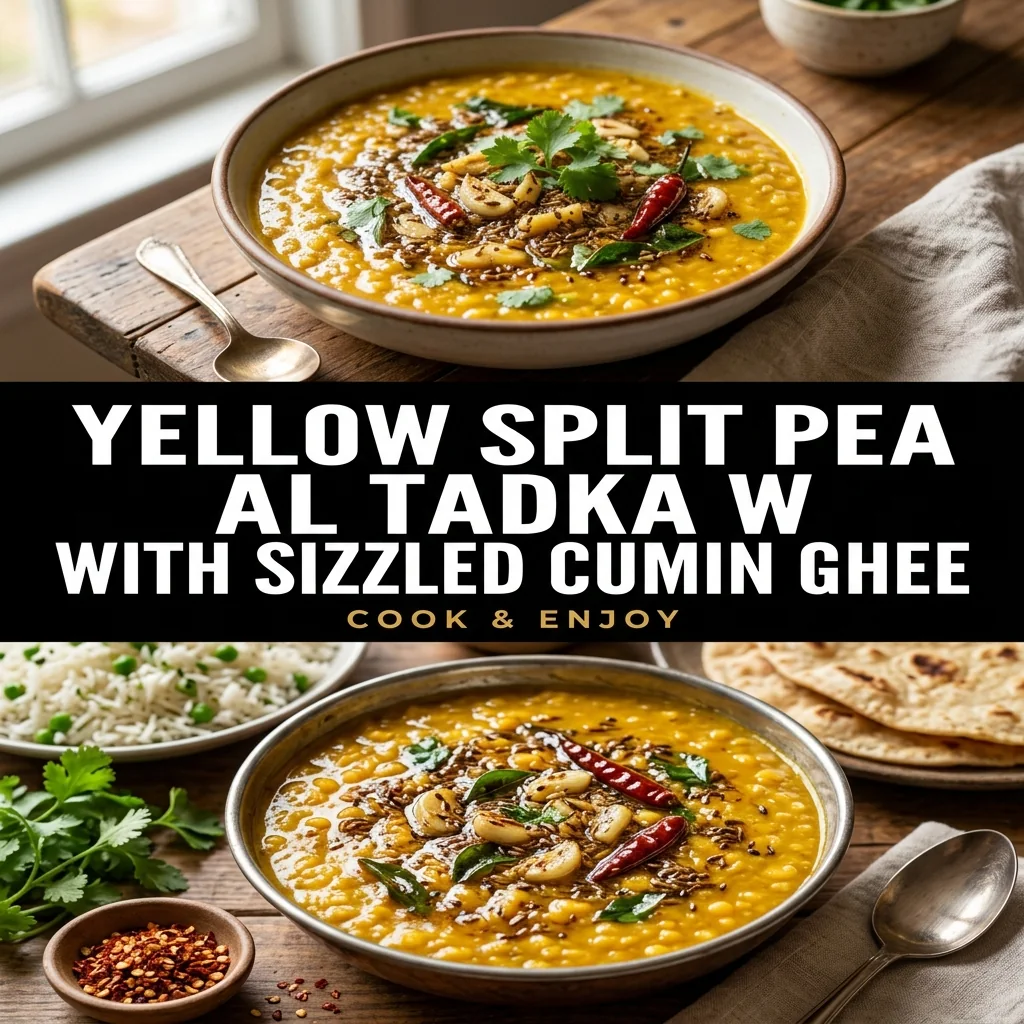
Daal tadka holds a place of honor across South Asian home cooking, offering comfort through modest ingredients transformed by culinary technique. While many weeknight versions use fast-cooking red lentils, yellow split peas provide a richer, sweeter, and more robust foundation that holds its texture beautifully. Simmered patiently with fragrant turmeric and fresh grated ginger, the pulses break down into a naturally creamy soup without needing dairy thickeners. The defining moment of the dish is the tadka—a traditional tempering technique where whole cumin seeds, slivered garlic, and green chilies sizzle in pure halal ghee. Poured hot into the pot, this aromatic fat blooms across the surface, infusing the mild split peas with deep, smoky warmth.
Selecting and Cooking Yellow Split Peas
Yellow split peas are derived from field peas that have been hulled and split. While visually similar to chana dal (split Bengal gram) or toor dal (split pigeon peas), split field peas take slightly longer to cook and yield a silky, smooth consistency when whisked. Always wash the pulses thoroughly until the rinse water runs clear to strip excess surface dust. Maintaining a gentle, steady simmer with the lid partially vented prevents the cooking liquid from boiling over while allowing the pulses to soften uniformly.
The Science of the Tadka Tempering
Tempering, or tadka, is an essential flavor extraction method. Essential oils within whole spices like cumin are fat-soluble; frying them briefly in hot ghee unlocks complex aromas and volatile flavor compounds that boiling in water cannot access. Halal-certified cow ghee possesses a high smoke point and rich nutty notes that olive or seed oils lack. Pouring the sizzling fat directly into the cooked legumes instantly emulsifies the surface layer, sealing in rich garlic-infused aromatics under the closed pot lid.
Balancing Density and Acidity
A great bowl of daal balances earthy starches against clean acidity. Fresh ginger cooked into the broth provides digestive warmth and background zest, but a final hit of fresh lemon juice added off the heat wakes up the entire composition. If your daal appears too thick after resting, adjust the consistency with boiling water; it should pour smoothly like heavy cream rather than spooning like stiff porridge. Fresh cilantro leaves stirred in at the end provide bright herbal lift.
Before you start
Yellow split peas have a tougher outer coat than split red lentils (masoor), so they require longer cooking to break down properly. Do not add salt or acidic lemon juice at the beginning of cooking, as minerals and acids can toughen legume cell walls and extend cooking time considerably. When preparing the tadka, keep your spices measured and close at hand; ground Kashmiri chili can scorch in seconds in hot ghee, so take the pan off the heat before stirring it in.
THE RECIPE
Yellow Split Pea Daal Tadka with Sizzled Cumin Ghee
4 servings · 15 minutes preparation · 55 minutes cooking · 10 minutes cooling, chilling or resting
Ingredients
Step-by-step instructions
- Place yellow split peas in a fine-mesh sieve and rinse thoroughly under cool running water until the water runs completely clear, removing any debris.
- Combine the rinsed split peas, 5 cups of water, ground turmeric, and grated ginger in a 4-quart heavy saucepan or Dutch oven.
- Bring the mixture to a rapid boil over medium-high heat, skimming off and discarding any white foam that rises to the surface during the first 5 minutes.
- Reduce the heat to medium-low, cover the pot with the lid slightly ajar, and simmer gently for 45 to 50 minutes until the peas are thoroughly tender and crush easily between your fingers.
- Remove the lid and use a wire balloon whisk or the back of a large wooden spoon to vigorously beat the split peas for 60 seconds against the side of the pot, creating a creamy, cohesive texture.
- Stir in the fine sea salt and 1 tablespoon of fresh lemon juice, adjusting the heat to the lowest setting to keep the daal warm.
- In a small heavy skillet or tadka pan, heat 3 tablespoons of halal ghee over medium heat until melted, clear, and shimmering.
- Add the cumin seeds, sliced garlic, and slit green chili to the hot ghee; fry for 60 to 90 seconds, swirling constantly, until the cumin crackles and the garlic slices turn light golden brown.
- Remove the skillet from the heat, immediately stir in the Kashmiri chili powder for 5 seconds to bloom, quickly pour the sizzling spiced ghee into the pot of daal, cover immediately with the lid, rest for 10 minutes to trap aromatics, and stir in fresh cilantro before serving.
Kitchen notes
Yellow split peas have a tougher outer coat than split red lentils (masoor), so they require longer cooking to break down properly. Do not add salt or acidic lemon juice at the beginning of cooking, as minerals and acids can toughen legume cell walls and extend cooking time considerably. When preparing the tadka, keep your spices measured and close at hand; ground Kashmiri chili can scorch in seconds in hot ghee, so take the pan off the heat before stirring it in.
Storage & make-ahead
Allow leftover daal to cool, transfer to a sealed glass container, and refrigerate within 2 hours. Refrigerate safely for up to 4 days or freeze in airtight containers for up to 3 months. Daal naturally thickens substantially upon cooling as starches re-solidify. When reheating, add water or light broth in 0.25-cup increments over medium heat, stirring occasionally until completely smooth, hot, and steaming to a minimum of 165 F (74 C).
An original recipe guide inspired by themes in our Pinterest research. Recipe has not been independently kitchen-tested. AI-generated image is illustrative; your finished dish may look different.
Frequently asked questions
Can I substitute oil for ghee to make it dairy-free?
Yes. You can use neutral avocado oil, coconut oil, or light olive oil for the tadka. However, pure halal ghee imparts a distinctive roasted, nutty aroma that defines traditional daal tadka flavor.
Why are my split peas still hard after 50 minutes?
Older dried legumes or exceptionally hard tap water can prolong cooking times significantly. If the peas remain firm, add 0.5 cup of boiling water and continue simmering covered for an additional 15 to 20 minutes.
Is Kashmiri chili powder very spicy?
No. Kashmiri chili is prized primarily for its vibrant crimson red color and mild, fruity warmth. If you prefer higher heat, add an extra sliced green chili to the sizzling ghee during the tadka step.