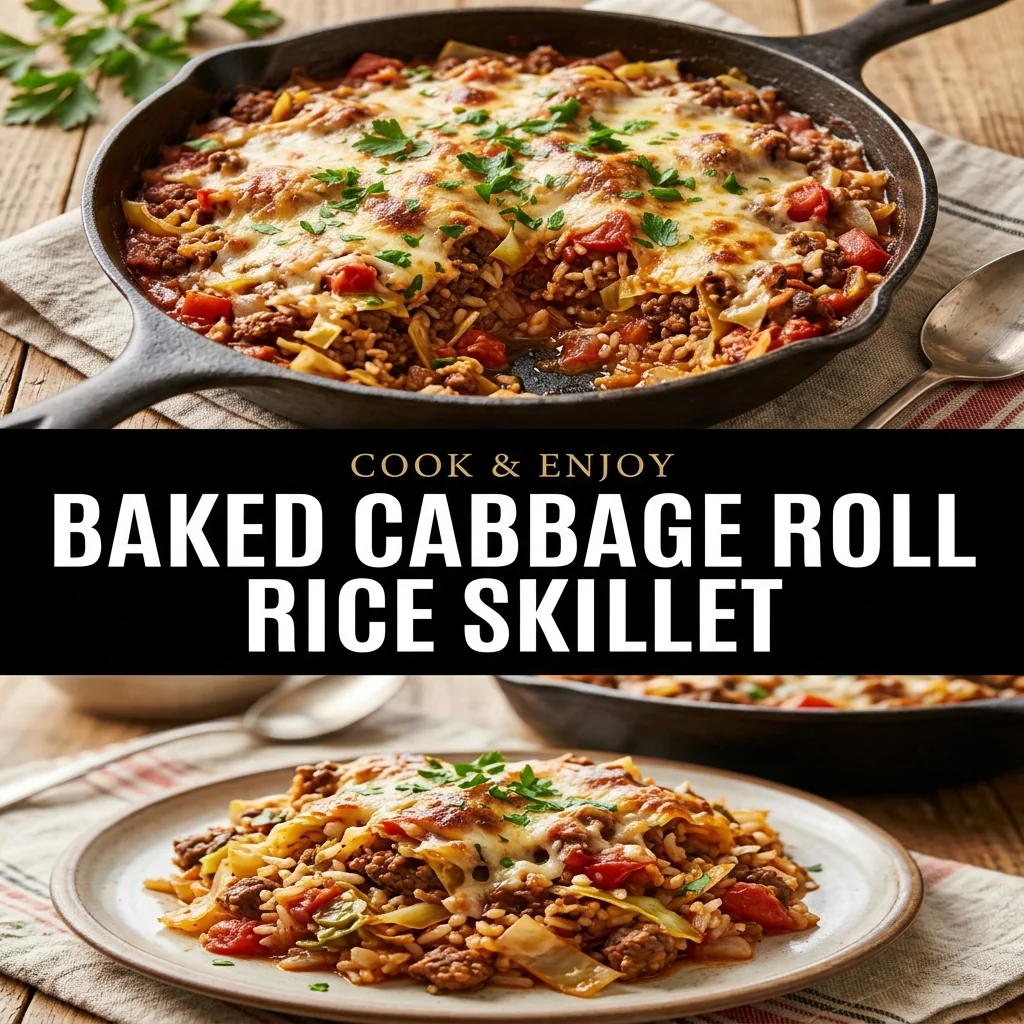
WHY MAKE IT
A little comfort, a lot of flavor.
Traditional stuffed cabbage rolls deliver exceptional comfort, but rolling individual leaves can be tedious and time-consuming. This skillet version captures every nuanced flavor of the heritage classic through a simplified, one-vessel approach. Lean halal ground beef browns alongside sweet yellow onions and garlic, creating a deeply savory base enhanced by smoked notes of sweet paprika and earthy thyme. Chopped fresh green cabbage ribbons collapse directly into simmering crushed tomatoes and rich halal beef broth, mingling seamlessly with parboiled rice grains. A splash of apple cider vinegar combined with brown sugar balances acidity and sweetness in classic eastern European style. Baked securely in the oven, the rice absorbs the savory broth, yielding tender grains and succulent cabbage in every spoonful.
The Choice of Cabbage and Rice
Standard green cabbage provides the best structural integrity for this extended oven braise. Its thick leaves soften gradually without dissolving into liquid puree, offering pleasing chew alongside the meat. Parboiled converted white rice is ideal here because the starches have been modified to resist burst cellular walls during baking. Acid from crushed tomatoes often retards the cooking rate of traditional raw long-grain rice, which can lead to chalky centers. Parboiled grains bypass this hurdle, absorbing hot beef broth evenly while maintaining clean, separate grains throughout the entire pan.
Flavor Foundation and Acidity Balance
The hallmark flavor profile of classic cabbage rolls hinges on the interplay between natural cabbage sweetness, rich beef fat, and sweet-and-sour tomato sauce. Browning the tomato paste alongside paprika and dried herbs caramelizes the sugars, intensifying tomato depth. Halal beef broth adds savory body, while a precise touch of brown sugar balances the sharp acidity of canned crushed tomatoes. Adding apple cider vinegar gives the braising liquid a bright tang, preventing the overall dish from tasting heavy or one-dimensional as it bakes.
Oven Braising Mechanics
Braising the mixture covered in a 375 F / 190 C oven provides gentle, omnidirectional heat that cooktops cannot duplicate evenly. Because the chopped cabbage starts with considerable volume, stirring it into the hot liquid allows heat to shrink the leaves before the skillet enters the oven. A secure seal trap is crucial; any gaps allow steam to vent, causing the top layer of rice to remain dry. Resting the skillet undisturbed for 10 minutes post-bake permits remaining free moisture to redistribute evenly throughout the tender starch.
Before you start
Using converted parboiled rice yields the most reliable texture in this one-pot baked dish. Unlike standard white long-grain rice, parboiled rice holds its shape remarkably well under acidic tomato environments without becoming mushy or staying unpleasantly hard. Ensure your skillet is sealed tightly with a well-fitting lid or heavy-duty aluminum foil prior to baking. Escaping steam prevents the top layer of shredded cabbage and rice grains from absorbing broth properly, resulting in unevenly cooked spots.
THE RECIPE
Baked Cabbage Roll Rice Skillet
6 servings · 20 minutes preparation · 45 minutes cooking · 10 minutes cooling, chilling or resting
Ingredients
Step-by-step instructions
- Preheat your oven to 375 F / 190 C with the oven rack positioned in the center.
- Heat 2 tablespoons olive oil in a large 12-inch oven-safe skillet or Dutch oven over medium-high heat, add the diced yellow onion, and sauté for 4 to 5 minutes until soft and translucent.
- Add the lean halal ground beef and minced garlic, breaking the meat into small crumbles with a wooden spoon, and brown thoroughly for 6 to 8 minutes until no pink remains.
- Stir in the tomato paste, sweet paprika, dried thyme, sea salt, and black pepper, cooking for 1 minute until fragrant.
- Pour in the crushed tomatoes, halal beef broth, apple cider vinegar, and brown sugar, stirring well and scraping up any browned bits stuck to the bottom of the skillet.
- Add the uncooked parboiled rice and chopped cabbage into the skillet, stirring patiently until the cabbage begins to collapse slightly into the hot liquid and the rice is distributed evenly.
- Bring the skillet liquid to a vigorous simmer, cover tightly with a heavy lid or two layers of aluminum foil, and transfer to the preheated oven.
- Bake at 375 F / 190 C for 35 minutes until the rice is tender, the cabbage is soft, and the sauce is absorbed; remove from the oven and let stand covered for 10 minutes before serving. Before serving, verify the center of the ground-meat filling or meatballs reaches at least 160 F (71 C) on a food thermometer; extend cooking as needed.
Kitchen notes
Using converted parboiled rice yields the most reliable texture in this one-pot baked dish. Unlike standard white long-grain rice, parboiled rice holds its shape remarkably well under acidic tomato environments without becoming mushy or staying unpleasantly hard. Ensure your skillet is sealed tightly with a well-fitting lid or heavy-duty aluminum foil prior to baking. Escaping steam prevents the top layer of shredded cabbage and rice grains from absorbing broth properly, resulting in unevenly cooked spots.
Storage & make-ahead
Cool leftovers and transfer them into an airtight storage container within 2 hours of baking. Store in the refrigerator for up to 3 days. Reheat individual portions in the microwave or warm the entire dish in a covered oven-safe pan at 350 F / 175 C with 2 tablespoons of water until heated through to an internal temperature of 165 F / 74 C.
An original recipe guide inspired by themes in our Pinterest research. Recipe has not been independently kitchen-tested. AI-generated image is illustrative; your finished dish may look different.
Frequently asked questions
Can I use Savoy cabbage instead of green cabbage?
Yes, Savoy cabbage works well in this skillet. Because Savoy leaves are thinner and more tender than green cabbage, they wilt slightly faster, but the total cooking duration remains the same to ensure the rice cooks thoroughly.
Can this recipe be prepared on the stovetop instead of the oven?
Yes. After bringing the skillet to a simmer, cover with a tight lid, reduce the stovetop burner to the lowest setting, and simmer gently for 30 to 35 minutes, checking occasionally to prevent scorching at the base.
Why did my rice turn out crunchy?
Rice remains hard if the lid wasn't sealed tightly, letting steam escape, or if acidic liquids simmered without enough total volume. Ensure broth amounts match precisely and cover tightly with foil under the lid if needed.


