WHY MAKE IT
A little comfort, a lot of flavor.
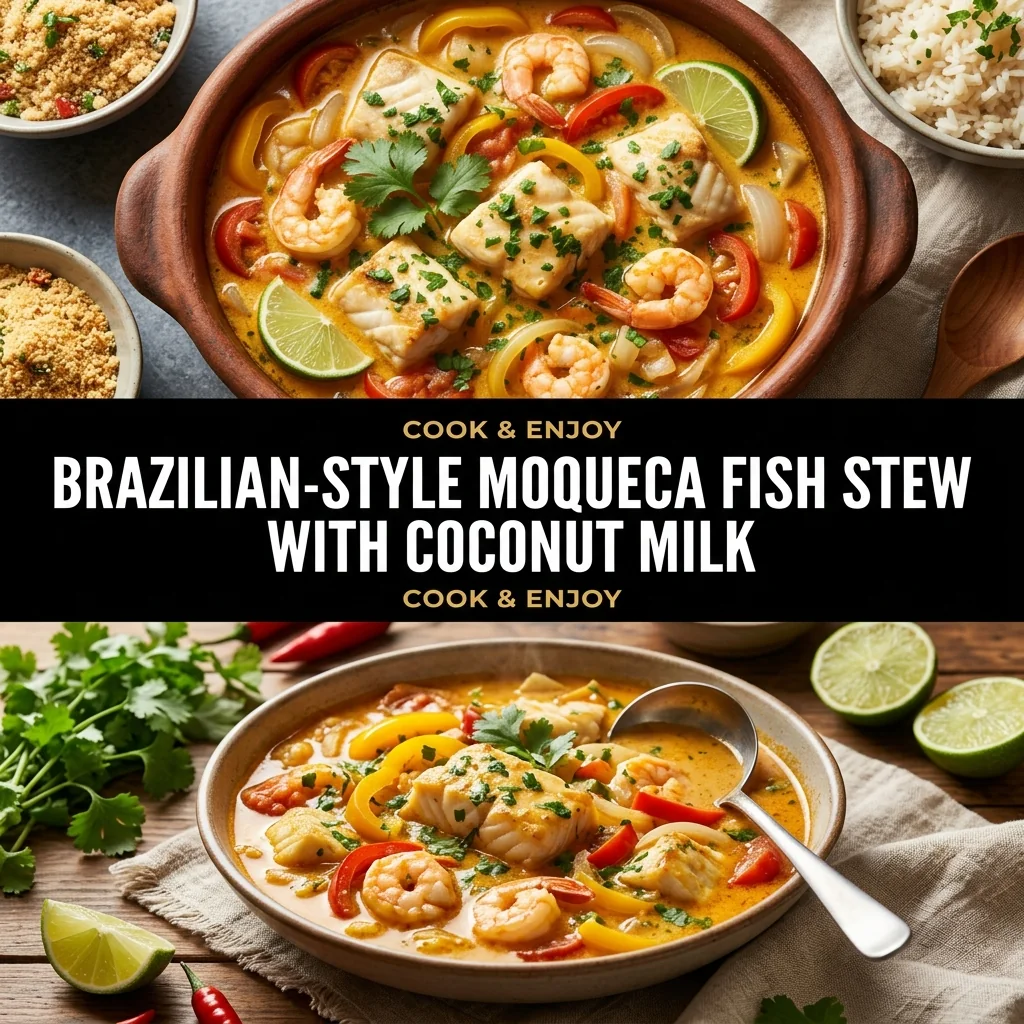
Moqueca Baiana is a celebrated Brazilian culinary tradition rooted in Bahia, balancing coastal seafood with aromatic Afro-Brazilian ingredients. This halal adaptation centers around meaty ocean fish gently poached beneath concentric rings of colorful bell peppers, ripe tomatoes, and sweet onions. The braising base unites rich, unsweetened coconut milk with golden dendê oil, imparting a deep crimson hue and an unmistakable nutty aroma. Unlike aggressively boiled chowders, moqueca relies on a disciplined, quiet simmer in a heavy lidded pot, preserving each delicate fillet's moisture without clouding the brothy sauce. Served over fragrant jasmine or long-grain white rice, this vibrant stew delivers bright citrus freshness and rich comfort in every balanced spoonful.
Selecting the Right Fish and Palm Oil
The structural integrity of your moqueca depends on firm, thick-cut white fish. Species like Pacific cod, halibut, grouper, or mahi-mahi maintain their shape under moist heat without turning rubbery. Dendê oil, extracted from the fruit of the African oil palm, provides the characteristic sunset hue and floral richness central to northern Brazilian cooking. Look for pure, unrefined red palm oil with halal certification where applicable. Avoid hydrogenated varieties, and store the bottle in a cool pantry away from direct sunlight to preserve its delicate fatty acid profile and peppery aromatics.
The Layering Technique
Traditional Bahian cooks layer moqueca rather than sautéing ingredients sequentially. Constructing a protective foundation of sliced onions, crisp bell peppers, and fresh tomatoes shields the delicate fish from direct pot contact. As the stew heats, the bottom vegetables release moisture, generating steam that infuses the seafood from below. Pouring the coconut milk and broth over the assembled ingredients allows the liquid to filter through every crevice. Resisting the urge to stir preserves the individual components, ensuring distinct textural contrast between silky fish and tender-crisp peppers.
Serving and Balance
Moqueca demands balance between rich saturated fats and vibrant acidity. The initial citrus marinade cuts through luscious coconut cream, while fresh scallions and cilantro added at the final minute provide grassy brightness. Serve the stew piping hot directly from the cooking vessel into wide, shallow bowls alongside steamed white rice or traditional cassava flour pirão made by thickening strained moqueca broth. A light drizzle of extra dendê oil over each portion accentuates the deep aroma, offering a visually stunning presentation suitable for family gatherings.
Before you start
Select dense white fish like wild cod, haddock, or halibut that holds structure during gentle simmering without disintegrating into flakes. Authentic moqueca depends on unrefined red palm oil (dendê) for its distinctive amber color and earthy, nutty fragrance; do not substitute clear processed palm oil. Avoid vigorously stirring the pot after layering, as maintaining defined strata ensures gentle, uniform cooking while keeping the tender fish portions intact and preventing the vegetables from turning into a mushy puree.
THE RECIPE
Brazilian-Style Moqueca Fish Stew with Coconut Milk
4 servings · 20 minutes preparation · 25 minutes cooking · 20 minutes cooling, chilling or resting
Ingredients
Step-by-step instructions
- Place 1.5 pounds of diced fish in a shallow non-reactive ceramic dish, toss thoroughly with 3 tablespoons lime juice, 4 minced garlic cloves, 0.75 teaspoon salt, and 0.5 teaspoon black pepper, then cover and marinate in the refrigerator for 20 minutes.
- Heat 2 tablespoons dendê oil and 1 tablespoon olive oil together in a wide, heavy-bottomed Dutch oven or deep skillet over medium heat until shimmering but not smoking.
- Arrange half of the sliced yellow onion, red bell pepper, green bell pepper, and Roma tomatoes across the base of the pot to form an even vegetable bed.
- Layer the marinated fish pieces evenly over the vegetables in a single stratum, then scatter the remaining half of the onion, bell pepper, and tomato slices neatly across the fish.
- Pour 13.5 fluid ounces full-fat coconut milk and 0.5 cup halal vegetable broth gently over the arranged layers, seasoning the top with the remaining 0.5 teaspoon fine sea salt.
- Bring the liquid to a steady simmer over medium-high heat, then reduce the heat to medium-low, cover with a tight-fitting lid, and simmer without stirring for 15 minutes.
- Uncover the pot and simmer gently for another 8 to 10 minutes, ladling broth over the exposed fish until the flesh turns opaque and registers an internal temperature of 145 F (63 C) on an instant-read thermometer.
- Remove the pot from the heat source and garnish the surface evenly with 0.25 cup chopped fresh cilantro and 2 thinly sliced scallions before serving warm.
Kitchen notes
Select dense white fish like wild cod, haddock, or halibut that holds structure during gentle simmering without disintegrating into flakes. Authentic moqueca depends on unrefined red palm oil (dendê) for its distinctive amber color and earthy, nutty fragrance; do not substitute clear processed palm oil. Avoid vigorously stirring the pot after layering, as maintaining defined strata ensures gentle, uniform cooking while keeping the tender fish portions intact and preventing the vegetables from turning into a mushy puree.
Storage & make-ahead
Cool leftovers to room temperature and transfer to an airtight glass container within 2 hours of cooking. Store in the refrigerator for up to 2 days. Reheat gently in a covered skillet over medium-low heat until the broth simmers and the internal temperature of the fish reaches 165 F (74 C). Avoid freezing, as freezing separates coconut milk emulsion and alters fish texture.
An original recipe guide inspired by themes in our Pinterest research. Recipe has not been independently kitchen-tested. AI-generated image is illustrative; your finished dish may look different.
Frequently asked questions
Can I use frozen fish fillets for this moqueca?
Yes, provided they are completely thawed in the refrigerator overnight and thoroughly dried with paper towels before marinating. Excess moisture from partially frozen fillets will dilute the coconut broth and affect the final seasoning balance.
What can I use if dendê oil is unavailable?
While authentic dendê oil yields distinct color and earthy taste, you can combine two tablespoons of extra-virgin olive oil with a half-teaspoon of sweet paprika and a pinch of ground annatto to achieve a comparable vibrant orange tone.
How do I know when the fish is safely cooked?
Insert an instant-read digital culinary thermometer into the thickest part of the fish. It must reach a minimum internal temperature of 145 F (63 C), and the flesh should flake easily under gentle fork pressure.