WHY MAKE IT
A little comfort, a lot of flavor.
Foil pack cooking delivers intensely flavored, moist fish with minimal clean-up. Enclosing salmon fillets inside sealed metallic parcels traps all natural moisture and aromatic vapors, effectively steaming the ingredients in their own concentrated juices. In this preparation, crisp green cabbage forms an aromatic cushion underneath the fish, soaking up the dripping omega-3 oils along with a balanced ginger, garlic, and toasted sesame sauce. As the oven heat penetrates the bottom layer of the packet, the finely shredded cabbage tenderizes while retaining a pleasant texture. This method guarantees moist salmon without the risk of drying out delicate fillets, making it a dependable weeknight dinner solution.
Building the Cabbage Bed
Green cabbage is ideal for packet steaming because its sturdy leaves retain structural integrity without disintegrating into mush. Slicing the cabbage into fine 3 mm ribbons ensures it cooks through within the short 16 to 18 minute baking window. Adding thin matchsticks of red bell pepper introduces sweetness and vibrant color. Toss the vegetables in part of the soy-sesame dressing beforehand so seasoning permeates the entire bed, rather than relying solely on run-off moisture from the salmon sitting above.
Sealing and Steam Physics
The mechanics of packet cooking rely entirely on an airtight envelope. When the oven heat warms the water and sauce within the pouch, rapid vaporization occurs, ballooning the foil sheet. This enclosed environment cooks the fish gently and evenly from all sides without direct dry heat exposure. To form the seal, bring opposite parallel edges together and make two distinct fold-overs, pressing flat. Crimp the ends inward firmly. If steam escapes through an unsealed seam, the cabbage will dry out and the fish may stick.
Verifying Doneness Safely
Always exercise caution when opening foil packets immediately after removal from the oven, as trapped steam releases instantly and can cause burns. Cut an X across the top foil layer with kitchen shears and peel the flaps back using tongs. Insert an instant-read digital probe into the center of the salmon; it must reach 145 F / 63 C. The flesh should yield to gentle pressure and separate along natural muscle flakes while displaying an opaque, tender center.
Before you start
Heavy-duty foil is critical for this recipe to prevent tearing and steam leaks during baking. When sealing the parcels, leave a slight dome of empty space above the salmon fillet rather than wrapping it tightly against the fish. This headspace allows the trapped ginger-scented moisture to circulate and steam the fish gently while the cabbage underneath softens and catches all the seasoned juices dripping from the cooking salmon.
THE RECIPE
Charred Cabbage and Salmon Foil Packs
4 servings · 20 minutes preparation · 18 minutes cooking · 5 minutes cooling, chilling or resting
Ingredients
Step-by-step instructions
- Preheat the oven to 425 F / 220 C (gas mark 7).
- Cut four large sheets of heavy-duty aluminum foil, each measuring roughly 30 cm by 45 cm, and lay them flat on a clean work surface.
- In a medium bowl, whisk together 2 tablespoons grated fresh ginger, 2 grated garlic cloves, 3 tablespoons halal soy sauce, 2 tablespoons toasted sesame oil, 1 tablespoon maple syrup, and 1 tablespoon rice vinegar until thoroughly emulsified.
- Toss 450 g finely shredded green cabbage, sliced red bell pepper, half of the sliced scallions, 1/2 teaspoon fine sea salt, and 1/4 teaspoon black pepper in a large bowl with 3 tablespoons of the prepared ginger-garlic dressing.
- Divide the dressed cabbage mixture evenly across the centers of the four foil sheets, pressing it down into a compact bed.
- Season 4 skinless salmon fillets with a pinch of sea salt and place one fillet directly atop each portion of cabbage.
- Spoon the remaining ginger-garlic dressing evenly over the tops of the four salmon fillets.
- Bring the long edges of each foil sheet together over the salmon, fold over tightly twice to form a seal, and crimp both outer ends securely to create four fully enclosed packets.
- Place the packets on a large rimmed baking sheet and bake at 425 F / 220 C for 16 to 18 minutes until the packets puff with steam and the salmon registers 145 F / 63 C inside.
- Rest the sealed packets for 5 minutes, then carefully slice the foil open to release hot steam, garnishing with the remaining scallions and toasted sesame seeds before serving.
Kitchen notes
Heavy-duty foil is critical for this recipe to prevent tearing and steam leaks during baking. When sealing the parcels, leave a slight dome of empty space above the salmon fillet rather than wrapping it tightly against the fish. This headspace allows the trapped ginger-scented moisture to circulate and steam the fish gently while the cabbage underneath softens and catches all the seasoned juices dripping from the cooking salmon.
Storage & make-ahead
Promptly refrigerate any leftover salmon and cabbage in an airtight container within 2 hours of baking. Store in the refrigerator for up to 2 days. To reheat, transfer the contents to an oven-safe dish, cover tightly with foil, and bake at 350 F / 175 C for 12 to 15 minutes until steaming and the salmon reaches an internal temperature of 165 F / 74 C.
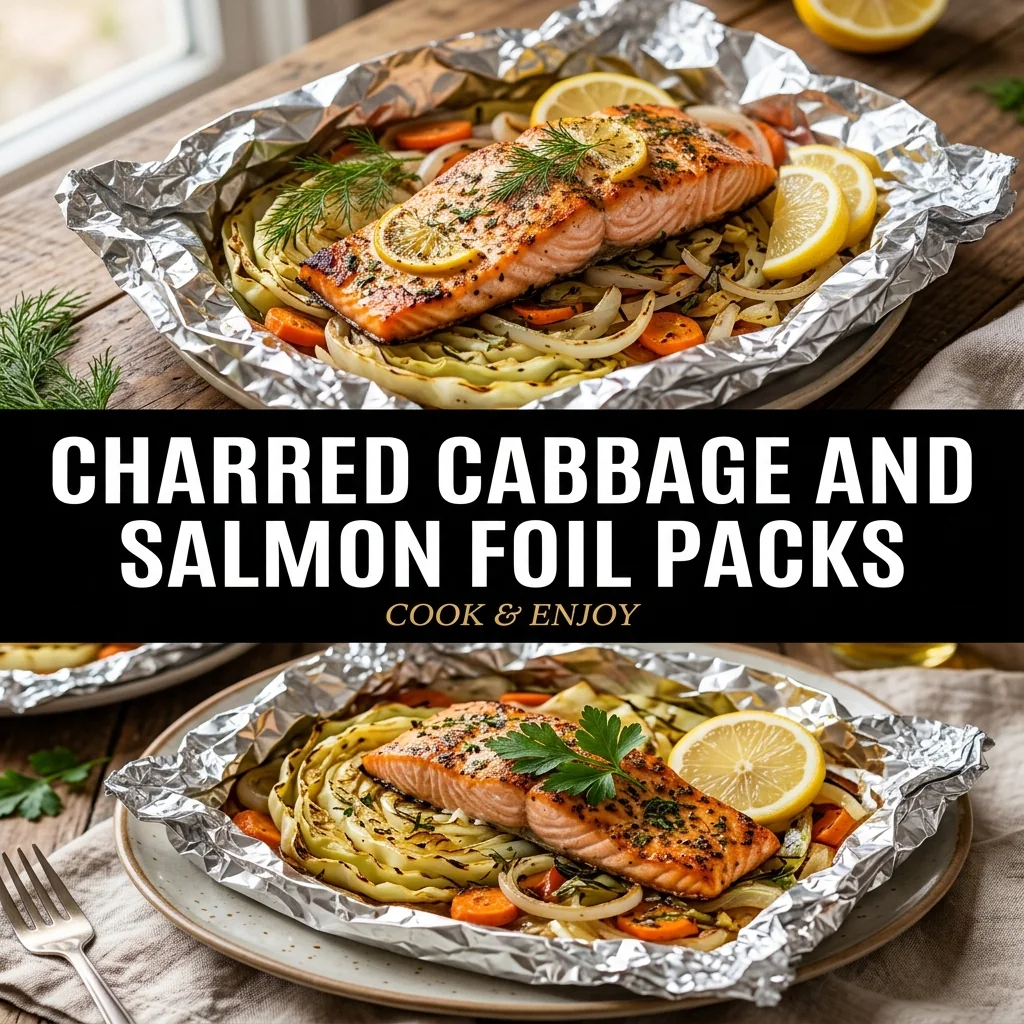
An original recipe guide inspired by themes in our Pinterest research. Recipe has not been independently kitchen-tested. AI-generated image is illustrative; your finished dish may look different.
Frequently asked questions
Can I cook these foil packs on an outdoor barbecue?
Yes. Place the sealed foil packets over medium direct heat on an outdoor grill, close the lid, and cook for 14 to 16 minutes. Verify that the fish reaches 145 F / 63 C before opening and serving.
Can I substitute another fish for the salmon?
Thick white fish such as cod, sea bass, or haddock works well. Ensure the portions are around 150 g and cut to a similar thickness so they reach the required 145 F / 63 C in the same timeframe.
Can I assemble the foil packets ahead of time?
You can assemble the cabbage bed and season the fish up to 4 hours in advance. Store the sealed packets in the refrigerator, adding 2 to 3 minutes to the total baking time if cooking straight from chilled.


